Traveling abroad is the best way to wash away the fatigue of daily life and gain new energy. However, careful preparation before departure is crucial to ensure you create pleasant memories. Beyond simply booking flights, understanding local conditions and preparing for unexpected variables determines the success of your trip. Let's systematically look at what you need to start doing right now for a successful journey.
Where should you start when planning an overseas trip?
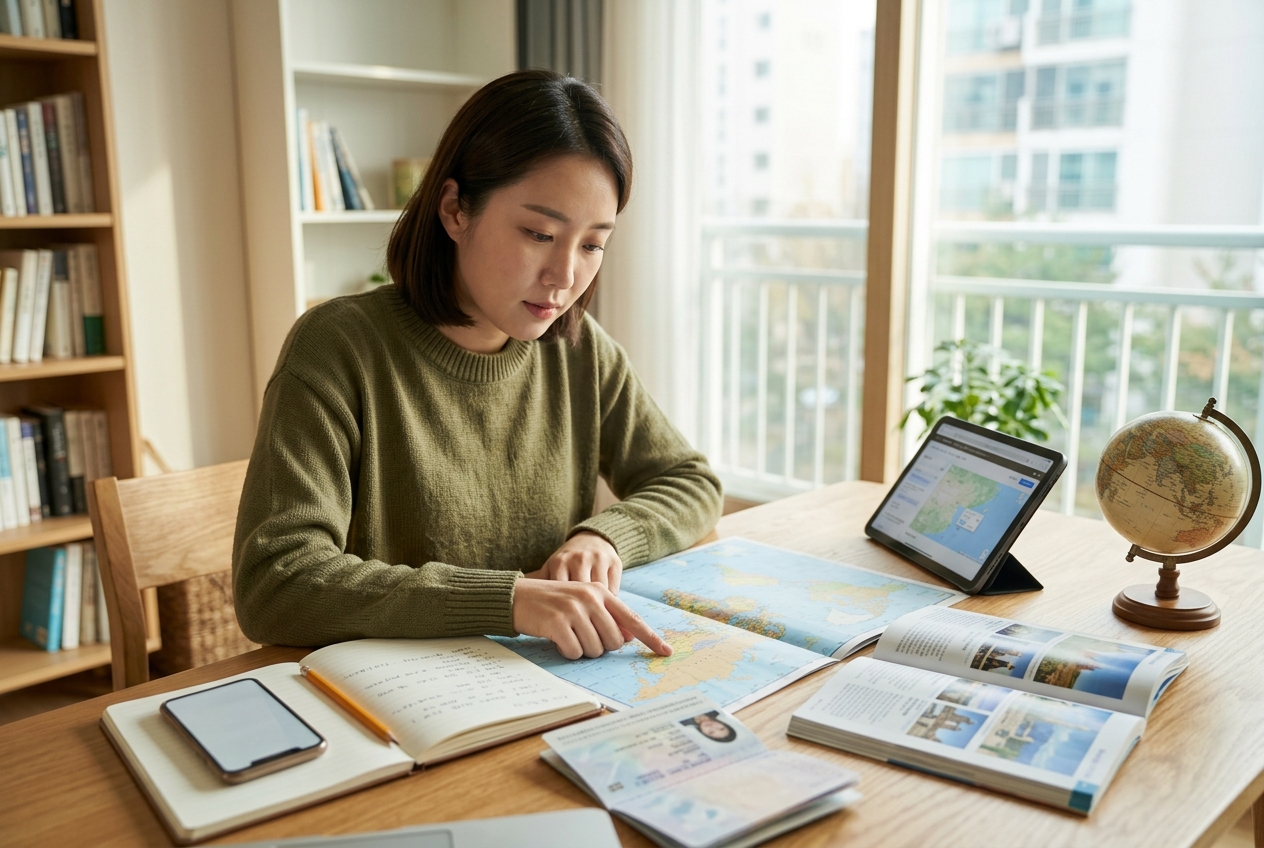
The first step in travel preparation is to clearly define your destination and duration. Rather than vaguely thinking, "I want to go anywhere," it is better to consider your travel style. The information you need to prepare will vary significantly depending on whether you want a relaxing vacation or a cultural exploration of city museums and historical sites. Once the destination is set, you should first check visa requirements, mandatory entry documents, and local climate. Especially with the rise of digital nomads and niche travel, entry policies can change frequently, so it is a good habit to check real-time information through the Ministry of Foreign Affairs' Overseas Safety Travel website.
It is also essential to check the safety status of your destination. Travel advisory levels for each country are updated in real-time on the Ministry of Foreign Affairs website, so be sure to check them before departure. If a specific area is classified as a high-risk zone, you need to be flexible enough to change your accommodation location or exclude it from your itinerary. Furthermore, identifying local holidays or festival periods in advance can prevent issues like closed museums or traffic congestion.
One aspect many travelers overlook is the timing of flight bookings. Generally, prices are most reasonable around 3 months before departure, but for peak seasons, it is more economical to prepare 6 months in advance. Also, you must check your passport's expiration date when booking flights. Most countries require at least 6 months of validity remaining upon entry, so if your expiration date is approaching, apply for a renewal immediately. When booking, your English name must exactly match your passport, and be careful not to swap the order of your surname and given name.
What is the first thing to do after booking your flight?

Once flights and accommodation are booked, you move on to the practical preparation stage. The first things to do are purchasing travel insurance and checking local communication options. Problems like illness, accidents, or lost items during travel can occur without warning. Refer to "Essential Checklist for Overseas Travel Insurance: 5 Things to Check Before Signing Up (/adsense_center/view.php?id=524)" to choose the right insurance for you. Also, compare whether roaming, a local SIM card, or an eSIM fits your data usage pattern. If you are moving around frequently for a short period, a SIM or eSIM is convenient; if you need to receive work-related calls, carrier roaming is recommended.
When booking accommodation, do not just look at the price; consider proximity to public transport and surrounding amenities. It is necessary to check the actual soundproofing or cleanliness of the accommodation through Google Maps or the latest reviews in travel communities. Especially if you are arriving late at night, confirming if airport pickup service is available can significantly reduce travel fatigue.
Preparing Currency Exchange and Payment Methods
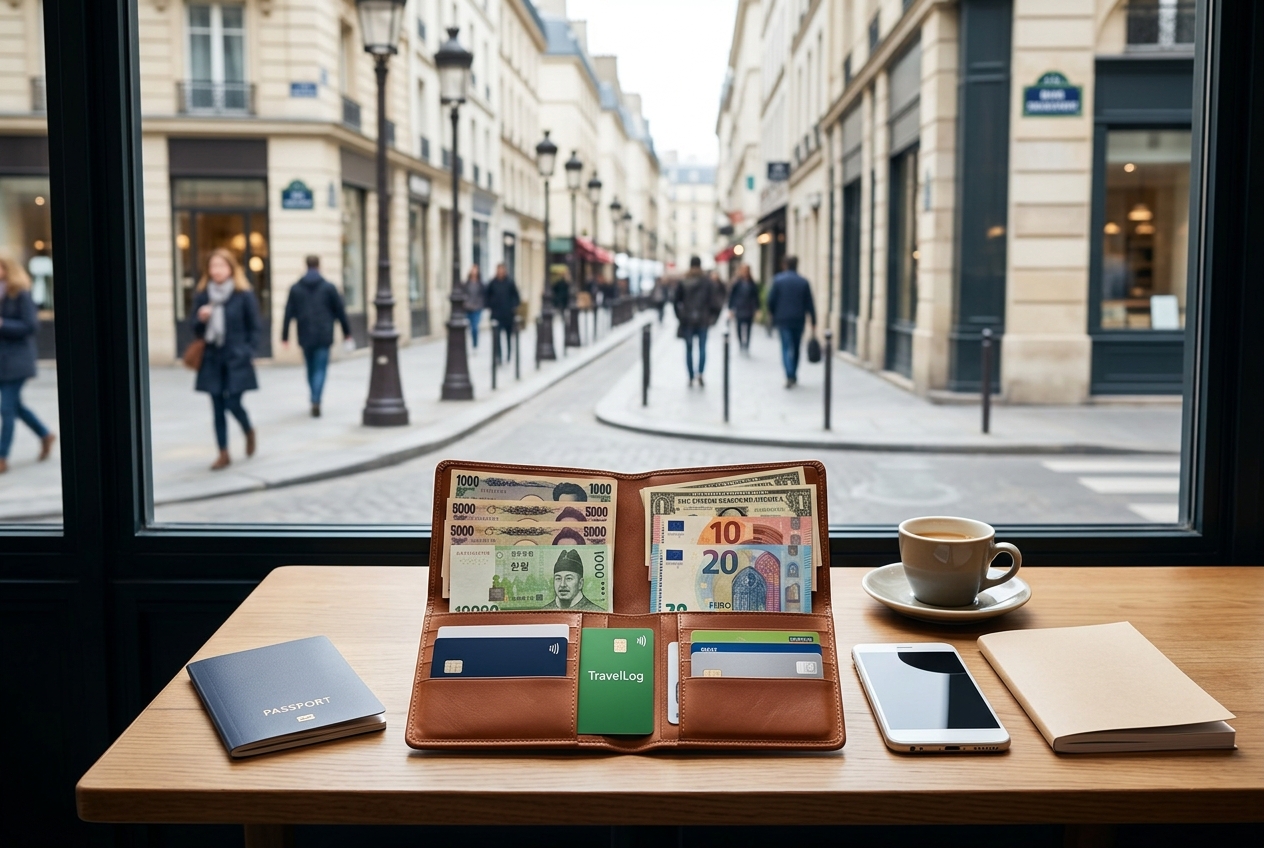
Recently, the trend is to avoid carrying large amounts of cash. However, a small amount of local currency is essential. This is because there are often cases where cards are not accepted when using public transport or visiting small shops. It is most efficient to exchange currency at a preferential rate using your primary bank's mobile app and prepare a debit or credit card with no overseas transaction fees. It is highly recommended to keep at least one credit card for emergencies. When exchanging currency, it is much more useful to have small denominations for change rather than large bills. Using foreign currency-loading cards like Travel Wallet or Travel Log allows for more economical travel by applying real-time exchange rates.
How can you pack efficiently?
When packing, focus on "must-have items" rather than "it would be nice to have" items. If you are not aware of prohibited items for carry-on luggage in advance, you might waste time at airport security or have to discard valuable items. Check out "Overseas Travel Packing Checklist: From Easy-to-Miss Essentials to Packing Tips (/adsense_center/view.php?id=549)" to learn how to pack light. You can use space much more efficiently by rolling your clothes or using compression pouches. Also, remember that liquids must be kept in containers of 100ml or less and stored in a transparent zipper bag.
For clothing, it is best to pack thin layers that are easy to mix and match, considering the local weather. If you are visiting a region with volatile weather, bringing a light windbreaker or raincoat will be very helpful. Also, keep a small pouch with essential medicines, including those you take regularly, as well as fever reducers, anti-diarrheal medication, digestive aids, and bandages, so you can take them out immediately when needed. Most importantly, keep your passport, flight tickets, and accommodation vouchers in a separate folder in your carry-on bag.
Managing Electronics and Toiletries
Voltage and plug shapes vary by country. A multi-adapter is essential, and power banks must be carried in your carry-on luggage. While toiletries are often provided by local accommodations, if you have sensitive skin, it is better to bring your usual toiletries in small containers. Remember that liquids must be in containers of 100ml or less for carry-on. Since electronic devices are essential for taking photos and checking maps, double-check if your power bank has enough capacity and if you have brought extra cables. Bringing a multi-port adapter that supports fast charging is effective for solving the problem of insufficient outlets in hotels.
What should you be careful about at the airport on the day of departure?
The day of departure is as tense as it is exciting. It is recommended to arrive at the airport at least 3 hours before departure. This is because unexpected waiting times can occur during baggage check-in and security screening. Check "Overseas Travel Departure Checklist: Essentials and Precautions (/adsense_center/view.php?id=14)" to ensure you haven't missed anything. After arriving at the airport, you will go through ticket issuance, checked baggage drop-off, security screening, and immigration. Keep your passport and boarding pass within reach at all times to move quickly.
Also, if you have purchased duty-free items, it is good to identify the pickup location in advance. In large airports, pickup locations can be far away, so move with plenty of time considering the boarding gate closing time. It is also important to frequently check the airport display boards, as boarding gate numbers often change.
First Schedule After Arrival
Upon arrival, the first thing to do is to re-confirm the route from the immigration area to your accommodation. It is easy to get lost in an unfamiliar environment. It is important to download offline maps in advance or immediately activate your SIM or roaming service to ensure you have a means of communication. By knowing the public transport routes or taxi stand locations from the airport to your accommodation in advance, you can move without panic. It is also the sign of a thoughtful traveler to email the hotel in advance in case your check-in time is delayed.
How should you deal with exceptional situations?
During your trip, you might lose your passport or get sick. If you lose your passport, visit the nearest police station immediately to file a report, and then find the embassy or consulate to issue an emergency travel document. Therefore, it is a good habit to keep a copy of your passport and two ID photos separate from your passport. The same applies to health issues. Bringing essential medicines (fever reducers, digestive aids, anti-diarrheal medication, bandages, etc.) is basic, and saving the locations of local hospitals or embassy contact information in advance is very helpful. If your belongings are stolen, report it to the local police immediately and get a police report, which is a mandatory document for travel insurance claims later.
Also, while you don't need to be suspicious of everyone's kindness, remember that managing your valuables is always your responsibility. Especially in crowded tourist spots, be wary of pickpockets and keep your bag in front of you at all times. As a precaution, taking photos of emergency contacts, emergency card numbers, and insurance policy numbers on your phone is also a good coping method. Staying calm and dealing with problems rationally is the key to a safe trip even if issues arise.
In conclusion, thorough preparation for overseas travel leads to a relaxed trip. If you prepare step-by-step focusing on the big picture of flights, accommodation, insurance, and packing, you can handle unexpected problems without panic. I hope you enjoy the preparation process, keeping in mind that it is part of the trip itself. I wish you a safe and happy journey. Above all, remember that your health and safety are the top priority during your trip, and I hope you build wonderful memories while respecting local culture and rules.
Frequently Asked Questions
How much validity should my passport have left?
Most countries require at least 6 months of validity remaining from the date of entry. For safety, please check your passport expiration date before traveling and renew it if necessary.
Is travel insurance mandatory?
Medical expenses can be very high abroad. We strongly recommend purchasing travel insurance to prepare for unexpected situations such as accidents, illnesses, or lost items.
Can I put a power bank in my checked luggage?
No, power banks cannot be sent as checked baggage due to fire risks and must be carried in your carry-on luggage.
How much currency should I exchange?
While it depends on the payment methods used locally, it is common to prepare about 20-30% of your total budget in cash for public transport or small shops and use cards for the rest.
What are the liquid carry-on regulations?
For carry-on, individual containers are limited to 100ml or less, and all containers must be placed in one transparent zipper bag. Liquids exceeding 100ml must be sent as checked baggage.