Gyeongju is often called a giant open-air museum, with historical traces found at every turn. For first-time visitors, the vast number of heritage sites and the city's expansive layout can make it difficult to know where to start. However, a trip to Gyeongju can be much easier and more enjoyable if you understand a few key principles. Today, we will take a detailed look at everything from travel preparation to efficient route planning and essential precautions from a beginner's perspective.
The Start of Your Gyeongju Trip: Understanding the Region and Choosing Transportation

Gyeongju is broadly divided into the downtown area (Hwangnidan-gil and Daereungwon), the Bomun Tourist Complex, and the outer areas where Bulguksa Temple and Seokguram Grotto are located. Since these three areas are quite far apart, choosing your accommodation and transportation based on your travel goals is crucial. The downtown area is great for exploring on foot or by bicycle, while the Bomun Complex features many large hotels and resorts, making it suitable for families. For a first visit, we recommend a 'downtown-focused' itinerary to minimize travel time.
If you use public transportation, note that while bus routes are well-established, intervals can be long. It is best to allow extra time, especially for trips to Bulguksa or Seokguram. Taxis are convenient but incur costs, so if you are traveling in a group of 3–4, a taxi or rental car might be more economical. Recently, electric bike and e-scooter rental services have become popular, allowing you to enjoy Gyeongju's scenery up close when the weather is nice. When choosing transportation, always consider your physical stamina and the composition of your group. If traveling with children or the elderly, a rental car or taxi tour will significantly reduce fatigue. Also, while much of Gyeongju's terrain is flat, some heritage sites have slopes, so it is a good habit to check your route on a map app beforehand.
Must-Visit Attractions and Themed Itineraries
You cannot miss Daereungwon and Cheomseongdae on a trip to Gyeongju. This area is beautiful during the day, but the night view, when the lights turn on at dusk, is spectacular. Donggung Palace and Wolji Pond are famous for their night views; be sure to check for reservations or wait times for on-site ticketing. We also recommend Gyochon Village and Woljeonggyo Bridge, which change their scenery with the seasons, as great walking paths.
Checkpoints: 1. Since distances between sites can be long, do not try to visit more than three places in one day. 2. Check sunset times according to the season to adjust your visit to night view spots. 3. Comfortable shoes are essential as the interiors of museums and heritage sites are larger than you might think. If you want to understand the history in depth, looking into programs that offer explanations by cultural tourism commentators is a great idea. It is also important to check official websites for closures or construction before visiting. It is wise to have one or two backup locations to prevent sudden schedule changes.
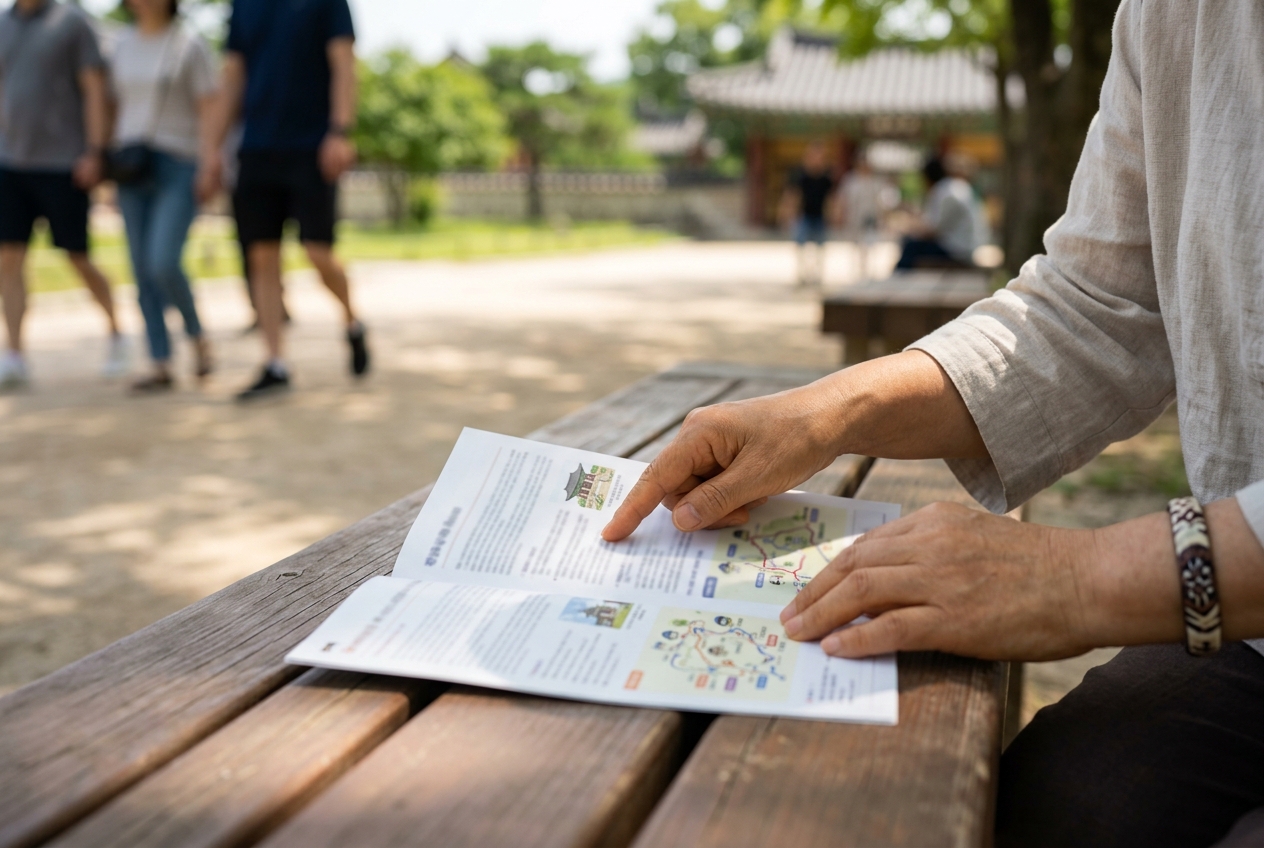
Recommended themed itineraries are as follows: For history buffs, we recommend the Bulguksa-Seokguram-Gyeongju National Museum route. For those who want aesthetic photos and cafe hopping, the Hwangnidan-gil-Daereungwon-Woljeonggyo route is recommended. If you are with children, including experiential spaces like Gyeongju World or Donggung Garden is a good idea. Each route should be planned based on walkability; especially for Hwangnidan-gil, where there are many hidden restaurants and boutiques in every alley, we recommend allowing at least 3 hours. When visiting heritage sites, don't just look at them; reading the guide signs or pamphlets detailing the significance of each site will add depth to your trip.
Practical Advice for Choosing Accommodation
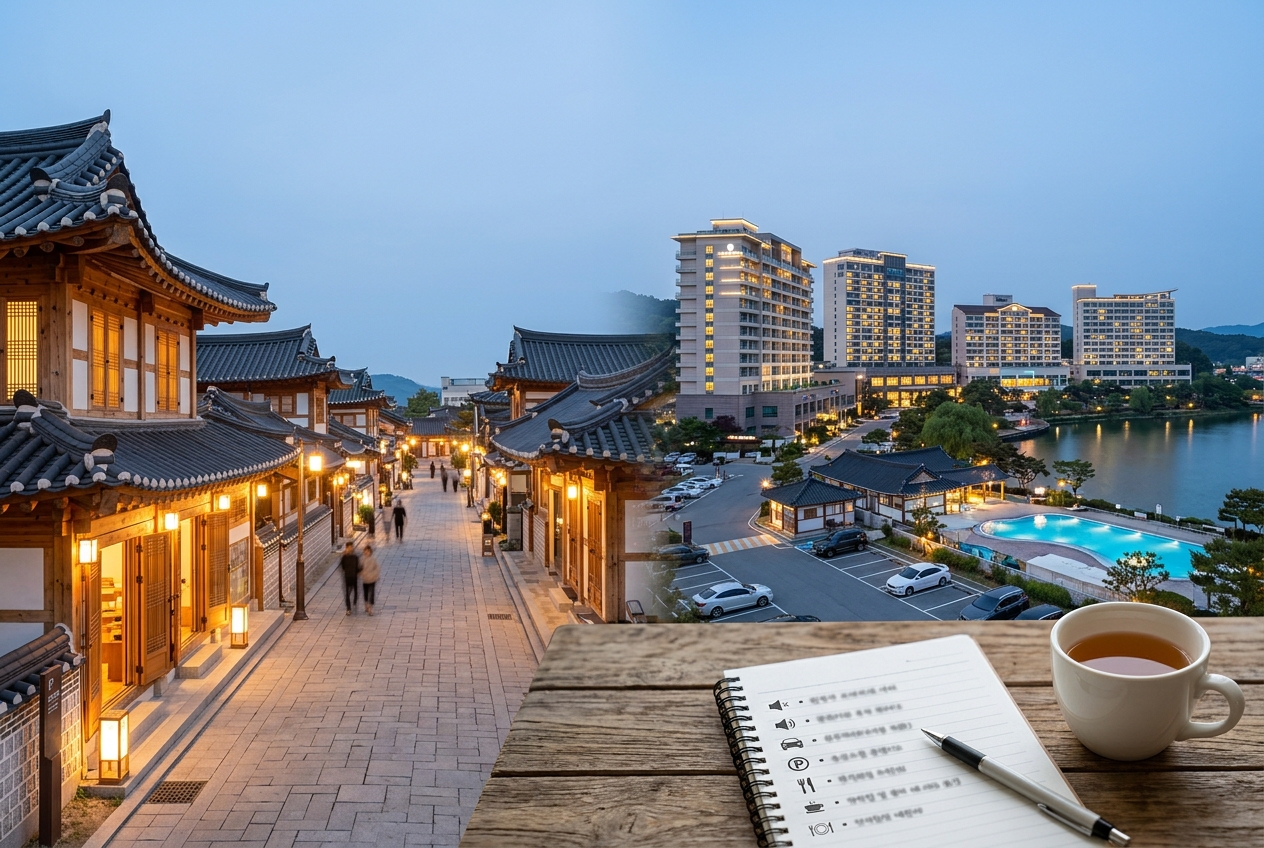
Accommodations in Gyeongju are distinctly divided into Hanok stays and modern hotels. Hanok stays are the best way to feel the quiet, traditional atmosphere of Gyeongju, but they may differ from modern hotels in terms of soundproofing or amenities. Read reviews carefully before booking and weigh what factors are important to you. Hanok stays near Hwangnidan-gil offer excellent accessibility, but you should be aware that noise can occur on weekends. Use a checklist when choosing accommodation: noise levels, parking availability, breakfast options, and distance to major tourist attractions.
If you prefer hotels, the Bomun Complex offers a wider selection. With well-equipped facilities like swimming pools and breakfast services, it is great for a 'hotel-cation.' The decision of where to base your trip plays a decisive role. If you want to spend time in the city center late into the night, we recommend the area near Hwangnidan-gil; if you want a quiet rest, the Bomun Complex area is recommended. For family travelers, resort-style accommodations in the Bomun Complex are much more convenient due to their various amenities. On the other hand, younger travelers or couples often prefer enjoying Gyeongju's nights in an aesthetic Hanok stay in Hwangnidan-gil. When booking, always check the check-in and check-out times and inquire in advance about luggage storage services.
Precautions, Etiquette, and Practical Tips During Your Trip
Many areas in Gyeongju are designated as protected heritage zones. Therefore, you must absolutely refrain from damaging or touching cultural assets. Also, as it is a popular tourist destination, following basic rules like proper waste disposal and parking etiquette is essential. Hwangnidan-gil, in particular, has narrow alleys and many people, making vehicle traffic very limited. It is best to park in public parking lots and walk. We strongly recommend using public transportation to solve parking issues, and on weekends, using the circular buses operated by Gyeongju City is a great option.
In summer, daytime temperatures can rise high, so sufficient hydration and rest are necessary. Conversely, in winter, strong winds can lower the perceived temperature, so it is good to prepare clothes that can be layered. Many heritage sites prohibit bringing in food, so please check the information boards before visiting. As a practical way to enhance the quality of your trip, try organizing photos of the places you visited each evening and leaving a short note about your thoughts. This helps you remember the trip more deeply.
Finally, make 'leisure' your biggest principle when planning your trip. Gyeongju is a city with too many stories to rush through. Even if you only see one place, looking up its historical background or sitting on a bench for a moment to feel the Gyeongju breeze will change the quality of your trip. Too many plans can actually reduce the joy of travel, so try to set only 2–3 core attractions and enjoy the freedom of moving as you please for the rest. If you clear your mind and walk slowly, you will discover new facets of Gyeongju not found in textbooks. Remember that the true value of travel lies in depth, not speed. We hope this trip becomes a precious time for you to fully feel the charm of Gyeongju.
Frequently Asked Questions
How many days are appropriate for a trip to Gyeongju?
While a 1-night, 2-day trip is possible if you only visit core attractions, we recommend a 2-night, 3-day itinerary to enjoy outer areas like Bulguksa, museums, and the Bomun Complex at a leisurely pace.
Is it difficult to park near Hwangnidan-gil?
Yes, Hwangnidan-gil has narrow alleys and heavy crowds on weekends, making parking very difficult. It is better for your peace of mind to use nearby public parking lots or public transportation.
Where are good places to go with children?
Gyeongju World, Donggung Garden, and the Children's Museum within the Gyeongju National Museum are suitable for children to experience and enjoy.
Where should I go to see the night view?
Donggung Palace and Wolji Pond, Woljeonggyo Bridge, and the area around Cheomseongdae are considered the top 3 night view spots in Gyeongju. It is best to visit right after sunset when the lights turn on.