While booking flight tickets is often the most exciting part of preparing for an overseas trip, choosing travel insurance is the moment that requires the most attention to detail. Many travelers simply look for the 'cheapest product' and find themselves flustered when they cannot receive compensation for issues that arise locally. Overseas travel insurance is not just an expense; it is a vital safety net that prepares you for various variables such as medical expenses, theft of personal belongings, and flight delays. Insurance is a financial defense line against unforeseen events and a crucial factor in determining the quality of your trip.
Why is overseas travel insurance essential?

As anyone who has visited a hospital abroad knows, medical costs for foreigners can be unimaginably high. Emergency room visits for a mild cold or stomach upset can easily exceed hundreds of dollars, and surgery due to an accident could cost tens of thousands. Travel insurance is the most efficient way to manage these financial risks. Since many products cover not only illnesses but also liability for damages or trip cancellation costs, it is important to design coverage that fits your specific travel style.
Furthermore, travel insurance covers not only your own safety but also damages you may cause to others. For example, if you damage accommodation facilities or someone else's property while moving, insurance can resolve these liabilities. While these items may not feel relevant before you leave, they provide significant psychological and financial relief if problems arise locally. It also plays a major role in controlling travel variables by covering additional accommodation and meal costs caused by unexpected flight cancellations or baggage delays. Recently, as flight cancellations due to airline issues have become more frequent, the importance of special riders for flight and baggage delays has grown.
Selection criteria for coverage by situation

When choosing travel insurance, you must first identify your travel style. The risk factors for a resort-based vacation are completely different from those of a trekking trip in rugged mountainous terrain. Since not all products offer the same coverage, please compare products based on the following checkpoints:
- Medical Expense Coverage Limit: It is recommended to set the medical expense limit to at least 10 million KRW. If you are visiting countries with high medical costs such as the US, Canada, or Europe, you should consider a higher limit. Since medical insurance often operates on an indemnity basis, covering actual expenses incurred, a low limit poses a risk of you having to pay the excess out of pocket.
- Personal Belongings Damage: If you are carrying expensive equipment like cameras, laptops, or smartphones, check the coverage limit for theft and damage. Note that cash and jewelry are often excluded, and there may be a per-item compensation limit, so it is best to read the terms and conditions carefully.
- Flight Delays and Baggage Loss: For long-haul flights or itineraries with many transfers, products that include coverage for meals or accommodation due to flight delays are advantageous. Since compensation for flight delays usually starts after a delay of 4 hours or more, check the specific time criteria.
- Special Riders: If you are planning high-risk leisure activities such as scuba diving, skiing, or surfing, you must check if a sports rider is included in addition to standard travel insurance. Professional leisure activities are often excluded from standard policies.
Another point to consider is 'overlapping coverage.' Check if your credit card already includes basic travel insurance and save on premiums by only supplementing the missing parts. Also, when setting coverage limits, consider the overall cost of living and medical service costs in the destination country. Since there is a huge difference in medical fees between Southeast Asia and North America, it is wise to search for average emergency room costs in your destination beforehand. Additionally, check if your existing private medical insurance covers any overseas medical expenses to avoid wasting premiums on duplicate coverage.
Preparation and procedures for insurance claims
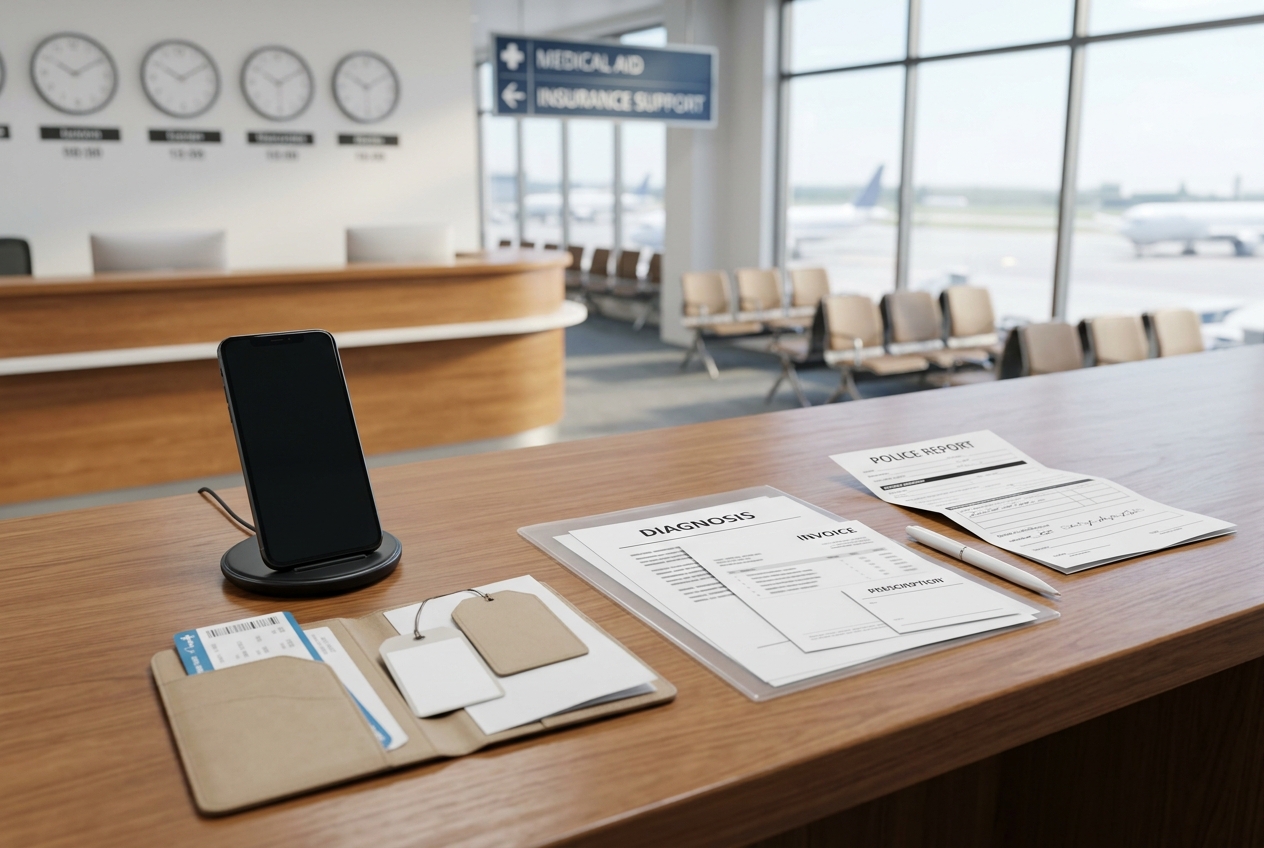
Even if you have insurance, it is difficult to receive compensation if you do not properly collect supporting documents in the event of an accident. To avoid panic, you should know in advance what documents are required. The basics are medical certificates, itemized medical receipts, and prescriptions. In the case of theft, a 'Police Report' issued by the local police station is essential.
The first thing to do in the event of an accident is to contact your insurance company's emergency support center. Many insurance companies operate 24-hour consultation centers that can connect you to local hospitals or guide you on necessary documents. Rather than going to a private hospital blindly, receiving guidance from your insurer helps with cost reduction and smooth claims. Keep originals if possible, but it is a good habit to take photos with your smartphone and back them up to the cloud. Also, ensure that the patient's name, diagnosis, and treatment period are included on receipts. If language barriers make using local hospitals difficult, obtaining information on the insurer's local partner hospitals in advance is very helpful.
Be sure to check the exclusions
A part that many consumers overlook is 'exclusions.' These are situations where the insurer can refuse coverage, with 'pre-existing conditions' being the most common. Many products do not cover cases where a disease you were already suffering from before the trip worsens. Pregnancy, childbirth, accidents caused by alcohol consumption, and damages caused by intentional acts are also mostly excluded.
Additionally, items that are not personal belongings, such as work equipment or expensive art, may be excluded from coverage. Simply reading the 'damages not covered' section of the terms and conditions can significantly reduce potential disputes later. If you are worried about pre-existing conditions, it is best to inquire if there is special insurance that includes coverage for them. Exclusions can vary slightly by insurer, so you must read the 'damages not covered' section to ensure it aligns with your activity range. Recently, accidents involving personal mobility devices like electric scooters have increased, so be careful to check whether these are covered by your specific insurer.
Checkpoints to note when signing up
When signing up for travel insurance, double-check the following: First, ensure the coverage period accurately includes the start and end times of your trip. It is safest to set the coverage period from the moment you leave for the airport until you walk through your front door upon returning. Second, if the premium is excessively cheap, suspect that the coverage items are too few or the limits are too low. Third, if traveling as a family, it is convenient to sign up for everyone at once, but if individual special riders are needed, it may be better to design them separately.
Finally, it is a good idea to carry a printed copy of your insurance policy in addition to the digital file. This ensures you can check your insurance information even in the event of an unexpected smartphone loss or battery drain. Writing down emergency contact information inside your wallet or bag is also a good method. In conclusion, overseas travel insurance should be evaluated based on the 'value of coverage relative to the premium.' Think of it as a safety net that prevents a single accident from ruining your entire travel budget. Complete your sign-up 2-3 days before your trip and don't forget to save your insurance policy and emergency contacts on your phone. This simple preparation process is the key to a safe and enjoyable trip. Remember that insurance is a reliable companion for your travels. Travel insurance is not just an expense, but an essential investment to safely protect your happy memories. Through thorough preparation, you can have the composure to handle unexpected challenges without panic.
Frequently Asked Questions
When is the best time to sign up for overseas travel insurance?
It is recommended to sign up at least 2-3 days before departure. While you can sign up at the airport on the day of travel, preparing in advance allows you to carefully compare coverage details.
Do I really need travel insurance if I already have private medical insurance?
Domestic private medical insurance often does not cover medical expenses incurred overseas or has limited coverage. Furthermore, items like theft of belongings, flight delays, and liability are not covered by standard medical insurance, so separate travel insurance is necessary.
Can I receive insurance money locally immediately in the event of an accident?
Most travel insurance requires you to pay hospital bills locally first and then claim the insurance money by submitting receipts and documents after returning home. However, in the case of major accidents, some insurers may pay hospital bills directly through emergency support services, so contact your insurer immediately in the event of an accident.
Can the representative sign up for the whole family at once during a family trip?
Yes, that is possible. However, since the required coverage scope may differ for each family member, it is recommended to set coverage limits considering each person's age and activity level when signing up.