The dollar exchange rate is more than just the price of buying and selling foreign currency; it is a key indicator that reflects a country's economic health and the flow of global financial markets. When the exchange rate rises, import prices increase and overseas travel costs go up; conversely, when the rate falls, the price competitiveness of export companies weakens. It has an immediate impact on every aspect of our lives. For successful asset management, it is essential to go beyond simply checking today's exchange rate and understand the fundamental principles of how exchange rates move and the corresponding response strategies. Exchange rate fluctuations are not just numerical changes, but the result of complex interactions between the movement of funds between countries and economic expectations.
1. Key Factors in Exchange Rate Determination: What Moves the Price?

Exchange rates are fundamentally determined by supply and demand in the foreign exchange market. However, behind this lie massive variables such as interest rate differentials between countries, economic growth rates, and geopolitical risks. The first thing to note is 'interest rates.' When the U.S. Federal Reserve (Fed) raises interest rates, investors move toward dollar assets in search of higher returns. In this process, the demand for dollars surges, causing the exchange rate to rise. Since interest rates are the price of money, it is a natural principle of the capitalist market for funds to flock to currencies that offer higher interest.
Economic growth rates are also an important variable. If there is high expectation that a country's economy will grow robustly, the value of that country's currency rises. Conversely, for countries highly dependent on external trade, their currency value is prone to falling during global economic downturns. Investors tend to sell currencies of countries with stagnant growth and buy those of countries with high growth potential. Additionally, when geopolitical risks arise, investors prefer the dollar as a safe-haven asset, which leads to an increase in the exchange rate. This is because war or political instability instills fear in the market, and the dollar serves as a refuge from that fear.
Furthermore, the 'current account' has a significant impact on exchange rates. When a country earns more money from selling goods than it spends on imports—that is, when a current account surplus persists—foreign currency accumulates domestically. This leads to an increase in supply, which acts as a factor to lower the exchange rate. Conversely, if a deficit persists, there is a shortage of foreign currency, putting upward pressure on the exchange rate. These factors do not act alone but interlock to create the massive waves of exchange rate fluctuations.
2. The Actual Impact of Exchange Rate Fluctuations on Personal Economy
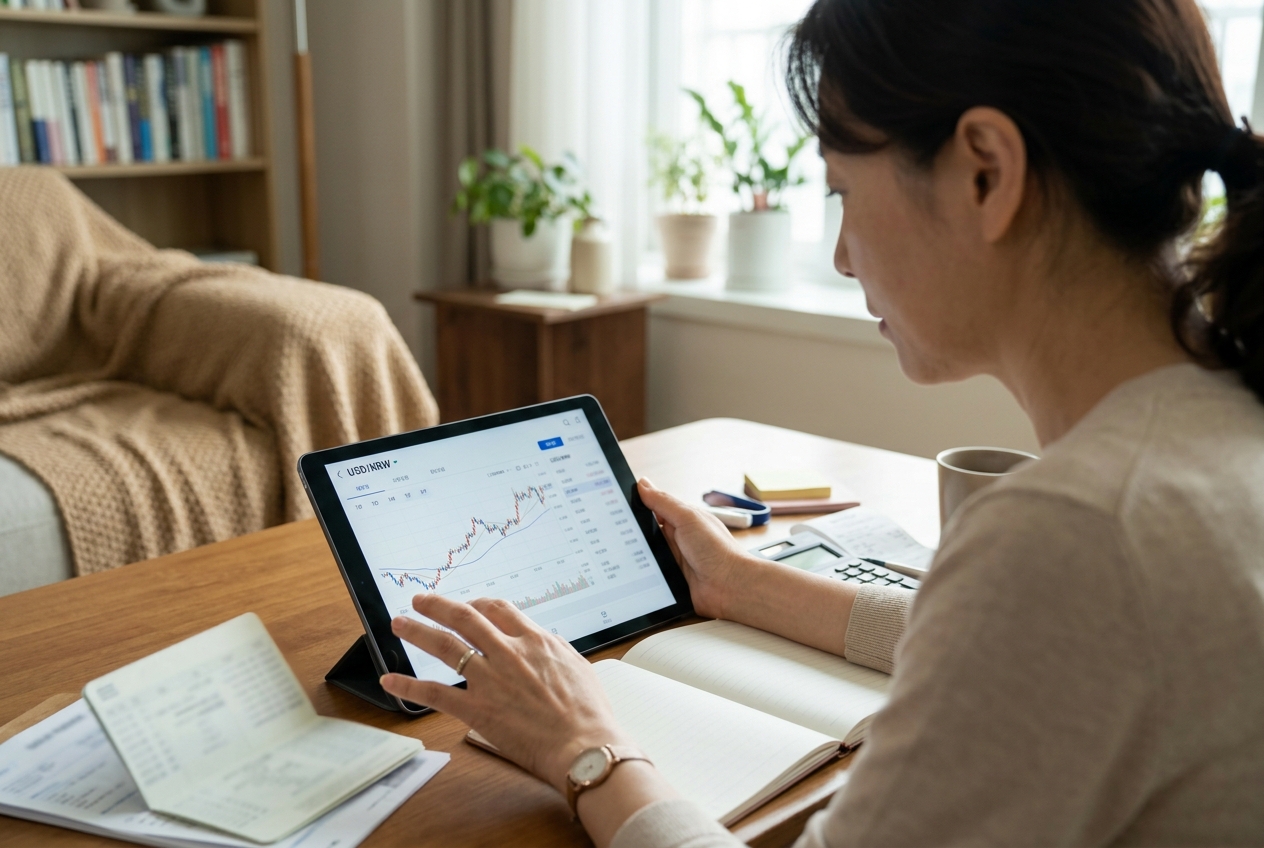
A fluctuation of 10 or 20 won in the exchange rate may not be immediately felt, but in the long term, the ripple effect on household economy is significant. The most direct impact is on 'import prices.' Items with a high proportion of imports, such as crude oil, food ingredients, and electronic products, see immediate price increases when the exchange rate rises. This ultimately leads to a rise in domestic consumer prices and has the effect of reducing real income. Since it results in lower disposable income for households, it can also cause a contraction in consumer sentiment.
On the other hand, for individuals who enjoy direct overseas purchasing or invest in foreign stocks, the exchange rate becomes a direct yardstick for returns. If you hold dollar assets, a rise in the exchange rate means an increase in asset value, but conversely, your purchasing power drops when buying foreign goods. Therefore, when constructing your asset portfolio, diversified investment that considers exchange rate volatility is necessary. For example, selling foreign stocks when the exchange rate is high can yield exchange gains, while buying when the rate is low can lead to additional profits when the rate rises later.
Also, for international students or those staying abroad, the exchange rate is a very sensitive issue directly linked to living expenses. If the exchange rate rises sharply, the burden of tuition or housing costs increases, so a strategy of securing dollars in advance is necessary. Office workers can also exercise economic wisdom by grasping the flow of exchange rates to adjust the timing of overseas trips or the purchase of expensive home appliances. The exchange rate is not just a number in the financial market, but a compass that adjusts our daily budget.
3. Personal Asset Management Strategies to Respond to Exchange Rate Changes
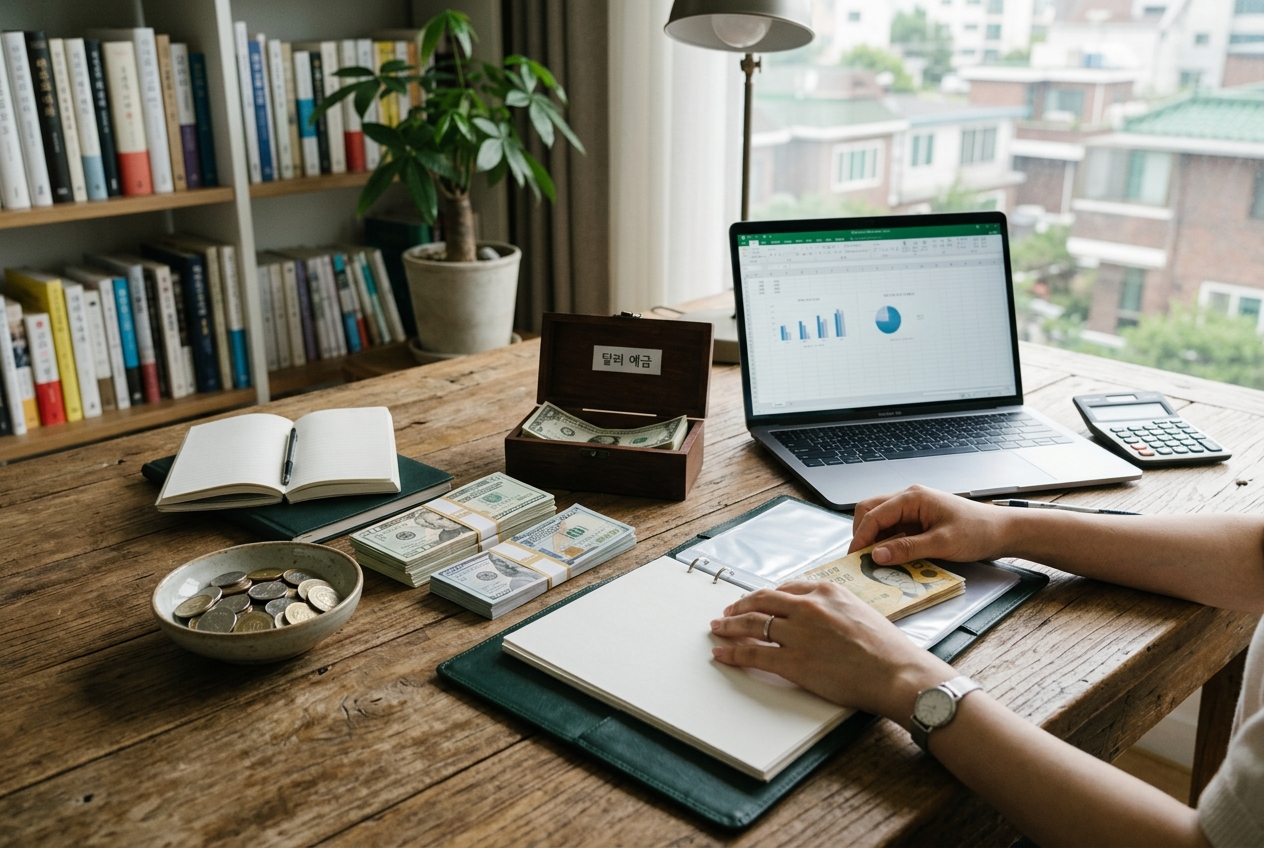
Predicting the direction of exchange rates accurately is difficult even for experts. Therefore, rather than going all-in on a specific direction, one should utilize 'split buying' and 'portfolio diversification' strategies. For example, when investing in foreign stocks, buying periodically by dividing purchases between high and low exchange rate periods can help lower the average purchase price. This is part of the Dollar Cost Averaging strategy, a method that seeks long-term stability by leveraging volatility.
Also, utilizing dollar deposits or dollar-linked products is an option. It is possible to take a strategic approach by securing dollars when the rate is low and using them for overseas investments or converting them to won when the rate spikes. However, one must always consider the fees incurred during currency exchange, and holding a portion of assets in dollars from a long-term perspective can serve as a form of 'hedge.' Since holding all assets only in won is equivalent to betting all your assets on the Korean economy, establishing a safety net in dollars significantly increases the stability of your portfolio.
Practical steps include the following: First, set the proportion of foreign currency assets within your total assets. Second, buy dollars little by little whenever the exchange rate drops to increase your holdings. Third, sell a portion when the exchange rate spikes to realize profits or execute planned overseas investments. This systematic approach prevents emotional trading and helps maintain a center that is not swayed by economic conditions. Above all, it is most desirable to approach currency investment from the perspective of protecting asset value rather than short-term gains.
4. How to Read Exchange Rate-Related News: Checkpoints

When interpreting exchange rate-related information amidst the daily flood of economic news, several criteria are needed. First, check 'U.S. economic indicators.' If employment indicators or the Consumer Price Index (CPI) come out higher than expected, the possibility of interest rate hikes increases, and the dollar is likely to remain strong. Conversely, if signs of economic slowdown are detected, expectations for interest rate cuts rise, which may lead to a weaker dollar. It is important to develop the habit of inferring future policy directions not just by looking at news headlines, but by checking documents like the 'FOMC Minutes,' which are records of the Fed's decision-making.
Second, look at the 'central bank's monetary policy.' It is important to see how the Bank of Korea intends to manage the interest rate gap with the U.S. and whether it has the will to intervene in the market. If the interest rate gap widens excessively, the possibility of foreign capital outflow increases, which is a cause for a weaker won. You should listen carefully to the statements of the central bank governor and thoroughly check the future economic forecasts presented at interest rate decision meetings. This serves as a compass for predicting the mid-to-long-term flow of exchange rates.
Finally, you must check the flow of 'global liquidity.' When risk-on sentiment is strong globally, the dollar value tends to fall relatively. This is because when the stock market is booming, funds flow into stocks or bonds rather than the dollar, which is a safe asset. Conversely, when fear prevails in the market, a 'dollar hoarding' phenomenon occurs where people sell all assets to secure dollars. You should develop the habit of comprehensively analyzing these three factors. In an era overflowing with information, the ability to select and focus on key indicators is necessary.
5. Precautions and Risk Management
Caution is required when jumping into exchange rate fluctuations for the purpose of currency investment. This is because exchange rates can change rapidly due to unpredictable external factors. In particular, foreign exchange investment using leverage carries a very high risk of principal loss. If it is not for investment purposes, the safest management method is to exchange only as much as you need at the time you need it. Always keep in mind that the foreign exchange market operates 24 hours a day and can fluctuate by dozens of won in a single day due to one unexpected global event.
Also, using financial platforms with low exchange fees is an important factor in protecting returns. It is recommended to check the preferential rates of your primary bank or compare the currency exchange fee benefits of recently activated fintech services. Small differences in fees can add up to make a big difference in long-term asset management results. If you lose 1% in fees every time you exchange currency, it means a huge leakage of profit in the long run. Therefore, efforts such as using fee-discount coupons or opening foreign currency accounts that waive fees are essential.
For risk management, 'asset allocation' is key. A method is to maintain dollar assets at about 10-20% of your total portfolio and rebalance whenever the exchange rate fluctuates. If the exchange rate rises, the dollar proportion increases, so convert some to won; if the rate falls, convert won assets to dollars. Such mechanical rebalancing is a very efficient way to systematically grow assets without being swayed by the ups and downs of the exchange rate. An investor's psychology always changes, but pre-set principles bring steady returns.
In conclusion, the dollar exchange rate is like a mirror reflecting economic conditions. Rather than trying to predict it accurately, you need the flexibility to acknowledge exchange rate volatility and allocate assets appropriately accordingly. Please periodically monitor interest rates, economic indicators, and global fund flows to maintain the best portfolio for your situation. The exchange rate is the most honest tool for reading changes in our economy, and utilizing it well is the first step toward a wise economic life. Rather than focusing on the immediate exchange rate, I hope you become a prepared investor who reads future economic trends and rides that flow.
Frequently Asked Questions
Why do prices rise when the exchange rate rises?
Because the won-denominated price of raw materials or imported goods brought in from overseas becomes more expensive when the exchange rate rises. This leads to an increase in production costs, resulting in higher final product prices.
Can holding dollars be an investment?
Yes, if you buy dollars when the exchange rate is low and convert them to won when the rate rises, you can expect exchange gains. However, you must comprehensively consider currency exchange fees and deposit interest rates.
How should I consider the exchange rate when investing in foreign stocks?
Foreign stock investment has two variables: stock price fluctuations and exchange rate fluctuations. If you buy when the exchange rate is high, you may incur exchange losses even if the stock price rises, so it is better to diversify exchange rate risk through split buying.
Is exchange rate prediction possible for everyone?
Since exchange rates are determined by the complex interaction of numerous variables, it is difficult even for experts to predict them accurately. Therefore, it is more realistic to establish response strategies based on market conditions rather than prediction.
What are the ways to reduce currency exchange fees?
It is advantageous to use preferential exchange rates through your primary bank's mobile banking or utilize fintech apps that provide fee-free currency exchange services.