Gyeongju is a destination visited by many throughout all four seasons, but when it comes time to actually leave, the sheer volume of historical sites mixed with new, trendy spaces can make it difficult to decide where to start. It is important not to simply follow popular spots, but to make choices based on your travel style and the composition of your group. In this article, we will examine in detail the criteria for selecting locations when visiting Gyeongju and the key differences between each site.
What criteria should be used to categorize Gyeongju travel destinations?
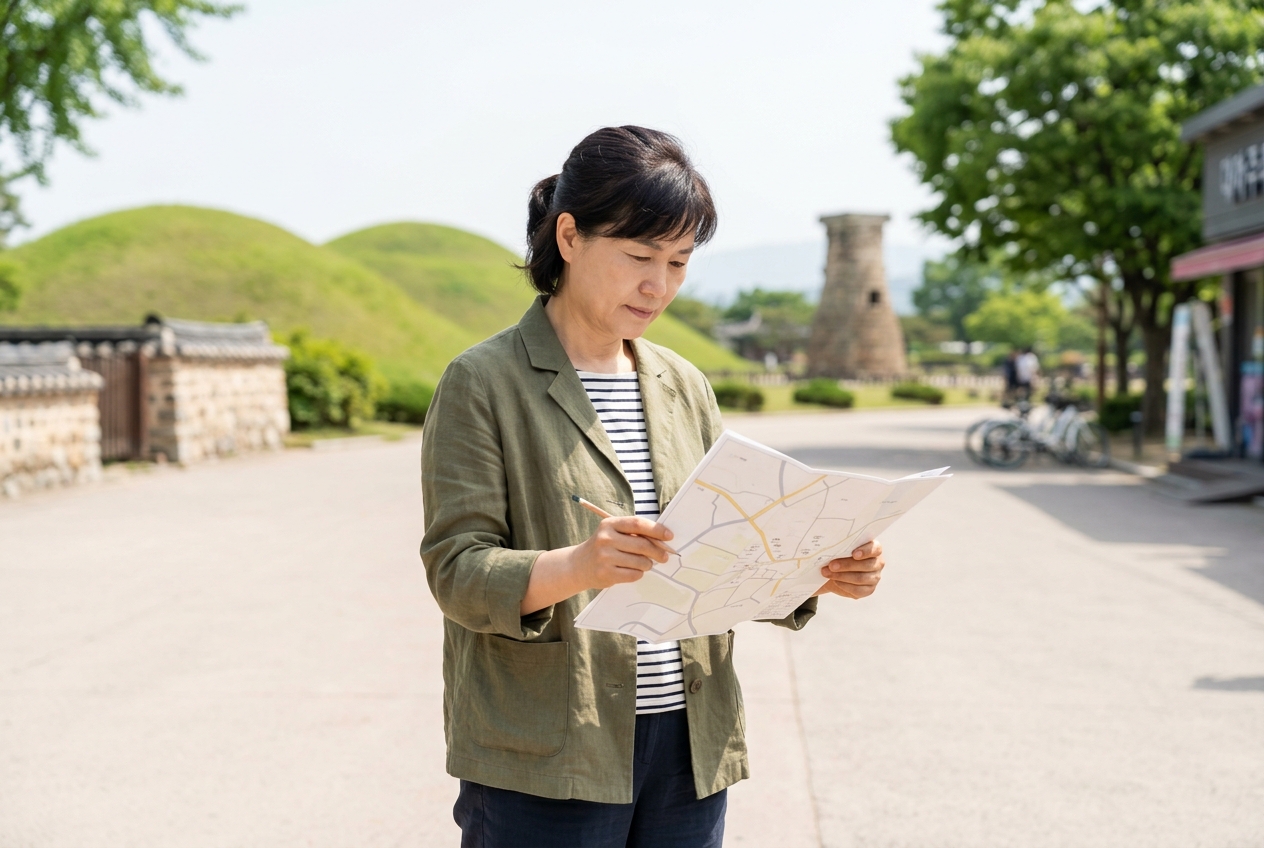
The first crossroads in a Gyeongju trip is the choice between 'historical depth' and 'modern sensibility.' Large-scale historical sites, which hold memories of school field trips, have high educational value and showcase Gyeongju's identity well, but they can sometimes be too vast, leading to physical fatigue. On the other hand, areas like the recently popular Hwangnidan-gil are packed with charming sights and restaurants, making them efficient for travel, but they can be somewhat crowded, making it hard to feel the quiet tranquility unique to Gyeongju.
When setting selection criteria, you should first consider the 'age group of your party.' If you are with young children, Daereungwon or Donggung Garden, which have plenty of flat ground and interactive elements, are advantageous. If you are with a partner or friends, it is better to prioritize alleys or night view spots that are easy for photography. Above all, since the city of Gyeongju itself is like a museum, you need a strategy of exploring only 3 to 4 places in depth per day rather than trying to visit too many locations.
Travel time is also an important checkpoint. While historical sites concentrated in the city center can be reached by walking or cycling, Bulguksa Temple and Seokguram Grotto are some distance away, so a separate transportation plan must be made in advance. If you plan your itinerary solely based on the title of 'must-visit place,' you may end up spending your whole day just traveling, so prioritize geographical proximity. Planning an itinerary centered around the Gyeongju city center is a completely different task than dedicating a day to temples on the outskirts. Renting a bicycle near Daereungwon to visit Cheomseongdae and Woljeonggyo Bridge all at once is a great way to maximize travel efficiency.
As an additional checkpoint, determine the 'ratio of indoor to outdoor activities.' Most historical sites in Gyeongju are exposed outdoors. Therefore, on hot or cold days, you should appropriately include indoor spaces such as Donggung Garden, the Children's Museum within the Gyeongju National Museum, or unique independent bookstores. Conversely, on days with good weather, it is recommended to strengthen your course by walking along the Bomun Lake trail or walking through forest paths. Objectively evaluate your physical stamina and practice the aesthetics of slowness by resting in cafes from time to time rather than excessive walking.
Historical Exploration vs. Emotional Tour, which is right for me?
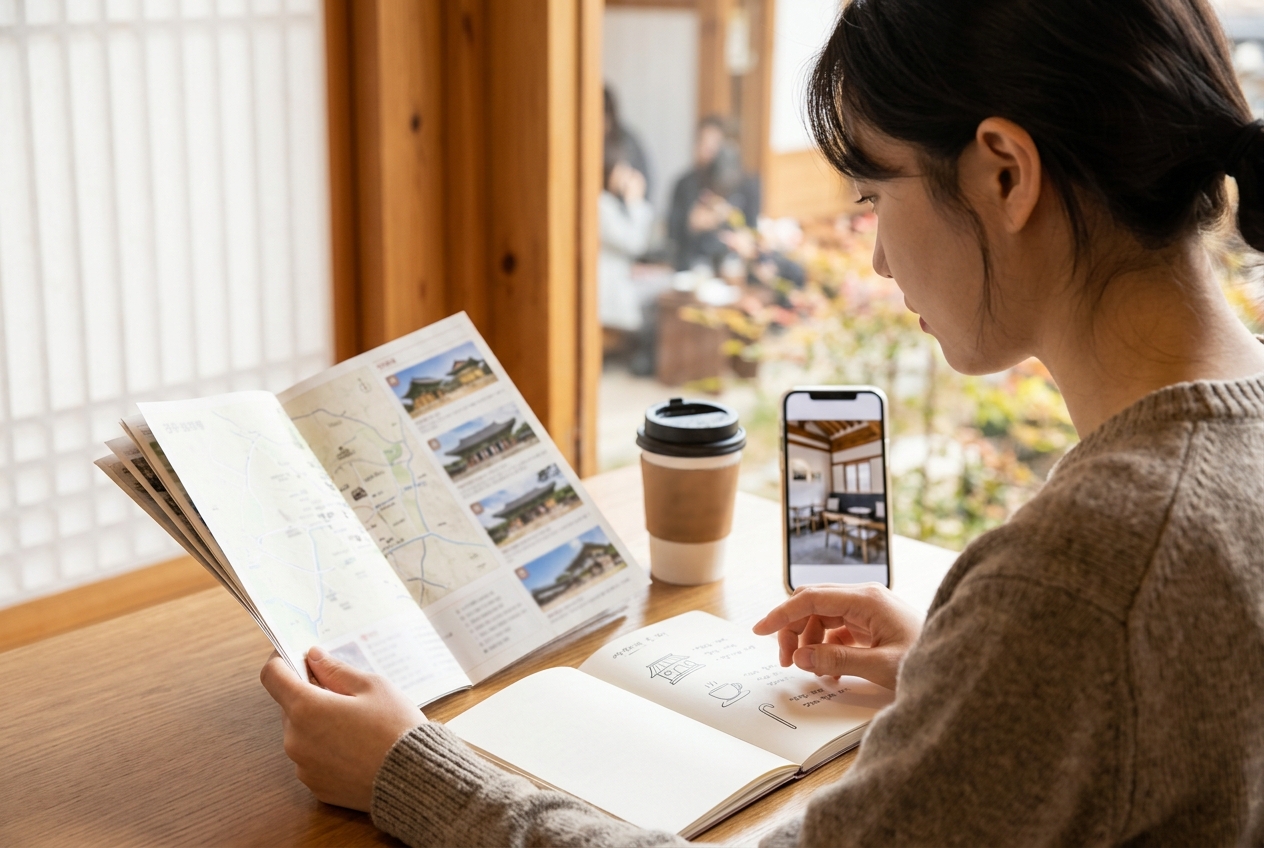
The nature of a Gyeongju trip is largely divided into 'exploratory' and 'relaxing' types. An exploratory trip is a way of organizing an itinerary around the foundations of Gyeongju, such as the Gyeongju National Museum, Cheonmachong, and Cheomseongdae. In this case, learning the background knowledge of each place in advance makes for a much richer trip. On the other hand, the relaxing type prefers walking along the lake trails of the Bomun Complex, visiting Hanok cafes in Hwangnidan-gil, or walking through forest paths hidden throughout Gyeongju.
The biggest difference between the two styles lies in 'density.' Exploratory trips involve longer stays at one location and more static activities, while relaxing trips involve frequent movement and focus on visual pleasure and gastronomy. The selection criteria for a destination depend not on its popularity, but on how much information your condition is ready to receive today. Exploratory travelers enjoy reading the information boards at historical sites carefully and sometimes requesting explanations from cultural tourism commentators to gain deeper information. On the other hand, relaxing travelers place greater value on the aesthetics of the interior, the visuals of the menu, and the scenery seen through the window.
If you are traveling as a family, the key is to mix exploration and relaxation appropriately. For example, you can experience history by taking a walk in Daereungwon in the morning and replenish your energy by enjoying delicious snacks in Hwangnidan-gil in the afternoon. Through this cross-composition, you can prevent boredom and increase travel satisfaction. Children may find more joy in running around on the large lawns than in the historical significance of the sites, so a natural, experience-centered approach is needed rather than excessive forced learning.
Also, if you are traveling alone, you have the advantage of being able to flexibly adjust exploration and relaxation to your own pace. Meditating at a quiet temple or walking through Cheomseongdae at dawn when no one is around are privileges that can only be enjoyed on a solo trip. On the other hand, if you are traveling with a group, you need to coordinate opinions. In this case, it is a good idea to add small fun elements, such as giving short missions for each place to take photos at points of interest, or holding a vote when deciding on a specific restaurant.
Checking regional accessibility based on means of transportation
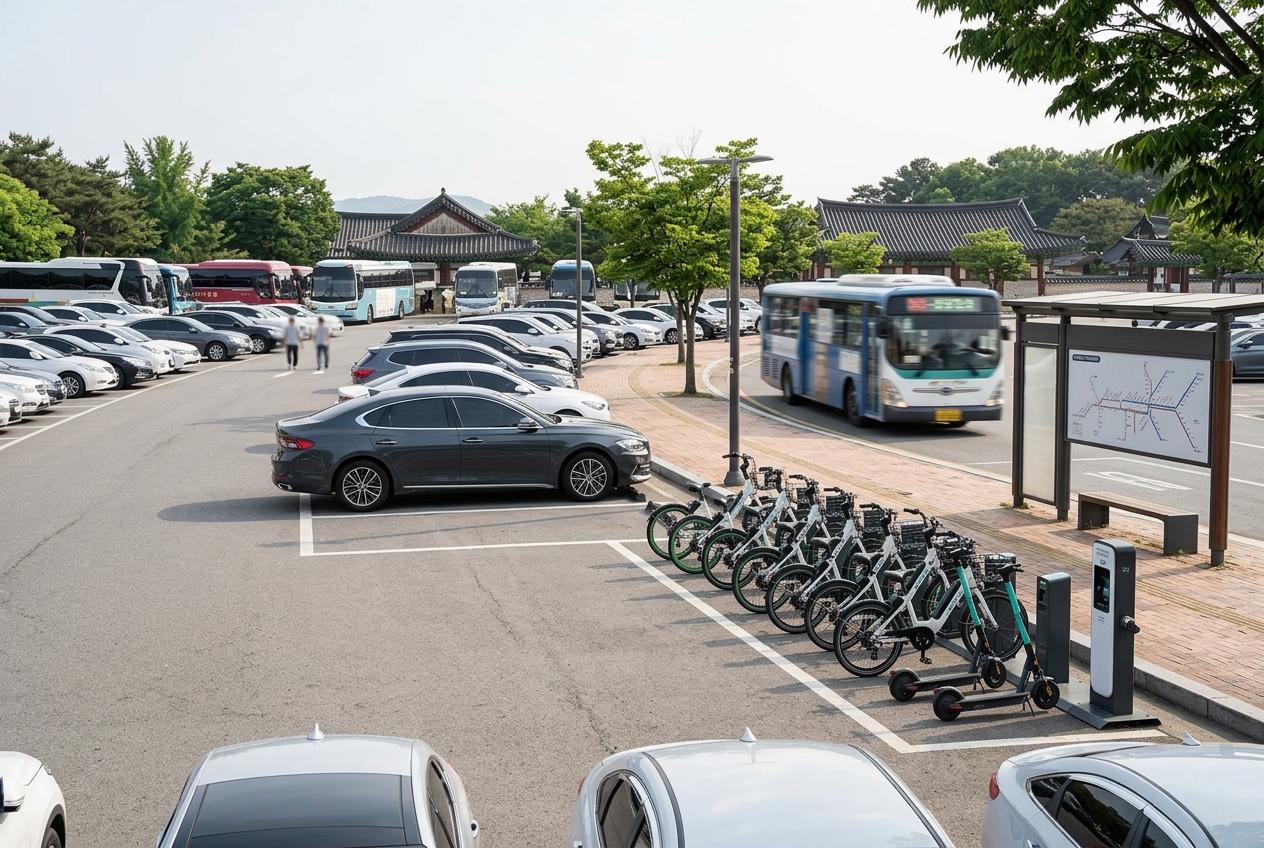
Gyeongju has a well-equipped public transportation system, but there are routes with long intervals between buses. For travelers without a car, we recommend a course that connects the city center—Hwangnidan-gil, Daereungwon, Cheomseongdae, and Donggung Palace and Wolji Pond—for travel on foot. These areas are adjacent to each other, making them very suitable for renting bicycles. On the other hand, if you use your own car, you can expand your range of activities to outlying areas such as Bulguksa Temple, Seokguram Grotto, and Gameunsaji Temple Site. When using your own car, keep in mind that Gyeongju is larger than you might think. Since it takes more than 20 minutes by car from the Bomun Complex to Bulguksa Temple, it is better to divide the region and allocate one day to each.
One thing to be aware of is traffic congestion on weekends or public holidays. In particular, parking space around Hwangnidan-gil is very limited, and there are many sections where vehicle traffic is restricted. In such cases, it is much more efficient for saving time to park in a public parking lot on the outskirts of the city and use public transportation, or to leave your car at your accommodation. Be careful, as it is common to waste more than an hour trying to park if you try to force your way into the city center by car. As an alternative, you can consider using shared bicycle services or electric scooters, but do not forget that you must comply with safety regulations and use designated parking areas.
When using public transportation, you can significantly shorten your time by checking bus routes in advance and identifying circular bus routes that pass through major historical sites. Get into the habit of checking real-time locations using the Gyeongju bus app or portal maps. Also, if you use a taxi, there are taxi stands well-prepared at every major tourist attraction, so actively using them can save your energy. Especially during the daytime in summer, mixing in taxis rather than excessive walking is a choice that improves the quality of your trip.
Course optimization considering cost and time efficiency
The cost of a Gyeongju trip varies more in food and accommodation expenses than in entrance fees. Most historical sites have low or free admission, so there is no major burden, but popular cafes or restaurants have long wait times, which incurs a time cost. Doing an 'open run' or targeting weekday afternoons is the best way to increase time efficiency. If restaurant reservations are possible, complete them in advance, and if not, you need the wisdom to move your meal times slightly earlier or later.
Here is a suggested checklist for selection. First, be sure to check the operating hours of the places you want to visit. Most historical sites close around 18:00, but places with beautiful night views like Donggung Palace and Wolji Pond operate until late at night. Second, consider weather variables. Given the nature of Gyeongju, where there are many outdoor activities, you must have a Plan B, such as indoor museums or art galleries, in case of rain or severe fine dust. Third, check payment methods and discount benefits. Using a Gyeongju Pass or an integrated ticket for specific historical sites can be cheaper than single admission tickets. Fourth, refer to real-time reviews on social media, but do not rely on them too blindly. The crowd situation at a specific time can be different every day.
Also, location is key for accommodation, which takes up a significant portion of travel expenses. Staying inside Hwangnidan-gil allows you to enjoy the atmosphere until late at night, but there may be noise, while accommodation in the Bomun Complex is pleasant and quiet, but requires travel time to the city center. Select the location of your accommodation based on whether your priority is 'convenience' or 'tranquility.' If your budget is limited, aiming for weekday promotions at guesthouses or Hanok stays is also a good economic strategy.
Things to be careful about when traveling to Gyeongju
One of the mistakes many people make is 'putting too many places in one day.' Because each historical site in Gyeongju is large in scale, if you are greedy, you will end up moving around just taking pictures without properly appreciating them. Also, in summer, there are many historical sites without shade, so you must be careful of heatstroke, and in winter, the cold wind unique to Gyeongju is strong, so cold-weather measures are essential. Especially at outdoor historical sites, sunscreen, hats, and sunglasses are essential items.
Another precaution is the protection of cultural heritage. It goes without saying, but eating and drinking are prohibited within historical sites, and you must not leave the designated trails. Recently, there have been cases of people crossing fences or entering lawns to take pictures at some historical sites, which can lead to damage to cultural heritage, so you must strictly follow the prohibition rules. Also, you must show mature civic awareness by taking your trash back with you. This is an essential practice that goes beyond simple rules to pass on the beauty of Gyeongju intact to the next generation.
Finally, the best way to increase the satisfaction of your Gyeongju trip is to have 'leisure.' Even if things don't go according to plan, don't panic; take the time to walk through a pretty alley nearby or sit on a bench and rest. Gyeongju is a city that shows you more when you walk slowly than when you run in a hurry. I hope this Gyeongju trip will be a time for you to fully experience the charm of the place, rather than just leaving a record of your visit. No matter what season you visit, Gyeongju has different charms, so I recommend completing your own optimal course based on this guideline.
Frequently Asked Questions
Where is the essential course for a first-time Gyeongju trip?
If you are visiting for the first time, we recommend a city-center course that combines Daereungwon, Cheomseongdae, Donggung Palace and Wolji Pond (night view), and Hwangnidan-gil. You can experience both the history and the current atmosphere of Gyeongju.
Are there any places good for children?
Yes, we recommend Daereungwon, which has plenty of flat ground and well-maintained walking paths, or Gyeongju Donggung Garden, where various plants and experiential activities are available. It is recommended to plan your itinerary around places where stroller movement is convenient.
How do I park in Hwangnidan-gil?
The inside of Hwangnidan-gil is very congested, so it is good for your mental health to use the nearby Daereungwon public parking lot or the Gyeongju Station (former Gyeongju Station) parking lot. We strongly recommend using public transportation on weekends.
Are entrance fees for Gyeongju historical sites expensive?
Most major historical sites are very reasonable, ranging from 1,000 to 3,000 won for adults. However, you can view them more economically by using integrated tickets, so check the official website before visiting.