Gyeongju has established itself as a center of unique cafe culture, going beyond being just a travel destination. If you are struggling to choose among the countless Gyeongju cafes, it is most important to first clarify your travel style and the purpose of your visit. The optimal location changes completely depending on whether you are looking for a place to take photos or a quiet spot to contemplate and enjoy the taste of coffee. In this article, we will examine in detail the criteria for choosing a cafe without failure and the characteristics of cafes by region in Gyeongju. Cafes have become platforms for experiencing the local culture and aesthetics beyond just being resting spaces. Gyeongju's cafes create a unique atmosphere by combining the historical background of the thousand-year-old capital with modern sensibilities. Therefore, planning with these factors in mind is the key to increasing your travel satisfaction.
1. 5 Criteria for Choosing a Gyeongju Cafe Without Failure
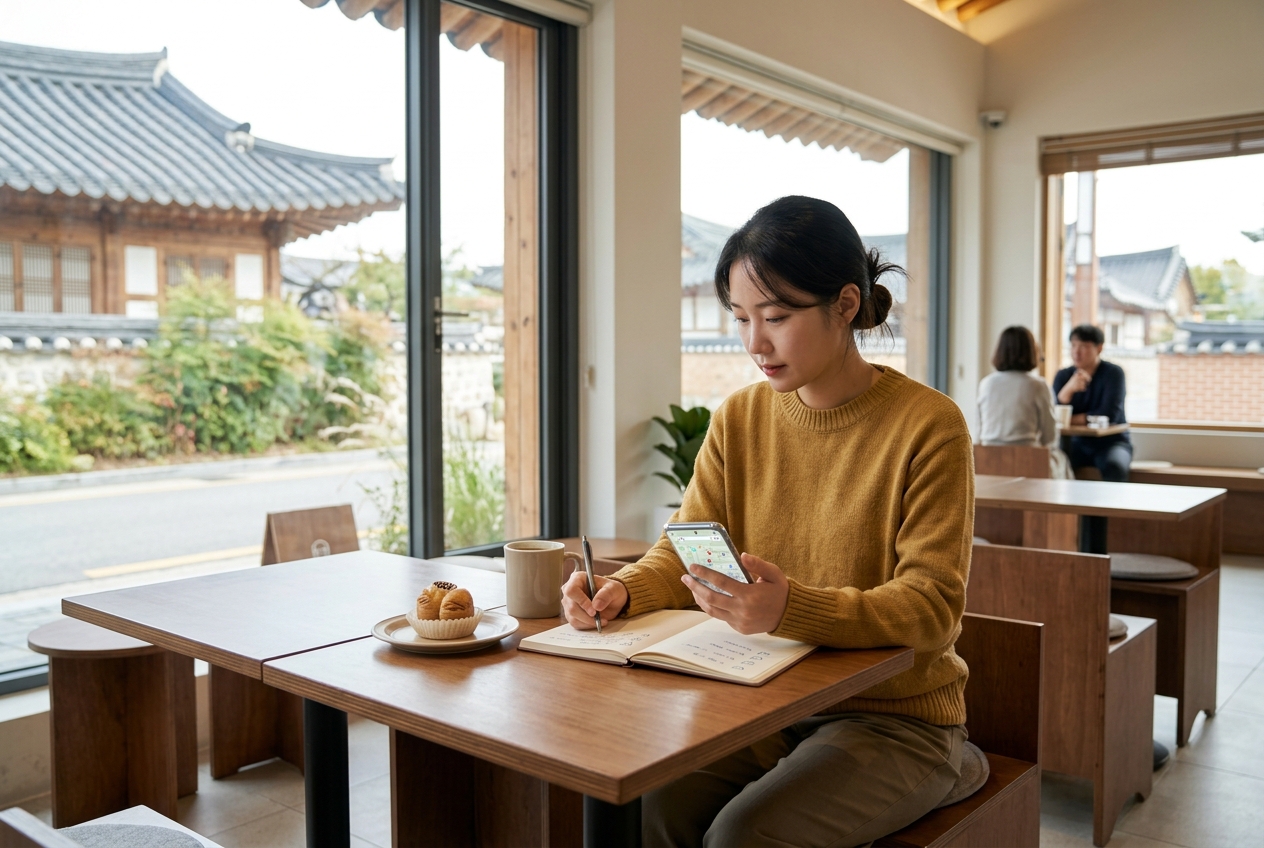
There are hundreds of cafes in Gyeongju. Since you cannot visit them all, you need your own filtering criteria. First is route efficiency. Gyeongju is a larger city than you might think. If you are starting in Hwangnidan-gil and need to move to Bulguksa Temple or the Bomun Complex, prioritizing cafes located along your travel route is a way to save time. Second is the purpose of the space. If the main purpose is conversation, check for places with wide table spacing; if you need to work or study, check in advance if there are enough power outlets. Many people visit based solely on the interior only to find the seating uncomfortable and unable to stay long, so it is good to identify the type of seating that suits your purpose beforehand.
Third is the presence of signature menus. Check if there are special desserts or drinks that you can only taste there. Cafes with desserts that reinterpret Gyeongju specialties like chalbori (glutinous barley) or Hwangnam bread make travel memories even more vivid. Fourth is parking convenience. Parking in Hwangnidan-gil is especially difficult on weekends. You must check the distance to public parking lots, and if using public transportation, check the walking distance from the bus stop. Finally, the variability of operating hours. Independent cafes often have irregular closing days, so it is necessary to have a habit of checking real-time information via Instagram or Naver Maps before visiting. Additional checkpoints to consider when selecting a cafe include 'whether it is a No-Kids Zone', 'type of seating (table/floor)', and 'whether pets are allowed'. Identifying these details in advance can minimize inconvenience on-site. Also, you need the flexibility to decide whether to choose a place with a spacious indoor area or one with a beautiful outdoor garden depending on the weather on the day of your visit.
2. Characteristics of Gyeongju Cafes by Region
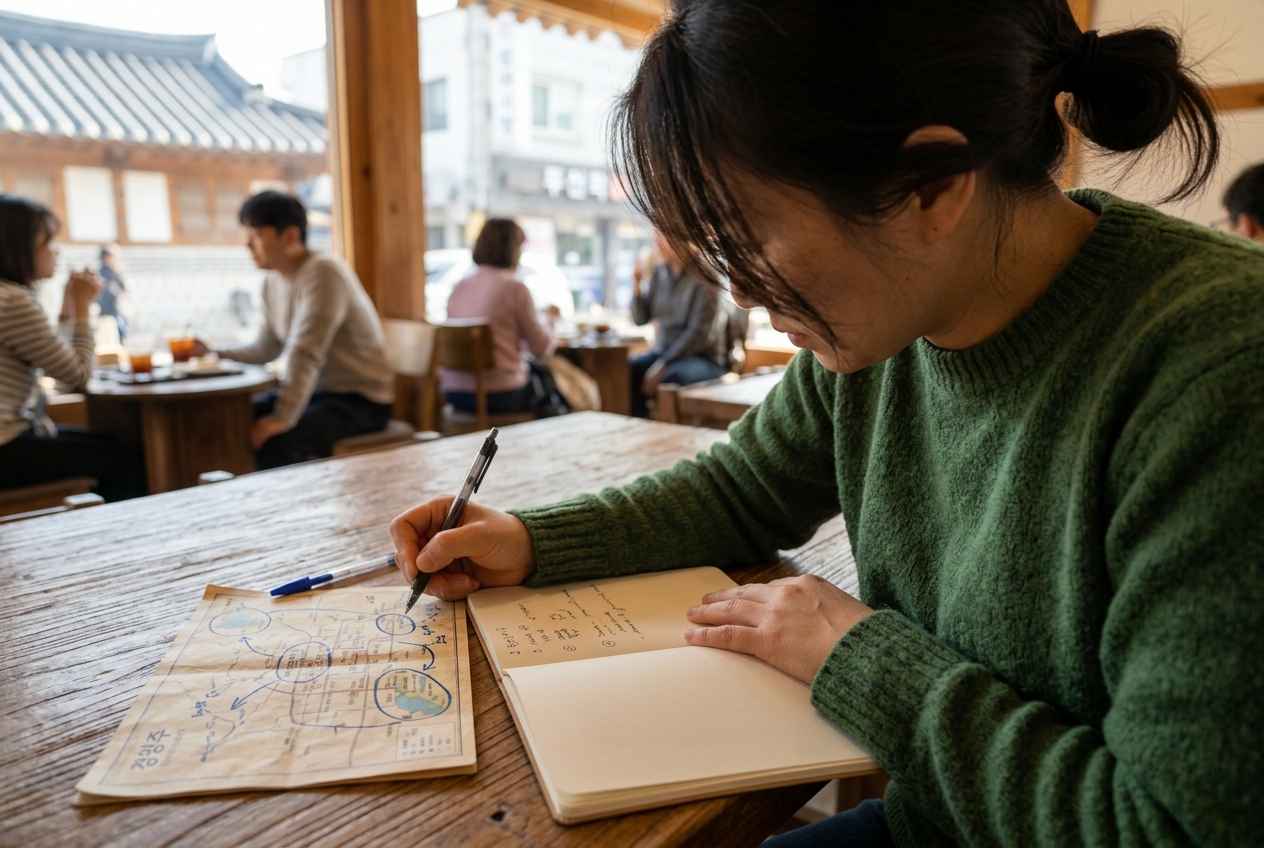
Gyeongju cafes are largely divided into Hwangnidan-gil, the Bomun Complex, and the outskirts. Each region offers a distinctly different experience to visitors.
Hwangnidan-gil: Reinterpretation of Tranquil Hanok
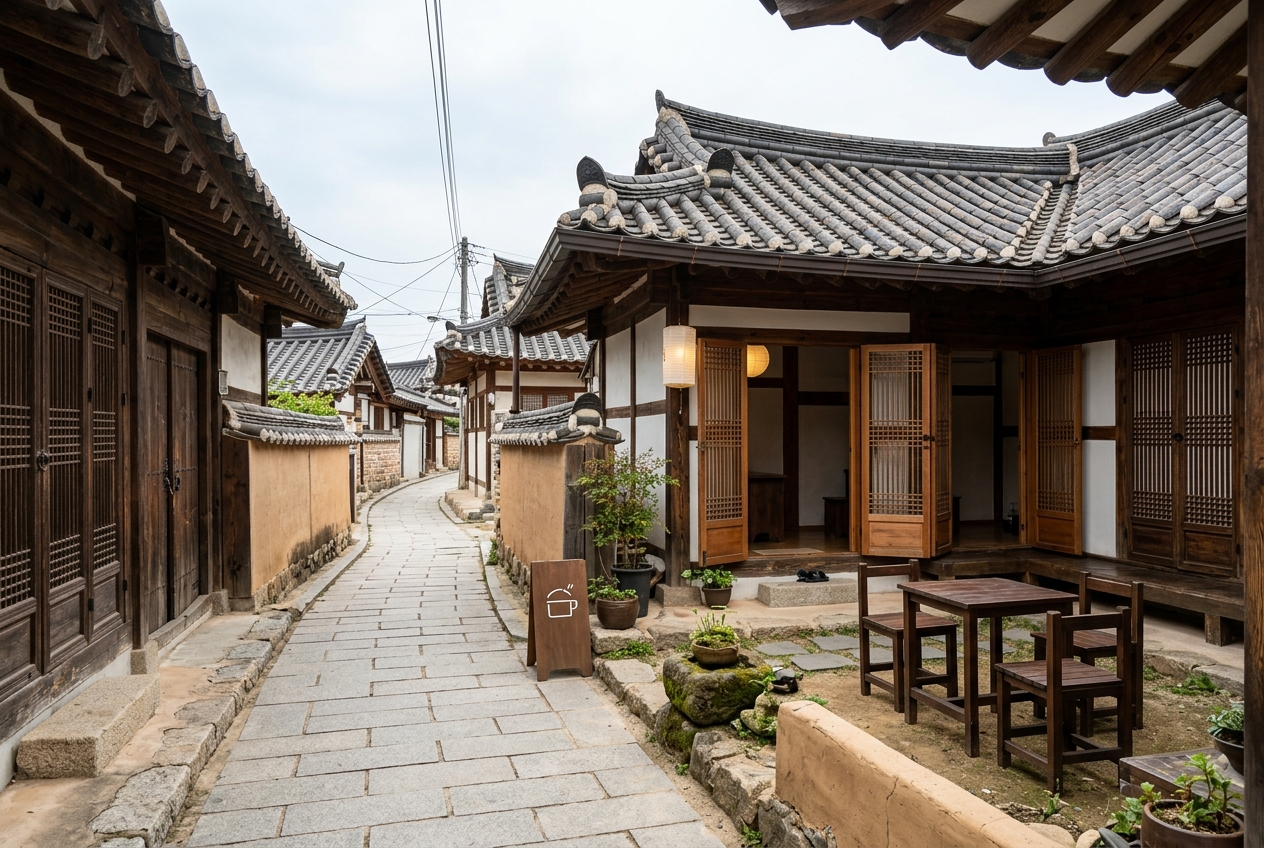
Hwangnidan-gil is the mecca of Gyeongju cafes. The biggest charm of this place is that there are many spaces that have modernized old Hanok houses. Interiors that preserve the rafters and seating located in the courtyards maximize the unique atmosphere of Gyeongju. However, as it is popular, you should consider that there may be long waits and it can be somewhat noisy on weekends. When visiting this area, we recommend going into the alleys slightly off the main road. There are many hidden small cafes in the alleys, so the probability of finding a quieter and more unique space is higher. When touring cafes in Hwangnidan-gil, it is efficient to plan your route in connection with the nearby Daereungwon or Cheomseongdae.
Bomun Complex: Large Cafes and Lake Views
The area around the Bomun Complex is dominated by large cafes where you can enjoy open lake scenery. With ample parking and plenty of seating, it is suitable for family visitors or group travelers. If you want to enjoy relaxation while looking at nature, we recommend the Bomun Complex direction. Many large cafes operate their own bakeries, making them good choices for bread that can be enjoyed as a meal replacement with coffee. In particular, window seats where you can view the scenery of Bomun Lake at sunset are highly competitive, so it is good to time your visit well.
Outskirts: Hidden Relaxation in Nature
If you go just a little bit to the outskirts of Gyeongju, you can find unique cafes with rice fields or forests as a backdrop. While difficult to access by public transportation, if you use your own car, it is the optimal place to take a true rest in a quiet atmosphere. Cafes in the outskirts usually have large grounds and well-maintained gardens. We recommend using the outdoor terrace when the weather is nice. The experience of drinking coffee while listening to the sounds of nature, completely away from the noise of the city, is another joy of traveling to Gyeongju. Since travel time to suburban cafes can be long, it is best to place them during a leisurely time in your daily schedule.
3. Step-by-Step Cafe Tour Execution Strategy
For a successful cafe tour, try implementing the following 3-step strategy.
Step 1: Use Map App Favorites
Before your trip, mark all the places you want to go on a map app. Group nearby places to create a 'route group'. At this time, using tags like 'Planned Visit' or 'Area of Interest' allows for more systematic organization. It is necessary to go through the process of optimizing the route by measuring the actual travel distance on the map, rather than just making a list.
Step 2: Establish a Visit Strategy by Time Slot
You should visit the most popular cafes right after they open or at ambiguous times on weekdays (3-4 PM) to enjoy them leisurely. The time right after lunch, 1 PM to 2 PM, is the busiest time for any cafe. Especially on weekends, avoiding this time slot is a key strategy to reduce waiting times. Since it is relatively quiet 1 hour before closing, consider a late afternoon visit if you want to enjoy the closing atmosphere.
Step 3: Responding to On-Site Situations
If you arrive and find it too crowded, you need the decisiveness to boldly move to a nearby 'Plan B'. Gyeongju has as many excellent hidden cafes as there are famous ones. If you select about 3 candidates in advance, you can continue your trip smoothly without panic. If the wait gets too long, taking a light walk around nearby cultural heritage sites and visiting again is also one way.
4. Precautions and Etiquette When Visiting Cafes
As these are spaces visited by many people, observing basic etiquette is important. When taking commercial photos, you must ask for permission from the store in advance, and be careful not to disturb the conversations of other guests. In particular, regulations regarding No-Kids Zones or pet accessibility vary by store, so it is necessary to check before visiting.
Also, since many places operate on the principle of daily production and sale for desserts, it is common for them to be sold out in the late afternoon. If you must eat a specific menu item, we recommend visiting in the morning. Finally, Gyeongju cafes are often buildings that are cultural heritage sites or old structures themselves. A mature civic consciousness is needed to treat the facilities with care and dispose of trash in designated places. It is also important to have a considerate attitude so as not to disturb the passage of other guests when moving inside the cafe. Additionally, being mindful of noise control so as not to ruin the quiet atmosphere of the cafe is the attitude of a mature visitor.
In conclusion, the key to a Gyeongju cafe tour lies in 'what kind of time you want to spend' rather than 'where you go'. While it is nice to visit because you are drawn to a flashy interior, choosing based on your travel route and personal taste creates a more satisfying experience. We hope you complete your own special Gyeongju trip by referring to the criteria summarized today. Do not forget that a cafe tour is not just about moving between places, but a process of enjoying the atmosphere of the city of Gyeongju at your own pace. If you deeply appreciate the unique philosophy and architectural charm of each cafe, it will be a more memorable trip. Since Gyeongju's cafes offer different scenery each season, you can always discover new joys even if you visit repeatedly. We hope this trip remains a deeper lingering impression along with the scent of Gyeongju.
Frequently Asked Questions
What time do Gyeongju cafes usually close?
It varies by store, but Hwangnidan-gil cafes often close between 8 PM and 9 PM. Outlying areas may close earlier at 6 PM to 7 PM, so checking Naver Maps or Instagram before visiting is essential.
Where is it convenient to park for Hwangnidan-gil cafes on weekends?
Parking inside Hwangnidan-gil is very difficult. It is safest to use the nearby 'Gyeongju Daereungwon Public Parking Lot' or 'Hwangnam Public Parking Lot', and since they are likely to be full on weekends, we recommend moving a little early.
How do I check if a place is a No-Kids Zone or pet-friendly?
Checking the 'Amenities' information on the Naver Map detail page or the highlights (announcements) on the store's official Instagram account is the most accurate method.
Is there a recommended route for a Gyeongju cafe tour?
We recommend a route where you enjoy coffee while soaking in the Hanok vibes in Hwangnidan-gil in the morning, and move to large cafes in the Bomun Complex or the outskirts in the afternoon to appreciate nature and relax leisurely.