Hadong is more than just a place with beautiful scenery; it is a region that reveals entirely different charms depending on the traveler's purpose for visiting. For some, a peaceful walking path along the Seomjin River is the ultimate relaxation, while for others, a challenging trekking course up the rugged terrain of Jirisan Mountain might be the top priority among places to visit in Hadong. Therefore, when preparing for a trip to Hadong, you should consider your travel style, physical stamina, and the characteristics of the season rather than simply listing famous tourist spots. Since Hadong is geographically spread out, a strategic approach to optimizing your route is necessary rather than visiting blindly. Instead of just chasing popularity, the process of selecting places that match your travel preferences and clarifying what you want to experience there is essential for a journey without regrets.
The Charm of the Seomjin River and Relaxation in Nature: Who Is It For?
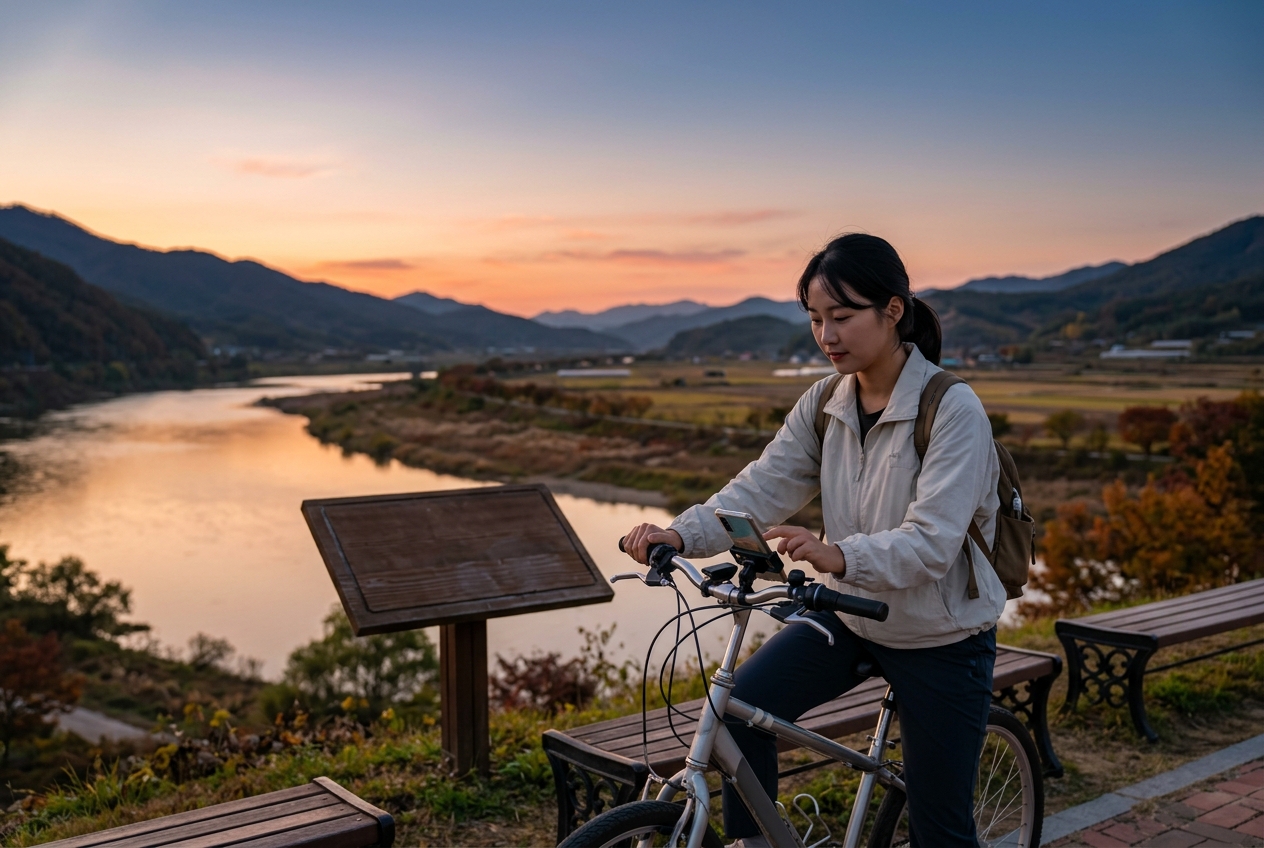
The paths created along the Seomjin River are symbolic of a trip to Hadong. In particular, the fields around Pyeongsa-ri Park or the Choi Champan-daek House are places where you can feel the natural colors that change with each season up close. This area is highly suitable for travelers who want to escape their busy daily lives and enjoy quiet contemplation. A major advantage is that you can connect with nature without having to travel much. The Seomjin River bicycle path or walking trails are perfect for feeling nature with your whole body. This area is especially popular with solo travelers seeking reflection or couples who prefer a static atmosphere.
On the other hand, for those who prefer active travel, this place might feel a bit dull. If it is a family trip with children, the wide space of the Pyeongsa-ri fields is a great environment for running around, but for younger people looking for stimulating activities, nearby cafe streets or experience programs should be combined for higher satisfaction. Therefore, it is important to plan in advance what you will do within the scenery rather than just looking at it. For example, when visiting the Pyeongsa-ri fields, it is a good idea to plan a route that includes nearby literature museums or locations that served as the setting for the novel 'Toji'. Also, since the Pyeongsa-ri area is a vast plain, keep in mind that there are few places to hide from the sun. In summer, you must bring a parasol, sunglasses, and sunscreen, and it is recommended to utilize the early morning or late afternoon hours.
Checkpoint: When moving along the Seomjin River, consider the time around sunset. The evening scenery, blending with the reflection on the river, offers a different kind of emotion than the daytime. The river breeze can be chilly, so bringing a light outer layer regardless of the season is a way to improve the quality of your trip. Also, if you find out about bicycle rental services in the area in advance, you can explore a much wider range than on foot.
Temples and Forest Paths at the Foot of Jirisan Mountain: Conditions to Check Before Visiting
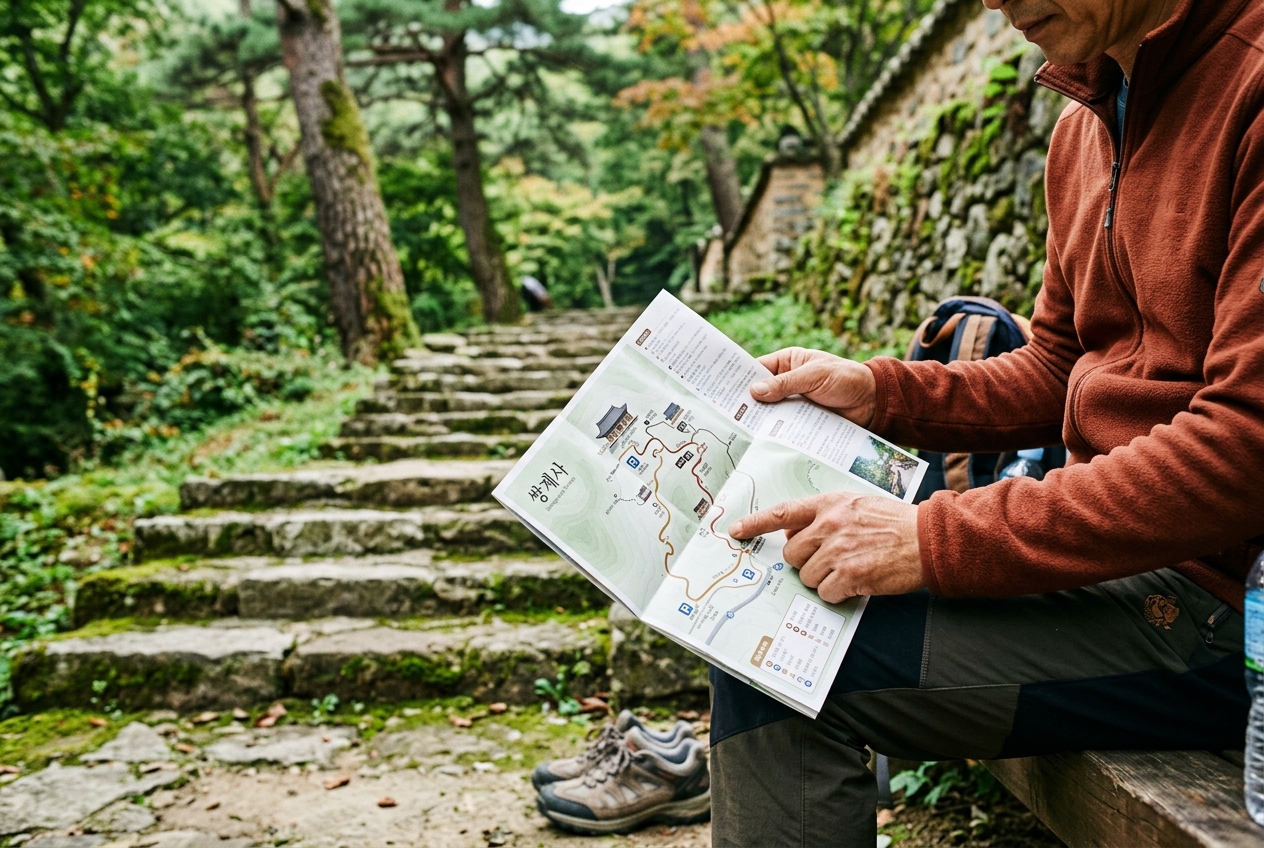
A trip to Hadong would not be complete without visiting the temples at the foot of Jirisan Mountain. Ancient temples like Ssanggyesa or Chilbulsa are not only of high historical value themselves, but the forests on the paths leading up to them are very lush, making them top-tier healing spots. However, there are some realistic conditions to consider when visiting these places. The first is the travel distance and incline. Most temples are located halfway up the mountain, so access by public transport alone can be difficult. Even if you use your own car, there are many cases where you have to walk a considerable distance from the parking lot to the main hall. Therefore, if you have a companion with limited mobility, you must check the conditions of the temple's entrance path in advance. The second is the temperature difference by season. Since the foot of Jirisan Mountain has a lower temperature than the plains, it is essential to prepare a light jacket even in spring or autumn.
Temple travel has a meaning beyond just viewing architecture. The sound of wind chimes and the wind heard while walking through the forest paths provide the mental rest needed by modern people. In particular, the Ten-ri Cherry Blossom Road leading to Ssanggyesa shows the different charms of the forest throughout the four seasons. Around the temple entrance, there are many restaurants using local specialties like wild mountain herbs, which is a good opportunity to taste the ingredients of Jirisan. However, due to the nature of mountain temples, nearby shops often close early in the evening, so it is safer to plan dinner in advance or head to the town center. Also, as it is a religious site, a quiet viewing attitude is essential, and you must be careful not to deviate from designated trails to protect cultural heritage.
Checkpoint: When visiting temples, weekday mornings are recommended rather than weekends. This is because on weekend afternoons, not only is it difficult to secure parking, but traffic congestion on narrow entrance roads can break the flow of your trip. Also, since the choice of restaurants around mountain temples is limited, it is good to decide on a place to eat in advance. In particular, restaurants specializing in wild herb bibimbap near mountain temples often close early when ingredients run out, so it is a good habit to call and check before visiting. Preparing some cash is also a small tip if you use unmanned vending stands or teahouses inside the temple.
Setting Seasonal Themes: The Optimal Strategy for Enjoying Hadong
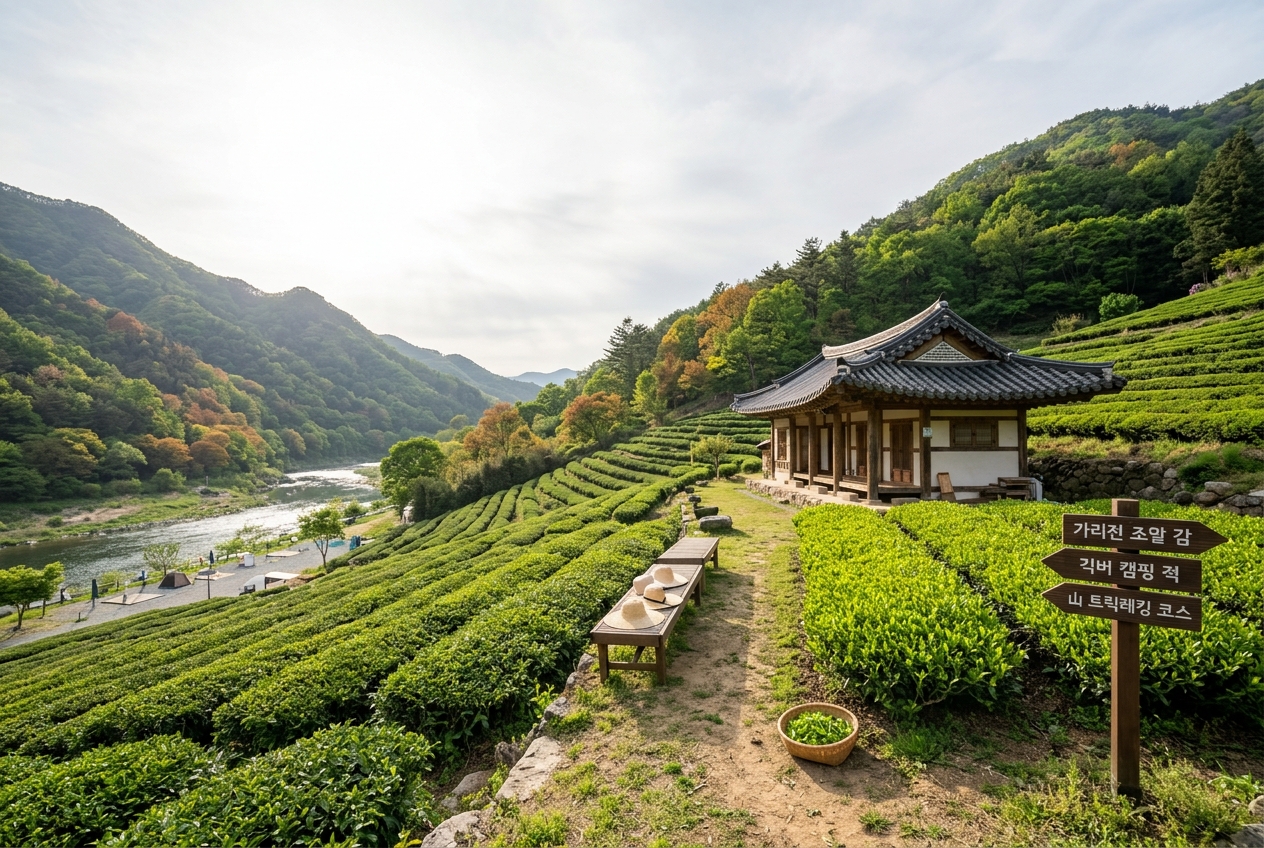
The satisfaction of a trip to Hadong depends on how well you utilize the season. In spring, the Hwagae Market Ten-ri Cherry Blossom Road is overwhelmingly popular, but traffic congestion is equally severe. If you visit during the cherry blossom season, you should consider targeting early morning hours or using public transport. There is a high risk of wasting time on the road if you just take your car. Hadong in spring is valuable not only for flowers but also as the birthplace of tea. Around mid-April, you can see the scenery of picking tea leaves, making for an even more special experience.
In summer, campsites or valleys where you can enjoy the cool breeze of the Seomjin River are popular. At this time, following water safety rules is more important than anything else, and it is recommended to check water quality in advance. Hadong in summer gives visual coolness with its deep greenery, but since humidity can be high, booking comfortable accommodation is key. In autumn, the charm of the tea fields is maximized along with the autumn foliage of Jirisan Mountain. Green tea fields are great in any season, but they create a unique atmosphere under the low, long sunlight of autumn. Autumn is the most suitable time to enjoy trekking on the Pyeongsa-ri path around the Choi Champan-daek House, thanks to the weather being good for walking.
Hadong in winter is relatively less crowded, making it suitable for those who want a quiet trip. However, some mountainous areas may have icy sections, so you should check your tire condition if using your own car. Winter in Hadong is also the best time to fully enjoy the clear air and the quiet atmosphere of the temples. As such, the priority of places to visit in Hadong should change completely depending on the season, and it is important to organize a theme trip that reflects the characteristics of each season. Because the color of Hadong is distinct by season, setting the main theme according to the time of your visit and preparing clothing and supplies accordingly determines the quality of the trip. In winter, planning a hot spring trip can also be a wise alternative to enjoy Hadong.
Selection Criteria: The key to a seasonal trip to Hadong is 'temperature' and 'transportation'. It is good to mix outdoor-oriented routes in spring and autumn, and indoor experiences and natural scenery in summer and winter. Especially in winter, the sun sets early, so you should plan to finish major schedules before 4 PM for safety. When moving between travel destinations, it is a good habit to check real-time local road conditions in addition to the recommended routes on your navigation system.
Precautions and Alternatives: Suggestions for a Trip Without Failure
Hadong has tourist attractions scattered over a large area. The greed to see everything in one day will actually lower the quality of your trip. When planning a 2-day, 1-night itinerary, it is better to focus on the Hwagae-myeon area, Agyang-myeon area, or Hadong-eup area. For example, if you visited a temple in the morning, you should adjust the intensity by enjoying leisure on the flat land near the river in the afternoon. Grouping by area and moving accordingly can reduce unnecessary travel time and allow you to experience places more deeply.
Also, local restaurants or accommodations often get booked up quickly. Especially during peak season, you should secure accommodation at least 2 weeks in advance. If famous places are already fully booked, considering accommodation in nearby areas that are a bit further away is also a method. Hadong's road network is relatively well-maintained, so a 20-30 minute drive is not a big burden. Planning a tight route considering travel time between destinations is the key to making your Hadong trip successful. When choosing accommodation, prioritizing a Hanok stay where you can feel the nature of Hadong or a pension with a view of the Seomjin River is also a factor that increases trip satisfaction.
Finally, if the purpose of your trip is 'experience' rather than just leaving 'proof shots', I recommend checking out tea ceremony experiences or traditional craft experiences held in Hadong in advance. This is because memories of a trip remain much deeper when you experience the local culture directly rather than just looking at the scenery and passing by. Do not forget that Hadong is a place with as many rich stories of the people living there as the scenery it shows. Stopping by small cafes or small workshops recommended by locals is also a hidden charm of a trip to Hadong. Small moments of leisure at a travel destination ultimately determine the memory of the entire trip. Rather than filling your schedule, I hope you meet Hadong with a mindset of leaving one or two places empty and enjoying the unexpected scenery you encounter locally.
Frequently Asked Questions
What is the optimal duration for a trip to Hadong?
If you want to explore the major tourist attractions of Hadong at a leisurely pace, a 2-day, 1-night itinerary is recommended. Given the travel distances, it is suitable for feeling the atmosphere of the region without rushing.
Is it okay to travel around Hadong by public transport?
Major hubs can be reached by bus, but temples or mountainous areas may have long intervals between buses and be difficult to access. It is much more efficient to use your own car or a rental car if possible.
Is there a way to avoid traffic congestion during the spring cherry blossom season?
During the cherry blossom festival, it is recommended to arrive early in the morning or park in a nearby area and use a shuttle bus. Since traffic congestion is severe, a relaxed mindset is essential.
Are there any places worth visiting with children?
Pyeongsa-ri Park or the wide green tea fields are good for children to run around. Also, indoor experience facilities such as the Hadong Wild Tea Museum are popular with family travelers.