Behind its image as an industrial city, Ulsan is a charming travel destination that holds vast natural landscapes and a deep historical spirit. However, when you search for places to visit in Ulsan, you are often overwhelmed by a flood of information, making it difficult to know what to prioritize. Rather than simply following famous spots, your choices should vary significantly depending on what you want to gain from this trip and who you are traveling with.
The key to choosing a destination is 'efficiency of movement' and 'alignment with the purpose of the visit.' Due to Ulsan's geographical characteristics, which stretch long along the east coast, it is difficult to visit the Buk-gu, Dong-gu, and Ulju-gun regions all in one day. Therefore, this guide provides step-by-step criteria for selecting attractions based on the nature of your trip and practical visiting tips.
Step 1: Setting Key Themes by Region Based on Travel Style
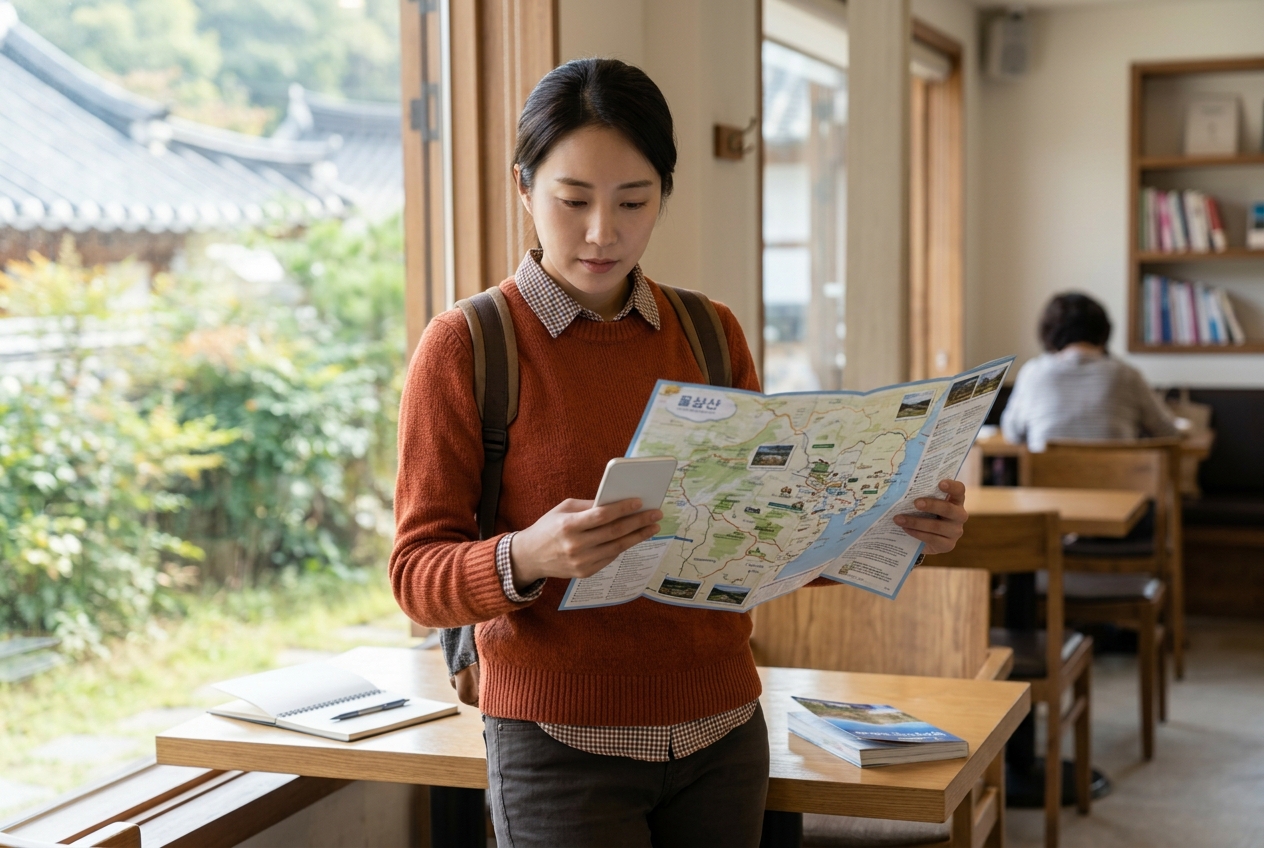
The first step in planning a trip to Ulsan is to identify your personal preferences. Recommended routes change depending on whether you want to relax in quiet nature or enjoy a vibrant trip with urban infrastructure. It is efficient to approach this by categorizing it into three main themes.
First, nature-healing travel. The Ulju-gun area features mountainous terrain represented by the Yeongnam Alps, combined with the Taehwagang National Garden. This is suitable for those who want to escape the noise of the city, enjoy walking, or take photos in nature. The Yeongnam Alps, in particular, offer new charms every season as you can observe different vegetation at different altitudes. When trekking in the mountains, be sure to prepare hiking boots and sufficient hydration, and check the difficulty level of each course in advance to choose a section that suits your physical strength.
Second, healing travel with the sea. Daewangam Park and Seuldo in Dong-gu are popular with couples and family travelers, as they allow you to enjoy Ulsan's unique rugged coastal cliffs and the blue sea at the same time. The coastal walking paths are well-maintained, making them perfect for walking while smelling the sea breeze. When traveling along the coast, it is a good idea to bring a windbreaker as the wind can be strong, and caution is required to stay inside the safety fences near the coastal cliffs.
Third, cultural travel where the city and history meet. The old downtown area of Jung-gu is where Ulsan's past and present coexist, making it optimized for those who prefer cafe tours or exploring cultural and artistic spaces. Historical spaces, including the site of the Ulsan Eupseong Fortress, blend with modern-style cafes to create a unique atmosphere. By clarifying your purpose like this, you can reduce unnecessary travel time and improve the quality of your trip. For city travel, we recommend identifying the locations of local public parking lots in advance and exploring the alleys using public transportation.
Step 2: Key Comparison Criteria for Selecting Attractions by Purpose

Important factors to consider when deciding on a destination are accessibility and length of stay. Among the places to visit in Ulsan, spots with long walking paths like Daewangam Park require at least 2-3 hours of leisure time, and the Taehwagang National Garden offers significantly different experiences depending on the season. We have summarized the criteria for judging this as follows.
1. Seasonality: In spring and autumn, the flower gardens of Taehwagang National Garden and the silver grass of the Yeongnam Alps are overwhelming. However, in summer, the cool sea breeze of the coastal Dong-gu area may be a better choice. In winter, it is good to include museums with well-equipped indoor exhibition halls or art centers within the city. Since flower blooming times and festival schedules vary by season, it is a good habit to check the official information page.
2. Physical Fitness Level: Hiking the Yeongnam Alps requires high physical stamina, but Daewangam Park or the National Garden are mostly flat, allowing anyone of any age to visit without burden. It is important to check the slope of the course in advance, considering the age and usual activity level of your companions. If you are traveling with children or the elderly, it is a wise choice to reconstruct your route around flat deck paths without inclines.
3. Type of Companion: If you have young children, prioritize places with large lawns or indoor exhibition spaces; if you are with a friend who loves photography, prioritize coastal cliffs or sunset spots with excellent scenery. Seuldo or Ganjeolgot become excellent photo spots during sunset. If photography is your main purpose, targeting the golden hour, one hour before and after sunset, is the best way to get the most beautiful results.
When creating your own list based on these criteria, we recommend visiting only 2-3 key places a day rather than trying to fit in too many. Although Ulsan has a well-developed road network, the distance between attractions is wider than you might think, which takes quite a bit of travel time. For example, it can take more than 40 minutes by car to move from a mountainous area to the coast, so you should leave room in your route plan. Also, try to maximize the fun of your trip by including local restaurants where you can taste regional specialties along your route.
Step 3: Optimal Route Design by Situation and Precautions

Once you have chosen your destination, the next step is the route. The most frequent mistake in Ulsan travel is planning to move from the northern end to the southern end in one day. Ulsan is larger than you think. Therefore, a strategy of grouping regions together is necessary.
The most recommended routes are grouping 'Dong-gu and Buk-gu' or 'Jung-gu and Nam-gu'. For example, a course that visits Daewangam Park in the morning and Seuldo in the afternoon is an efficient choice to fully feel the charm of the Dong-gu area. On the other hand, if you are traveling around the Taehwagang National Garden, it is natural to explore the nearby Simnidaesup (Bamboo Forest) and the restaurants in the old downtown of Jung-gu. If you plan your lunch in the old downtown by combining meal times with attraction operating hours, you can save a significant amount of time.
Also, be aware of traffic congestion on weekends or public holidays. In particular, vehicles may concentrate on the roads near the Taehwagang National Garden or the Ganjeolgot coastal road on weekend afternoons. If possible, visiting early in the morning or on weekdays is the secret to a much more pleasant trip. Also, while Ulsan has good public transportation, you should check the interval between buses when traveling to the outskirts of Ulju-gun. Note that the last bus for mountainous areas may be earlier than in the city. If you are using your own car, check the congestion level of parking lots at major tourist attractions in advance, and if it is not feasible, it is better for your mental health to find a nearby public parking lot and walk.
When planning your travel route, it is essential to use Google Maps or a map app to check the estimated travel time. Do not just look at the distance; consider the possibility of road congestion and set your schedule with about 15-20% more time than the actual required time. We also recommend a strategy of preparing a backup course so that you can flexibly switch between indoor and outdoor activities depending on the weather changes of the day.
Step 4: Checklist to Check Before Visiting
Finally, before you leave for your trip, please check the following items. This will help minimize inconveniences that may occur on-site and increase your satisfaction with the trip.
1. Weather Check: Coastal and mountainous areas, in particular, may have lower temperatures or stronger winds than the city center. Basic preparations such as outerwear or umbrellas are necessary. Mountainous areas can have sudden weather changes, so a light outer layer is essential. Check the Korea Meteorological Administration forecast, but respond flexibly to local conditions on the day.
2. Operating Hours: Some cultural facilities or experience centers in parks are often closed on Mondays. Be sure to check the closing days through the official website before visiting. Operating hours may be adjusted during holiday periods, so using the call center in advance is also a method. Facility closing days are the biggest variable that can break the flow of your trip, so thorough prior confirmation is required.
3. Parking Situation: Most of Ulsan's major attractions have well-equipped parking lots, but they often become full during peak seasons. It is advisable to find out parking lot information in advance and know about alternative parking lots. In the case of the Taehwagang National Garden, public parking lots are scattered in several places, so check the one closest to your destination in advance. If you use a parking app, you can often see the number of available parking spaces in real-time, so make active use of it.
4. Convenience Facility Information: If you are with children or the elderly, it is a good idea to inquire in advance about stroller rentals or wheelchair accessibility. Most large parks have barrier-free environments, but certain walking paths may have inclines. Saving a map with information on restroom locations or rest areas in advance will make your trip much easier. Especially during long outdoor activities, the presence of rest areas is very important for maintaining physical strength.
Try to create your own travel plan by checking these steps one by one. Ulsan has a mix of a flashy city appearance and a peaceful natural appearance, so if you plan well, it will be a destination that leaves a deep impression on anyone. The process of worrying about which destination suits you best is already the beginning of the trip. Adding local restaurants frequented by locals or hidden alleyways to your schedule will also be a factor that adds to the fun of the trip. Most importantly, rather than being chased by a set schedule, fully enjoy the relaxed atmosphere that Ulsan has. If you think of unexpected situations that may occur during the trip as part of the trip and respond flexibly, your time in Ulsan will be a memory that lasts for a long time.
Frequently Asked Questions
How many nights and days are appropriate for a trip to Ulsan?
About 2 nights and 3 days are appropriate to leisurely explore Ulsan's major attractions. You can have a fruitful trip by organizing one day for the coast, one day for mountains and the National Garden, and the last day for city exploration.
Is it possible to travel around Ulsan by public transportation?
Yes, it is possible. Major attractions are connected by city buses. However, since the interval between buses can be long in the outskirts of Ulju-gun or some mountainous areas, you should plan with plenty of travel time.
Where are good places to go with children?
We recommend the Taehwagang National Garden and Daewangam Park. They have well-maintained flat walking paths, and there are experience facilities for children and large lawns, making them popular with family travelers.
Are there different places to visit depending on the season?
Yes. The flower festival at the Taehwagang National Garden is famous in spring, and the silver grass colonies of the Yeongnam Alps are spectacular in autumn. In summer, the coastal course in Dong-gu, where you can feel the cool sea breeze, is good.