Apartment transaction prices are more than just numbers; they are key indicators for judging the current market flow and the appropriate value of a property you are considering. Many people experience confusion due to the gap between asking prices and actual transaction prices, but simply distinguishing between the two can give you the upper hand in negotiations. Because transaction prices are the actual amounts for which contracts have been completed, they best reflect the cold, hard assessment of the market. In this article, we will delve into how to accurately identify market prices using transaction data and the points you need to be careful about.
The Significance of Checking Transaction Prices in Real Estate Deals

In the real estate market, the 'asking price' is the desired price set by the seller. On the other hand, the 'transaction price' refers to the amount agreed upon by the buyer and seller and recorded in the registry. Many novice investors often mistake the asking prices listed on portal sites for the market price. However, actual transactions are frequently concluded at lower prices, and sometimes, due to urgent sales, deals are made at prices much lower than the market average. Therefore, the process of carefully checking apartment transaction prices is essential.
When checking transaction prices, you must use the 'Ministry of Land, Infrastructure and Transport Transaction Price Disclosure System' as your primary standard. This system is the most objective because data is uploaded based on actual reported contracts. It is recommended not to look at just the most recent transaction, but to examine the transaction trends over at least one to three years. You can read the market's energy by checking if transaction volume surged during a specific period or if transactions stalled at a certain price point. Also, while you can easily view transaction price information via mobile apps these days, remember that the final authority always lies with the Ministry of Land, Infrastructure and Transport system. Transaction price data is like the market's past report card. Use it as an indicator to judge how much the current asking price has fallen compared to past peaks or whether an upward trend is being maintained.
Establishing Your Own Criteria for Interpreting Data
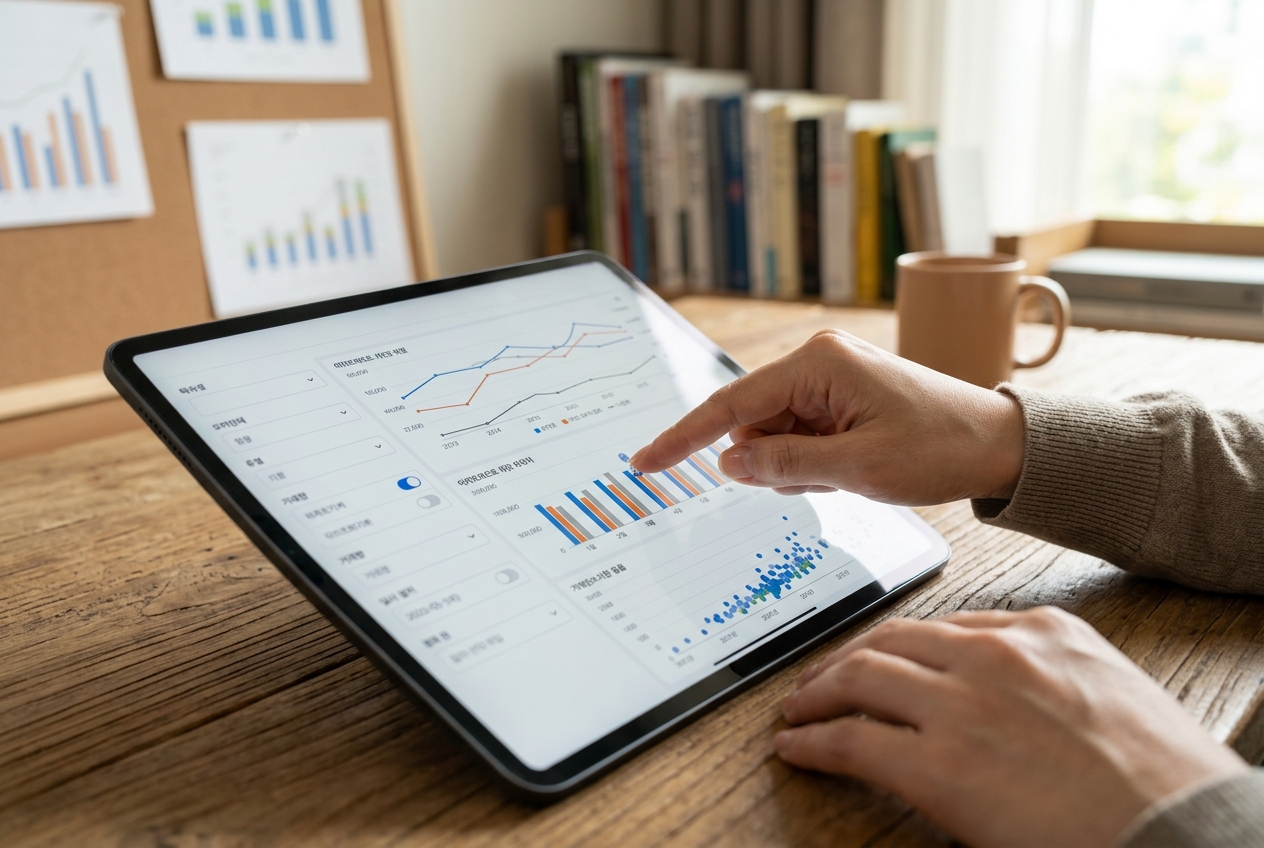
The most common mistake when looking at transaction price data is the 'average trap.' Even within the same complex, prices vary wildly depending on the floor, orientation, remodeling status, and view. If you simply average the transaction price of a 1st-floor unit in a 30-story apartment with a premium unit on the 20th floor, you will end up with a major error. Therefore, when looking at transaction prices, you need to develop the habit of filtering and comparing transaction cases with similar floors and orientations to the property you intend to buy.
Also, you must carefully watch changes in 'transaction volume.' In periods of rising prices, transaction volume often accompanies the trend, while in a downturn, volume drops sharply, and the number of reported transactions may fall to one or two per month. Transaction prices during periods of low volume may not represent the entire market. In such cases, a strategy that considers external factors like the flow of nearby regions or new supply volume is necessary. Check out more detailed search tips in Everything About Checking Apartment Transaction Prices. When the market is in a downturn, transaction volume plummets, so you must recognize that the most recent transaction price itself could be a signal of a decline.
Analyzing Differences by Floor and Building
Even within the same complex, the price difference between a premium building and a less preferred one can range from tens of millions to hundreds of millions of won. Check the transaction history by building and floor on the disclosure system to see if the property you are interested in is priced appropriately. Be especially careful with low-floor units or side units, as they are traded less frequently and may have price distortions. For example, the price difference between a low-floor unit that doesn't get much sunlight and a top-floor penthouse can be stark even within the same complex. When looking at the transaction price table, it is important not just to look at the 'exclusive area' but to match specific floors and orientations to understand the distribution of data. You should also check if location differences by building, such as accessibility to community facilities or distance to the subway station, are reflected in the price.
The Importance of Checking Canceled Transactions
Recently, there have been cases where contracts are canceled after being reported. This could be an attempt to manipulate market prices or simply a change of heart. Check if the system indicates 'transaction cancellation,' and if there is a case where only one transaction was made at an excessively high price and then canceled, it is difficult to view it as a normal market price. It is important to exclude such data and grasp the actual flow of transactions. Cancellation information can be found in the 'cancellation status' column of the transaction price list for that complex. Complexes suspected of price manipulation often show unnatural spikes and drops in transaction patterns, so you must check the continuity of the data. In particular, complexes where cancellations frequently occur immediately after a record-high price is reported may require verification of the transaction parties.
How to Use Transaction Prices in the Field

If there is a large gap between the asking price suggested by a real estate agency and the actual transaction price when you visit the site, you must ask why. By simply asking, "The recent transaction price is 500 million won, so why is this listed at 550 million won?", the agent will recognize that you are someone who has studied the market. The key is to find the 'invisible value' not shown in transaction prices, such as the state of remodeling, loan succession, and move-in availability.
Scenario: Person A found an apartment they liked but was hesitant because it was listed for 30 million won more than the transaction price. However, upon visiting, they found that the unit had recently undergone a full interior renovation, was in excellent condition, and the move-in date could be perfectly adjusted to the buyer's needs. Person A attempted to negotiate based on the transaction price and managed to get a price adjustment covering part of the renovation costs. This is a good example of responding flexibly by considering the specific characteristics of the site while using the objective indicator of transaction prices as a base. Always keep in mind that while transaction prices are an absolute standard, price adjustments are possible depending on the seller's urgent circumstances or the home's maintenance condition.
Precautions and Checkpoints When Using Data
Data in the transaction price system may not be reflected in real-time due to the reporting deadline (within 30 days of the contract). Therefore, very recent rapid market changes may take 1-2 months to appear in transaction prices. During periods of rapid rise or fall, it is important to experience the market atmosphere directly rather than relying solely on transaction prices. Also, since gift-type transactions or deals between related parties may be reported at lower prices than the market average, always keep in mind that transactions at unusually low prices may be 'special transactions.'
Checkpoint 1: Check the transaction volume trend over the last 6 months. You can gauge the strength of buying interest by seeing if volume is gradually increasing or stagnating. An increase in volume is often a leading indicator of price increases.
Checkpoint 2: Check the difference between the highest and lowest prices within the same floor plan. If the difference is too large, you must check with the agent to see if there are other factors (renovation status, presence of tenants, etc.) besides floor or orientation. This becomes an important argument in the price negotiation process.
Checkpoint 3: Compare prices with similar nearby complexes. You need to determine if the complex you are looking at is rising alone or if it is a general trend in the region to judge whether there is a bubble. Comparing with the overall market flow of the region makes it easier to gauge whether the complex is undervalued.
Additionally, it is good to check the jeonse-to-purchase price ratio when looking up transaction prices. A narrowing gap between purchase and jeonse prices indicates an influx of actual residents, which can act as a factor to increase future price defense. Also, for complexes with reconstruction or redevelopment issues, you must calculate the total purchase cost, including additional contributions, by comparing the member sale price with the transaction price. Remember that while transaction prices only show the purchase price, the actual cost of buying your home includes taxes and incidental expenses.
Ultimately, apartment transaction prices are records of the past. It is up to you to infer future value based on them. Developing the eye to distinguish whether a transaction price is supported by volume or is an exceptional case due to specific conditions is the shortcut to buying your own home. Based on the data interpretation criteria provided today, I hope you make wise decisions to protect your valuable assets. Remember that transaction prices are not just numbers, but signals the market is sending us. Data does not lie, but interpretations can vary depending on the perspective of the person reading it. I support you in making the best choice by prioritizing objective data while combining it with the living voices of the field. Consistency is the lifeblood of real estate study. Cultivate the habit of checking transaction price data regularly every week to draw your own market price map.
Frequently Asked Questions
What is the difference between transaction price and asking price?
The asking price is the desired price the seller wants to receive, while the transaction price is the amount actually contracted and reported. The transaction price is a more objective indicator of market value.
When must a transaction price be reported?
It must be reported within 30 days from the date of the real estate contract. Therefore, there may be a time lag of up to a month between the actual transaction and the system data.
What are transactions at unusually low prices?
Transactions between family members or related parties may be reported lower than the market price. Be careful not to mistake these for normal market prices.
Why do canceled transactions occur?
They occur due to contract cancellations or simple changes of heart. Since there may be cases of false reporting to artificially inflate prices, you should carefully check the transaction history.