Sudden news of a passing is always distressing and disorienting. Especially in professional life, you may find yourself attending funerals for various connections, including close acquaintances, superiors, or business partners. The first concern that arises is often, 'How should I behave to avoid being impolite?' Funeral etiquette is not merely about following formalities; it is the most fundamental language for expressing respect for the deceased and deep comfort for the bereaved family. This guide covers everything from attire and visitation procedures to condolence money etiquette in detail to help you avoid mistakes and convey your sincerity.
Funeral Attire: What is Appropriate?

The basics of funeral attire are 'neatness' and 'achromatic colors.' While there was once a strong perception that a black suit was mandatory, modern standards have become slightly more flexible. Nevertheless, there is still a minimum standard to uphold. A black suit is the safest choice, but if you do not own one, dark gray or navy blue attire is acceptable. The important thing is to avoid bright primary colors or excessive patterns.
For men, a black suit with a white dress shirt and a black tie is the standard. If you do not have a black tie, a dark-colored one is acceptable, but avoid materials with high gloss. For women, a black suit or dress is preferred; if wearing a skirt, choose a length that falls below the knee. Wearing black stockings rather than nude-colored ones is considered polite, and flashy accessories or heavy makeup should be avoided. Bare feet are strictly forbidden; black socks must be worn. This is a basic visual commitment to showing respect for the deceased.
As a tip for real-world situations, do not panic if you are unprepared due to sudden news. Many funeral homes now provide rental suits for visitors. If you must visit urgently, wearing neat, dark-colored everyday clothes is acceptable, provided you remove any flashy accessories. In winter, it is proper etiquette to leave your coat in the storage lockers in the hallway outside the funeral parlor or take it off before entering. When choosing your attire, always remember the mindset: 'I am a visitor here to mourn the deceased and comfort the family, not the protagonist.'
Mindset and Procedures at the Funeral Home Entrance

Upon arriving at the funeral home, remove your coat or hat and enter in a tidy state. Sign the guestbook at the information desk. If you have prepared condolence money, you may offer it then or on your way out after paying your respects. However, if there are many visitors, it is often better to offer it at the entrance to avoid congestion, so observe the atmosphere. When signing the guestbook, clearly state your affiliation so the bereaved family can easily identify you later.
When entering the funeral parlor, offer a light bow to the chief mourner. Avoid speaking loudly or initiating long conversations. Since the mourner is already in deep grief, a short word of comfort is sufficient. Brief greetings such as "I am so sorry for your loss" or "May the deceased rest in peace" are the most respectful. Afterward, stand before the portrait of the deceased to offer incense or flowers. Since procedures may vary based on religious background, following the lead of the chief mourner is the safest and most respectful approach. It is also good to make eye contact with the family and offer a light bow as you approach the altar, and move as quietly and calmly as possible within the parlor.
Incense, Flowers, and Bowing
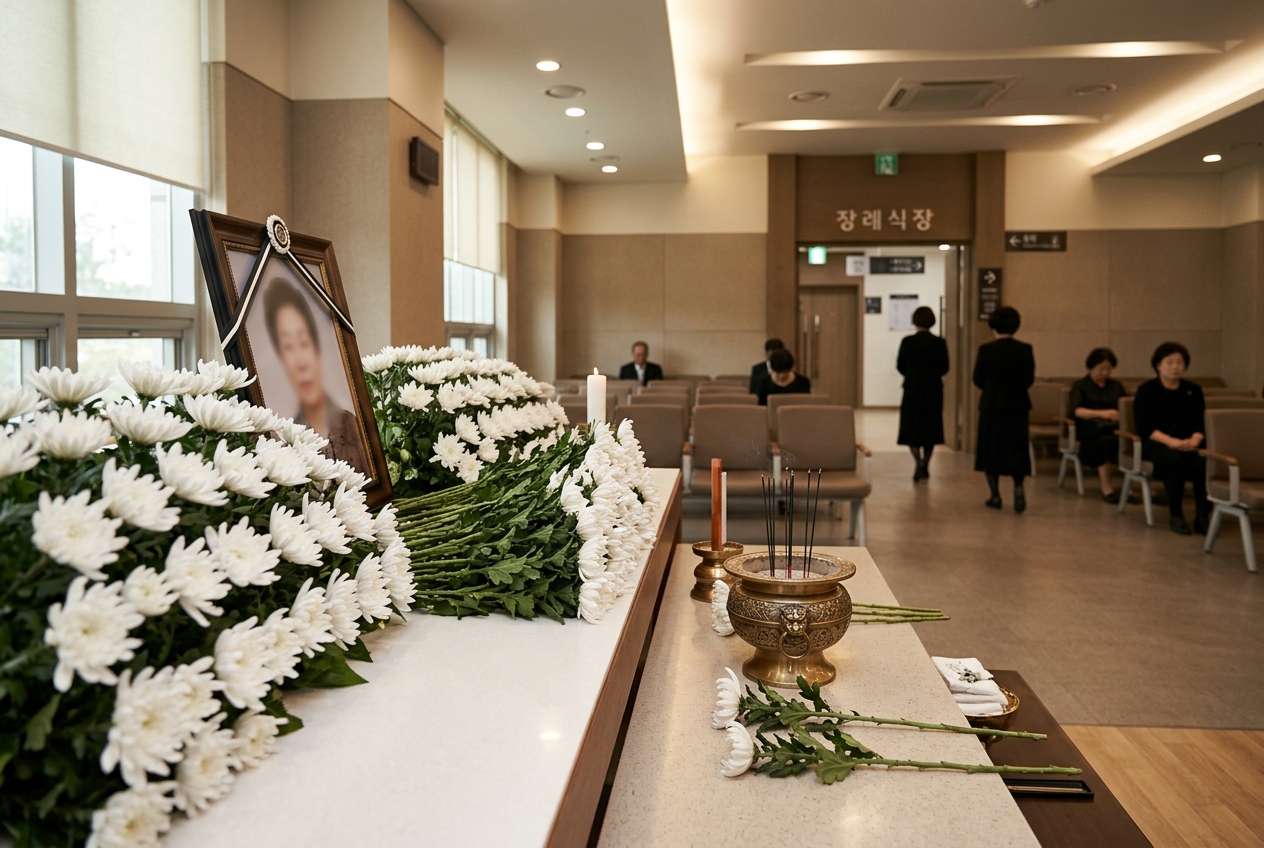
Offering incense involves lighting the incense sticks. Take one or two sticks, light them with a candle, and instead of blowing them out with your mouth, gently wave them with your left hand to extinguish the flame. Place them in the incense burner carefully so they do not clump together. Offering flowers involves placing a chrysanthemum on the altar with the stem facing the portrait. You may choose between incense or flowers based on religious or regional customs.
Typically, you perform two full bows followed by a half-bow. When bowing, men should place their right hand over their left, and women should place their left hand over their right. After bowing, exchange a bow with the chief mourner and offer a brief word of comfort. It is a major breach of etiquette to ask the family about the cause of death or details of the passing. For those grieving, your silent presence is comfort enough. If you are unable to bow, a respectful nod or a moment of silent prayer is an acceptable substitute. When bowing, it is important to move slowly and respectfully, reflecting your reverence for the deceased.
Precautions When Offering Condolence Money
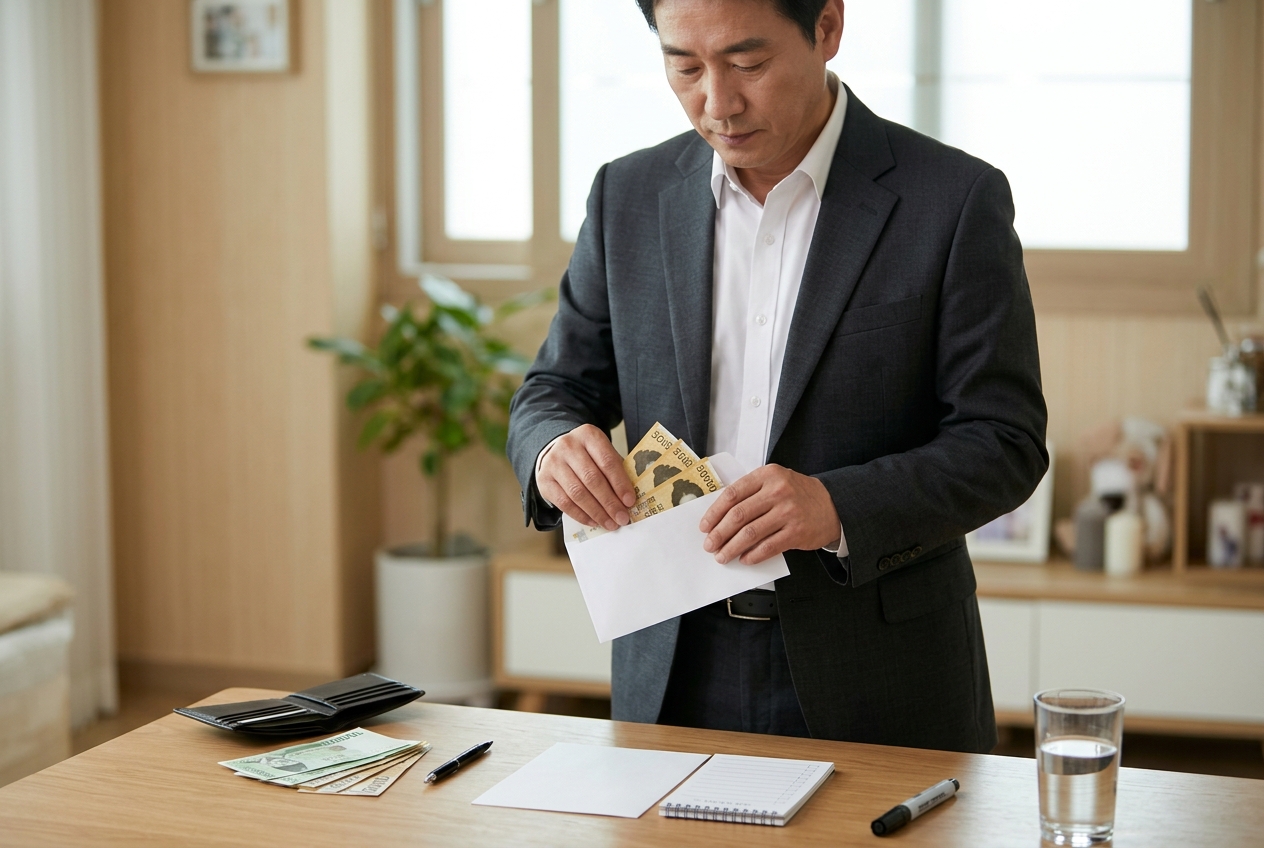
Condolence money is an expression of your heart to share in the grief of the deceased and the bereaved family. It is common to write 'Bu-ui (賻儀)' on the front of the envelope and your name and affiliation on the bottom left of the back. There is a tendency to give amounts in odd numbers, a custom based on Yin-Yang and Five Elements theory. However, sincerity is considered more important than this formality. Prepare an amount that fits your financial situation, such as 30,000, 50,000, or 100,000 won, with 50,000 or 100,000 won being the most common choices recently.
When offering the money, be careful not to fold the envelope. It is not impolite to place it in the collection box rather than handing it directly. If you must hand it over, it is respectful to support the envelope with your left hand while handing it over with your right. Since there is no fixed amount, consider your relationship with the deceased and decide on an amount that is neither excessive nor insufficient. Use a plain envelope if possible; if the envelope has 'Condolences' printed on it, using a white envelope is standard. It is better to use clean bills rather than brand-new ones, though some believe overly crisp new bills can seem too prepared, so use your best judgment.
Etiquette During the Meal After Paying Respects
After paying your respects, you may be seated for a meal prepared by the family. The point to note here is etiquette regarding alcohol. Avoid cheering, laughing loudly, or being boisterous during the meal. Remember that the funeral home is a space to mourn the deceased. Even if you drink, do so quietly and be careful not to ruin the atmosphere. As there is a growing trend to refrain from drinking, avoid pressuring others to drink. When pouring alcohol, do so quietly without making noise, and clinking glasses is strictly forbidden.
It is best not to make the meal last too long. The chief mourner and family are exhausted from receiving visitors. Therefore, once you have finished paying your respects, finishing your meal quickly and vacating your seat is a sign of consideration for the family. Staying until very late can be impolite, so it is best to leave at an appropriate time. Also, remember to switch your phone to silent mode inside the funeral home, and if you must take a call, have the sense to step outside. If you have the opportunity to speak with the family, it is best to share a brief word of comfort or a memory of the deceased.
Closing with a Core Checklist
Funeral etiquette may seem complex, but it ultimately boils down to the essence of 'sincere comfort.' Use the following checklist to confirm one last time:
- Is your attire neat and not flashy? (A black suit is the standard)
- When lighting incense, did you wave it out instead of blowing with your mouth?
- Did you avoid unnecessary questions, such as the cause of death, to the chief mourner?
- Did you avoid excessive drinking or noise during the meal?
- Did you accurately record your affiliation and name in the guestbook?
- Did you handle the condolence envelope respectfully?
- Did you avoid staying too long at the meal after paying your respects?
The above points are the minimum courtesies required as a visitor. The most important thing is not to lose the essence by being overly tied to formalities. The mindset of sharing the grief of losing the deceased and standing by the family, even for a moment, is the highest form of etiquette. A sincere attitude of mourning is the greatest comfort to the family, more so than perfect execution of etiquette. We hope this guide helps you navigate the funeral home without panic and allows you to calmly see the deceased off on their final journey. Small acts of consideration add up to great strength for the bereaved family.
Frequently Asked Questions
How much condolence money is appropriate?
There is no fixed answer for the amount of condolence money. You can decide based on your relationship with the deceased and your financial situation. While 50,000 or 100,000 won are common, expressing your heart is what matters, so choose an amount that fits your circumstances.
Where do I write my name on the condolence envelope?
Write your name and affiliation vertically on the bottom left of the back of the envelope. Some people add 'Baesang' (respectfully) or 'Geunjo' (condolences) after their name, but writing your name alone is sufficient.
What should I do if I cannot bow?
If you cannot bow due to religious or personal reasons, a respectful nod or a moment of silent prayer is perfectly acceptable. It is considered a sign of respect to ask the chief mourner for understanding in advance or simply to bow your head naturally.
Must I wear a black suit when visiting?
While a black suit is the most respectful attire, it is not mandatory. Neat clothing in achromatic colors like dark gray or navy blue is acceptable. Just avoid bright colors, excessive exposure, or patterned clothing.