Are you feeling overwhelmed by the daily fluctuations in pure gold prices and unsure where or how to check them? While gold has long been considered the safest tangible asset, actual returns can vary significantly depending on the investment purpose and timing. Understanding how the price is calculated at the moment of your transaction is the first step, going beyond simply watching whether gold prices rise or fall. Although gold is classified as a representative safe-haven asset that can hedge against inflation and currency devaluation, it is also an investment that requires a cautious approach.
How is the Pure Gold Price Determined?

The price of pure gold is influenced by both the flow of the international gold market and domestic exchange rates. Since the price per ounce (oz) traded in the international market is denominated in dollars, the domestic gold price tends to rise when the KRW/USD exchange rate increases. In other words, even if international gold prices remain stagnant, the price of pure gold felt domestically becomes more expensive if the exchange rate rises. This exchange rate effect acts as both an opportunity and a risk for gold investors.
For general consumers, the price of pure gold usually differs between 'buying' and 'selling.' These are called the 'bid price' and 'ask price,' and the difference is known as the 'spread.' This gap includes manufacturing costs (labor), distribution fees, and value-added tax (VAT). Therefore, there is inevitably a difference between the international market price seen in the news and the price offered by actual gold shops or banks. Investors should recognize this spread as a cost and find channels that allow them to enter the market with the lowest possible expenses.
In practice, investors should be aware that this spread varies slightly from one exchange to another. While large distributors may reduce the spread through economies of scale, smaller shops may set a wider spread to reflect operating costs. This is why it is essential to compare prices from multiple locations before trading. Additionally, when checking prices, you must consider the difference in 'purity.' Since 18K or 14K gold has a different gold content than 24K pure gold, careful attention is needed to verify the standard unit when comparing prices.
3-Step Strategy for Checking Real-Time Prices
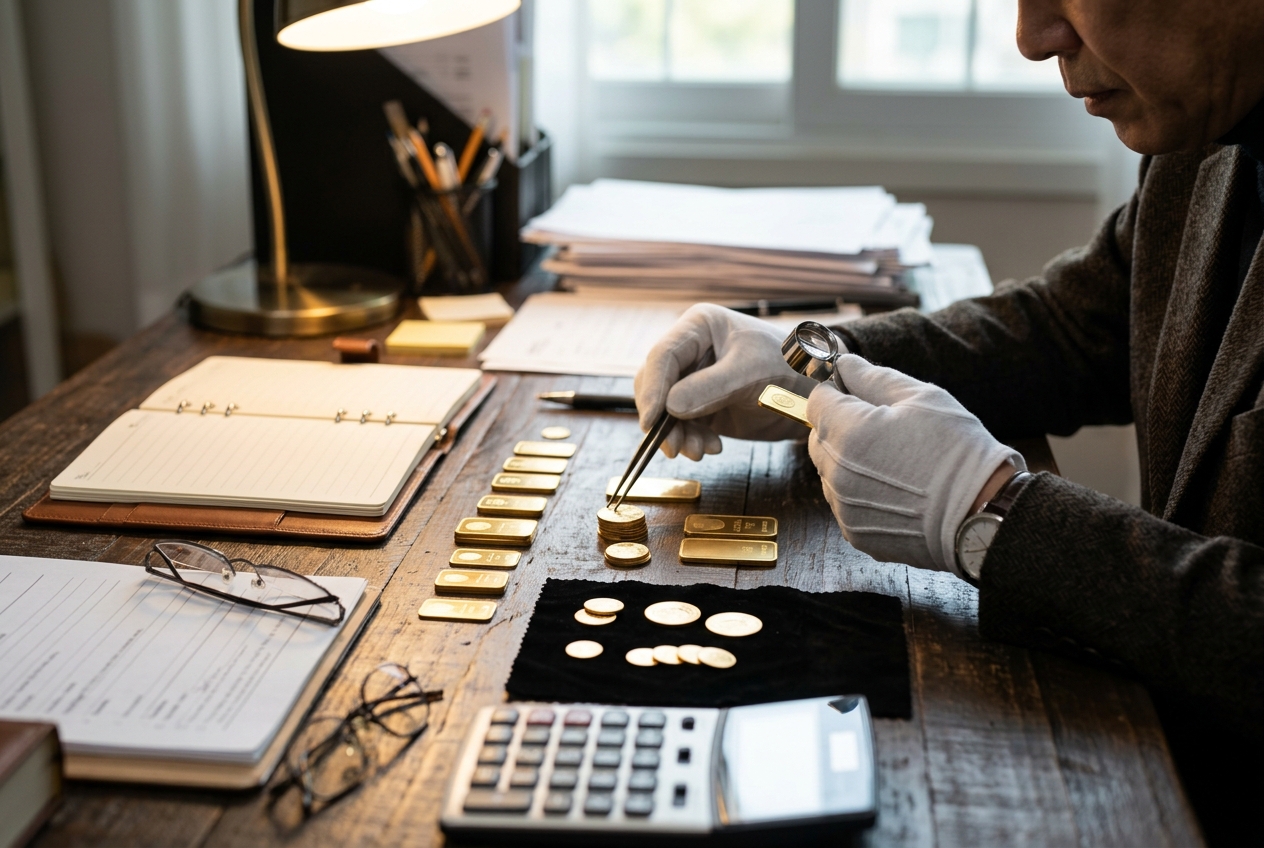
To grasp the most accurate price, you should first check official indicators. Rather than visiting a shop blindly, it is recommended to follow these 3 steps to understand the market price:
- Check Credible Institutions: First, check platforms that provide official data, such as the Korea Gold Exchange or the KRX Gold Market. Prices here serve as the market benchmark. Since prices fluctuate frequently, it is best to check again right before trading.
- Check Exchange Rate Volatility: If the exchange rate at the time of investment is significantly higher than usual, waiting for the gold price to adjust can be a strategy. Since the exchange rate amplifies the volatility of gold prices, you should make decisions by looking at both exchange rate and gold price graphs together.
- Calculate Labor and VAT: When purchasing physical gold (such as gold bars), you must calculate the additional manufacturing costs beyond the market price. For gold bars with a purity of 99.9% or higher, the manufacturing process is important, and you should remember that these costs are not recovered when you resell the gold later.
A part that many people overlook is 'tax.' When purchasing gold bars, a 10% value-added tax is applied. Since this is a cost that must be offset by price appreciation when selling the gold later, it is more advantageous to approach it from a long-term perspective rather than a short-term one. Also, keep receipts thoroughly at the time of purchase and consider tax aspects in advance, such as whether there are any capital gains tax or dividend income tax issues upon sale. Especially when trading large units of gold, consulting with a tax expert to establish a tax-saving strategy is helpful for asset protection.
Gold Investment: Differences Between Physical Purchase and Financial Products

Methods for utilizing pure gold prices are largely divided into keeping physical gold, using a gold bank account through a bank, or trading on the KRX Gold Market through a securities firm. Physical gold provides great psychological stability from direct ownership, but there are risks of storage and theft. On the other hand, the KRX Gold Market can be traded easily like stocks and offers VAT exemption benefits, making it suitable for small-scale investors.
When choosing to purchase physical gold, you must consider the security of the storage location and whether insurance is available. Storing gold in a home safe carries a risk of theft, and using a bank safety deposit box may incur additional costs. Conversely, financial products do not involve seeing the physical asset but are backed by the creditworthiness of the financial institution. The criteria for choosing financial products are 'whether physical withdrawal is possible' and 'transaction fee rates.' If you want long-term holding, choose a product with low fees; if you want short-term gains, choose a product with low costs even if trading is frequent. You must clearly define your criteria for whether you prefer physical assets or financial trading based on your investment style.
Additionally, a precaution when trading physical gold is the 'quality of the gold.' Purchasing gold bars with a certification mark from an accredited institution is the way to reduce depreciation upon future sale. Gold from unverified private companies may incur additional purity testing costs and carries a high risk of not receiving its fair value in the market. Therefore, choosing a verified company, even if the price is slightly higher, is more profitable in the long run.
Checkpoints to Note When Trading

If you are planning to trade pure gold, be sure to check the following:
- Check for Market Overheating: It is better to pause trading on days when prices fluctuate rapidly. Buying out of fear or selling in an overheated market always increases the possibility of loss. Patience to wait until the market stabilizes determines your return rate.
- Verify Credibility of the Seller: Check if the gold bar has an official certification mark and if transaction records are managed transparently. Uncertified gold may incur additional appraisal costs when resold later.
- Plan Your Exit Strategy: Rather than just having a plan to 'sell when it goes up,' a strategy of setting a target return rate and selling in portions is much more stable. Selling in batches depending on market conditions can diversify your risk.
- Storage and Management: Physical gold can lose value if it gets scratched or contaminated with foreign substances. Keeping the case and warranty received at the time of purchase is advantageous for resale.
- Adjust Portfolio Weight: It is recommended to maintain gold at about 5-10% of your total assets. You should not forget that gold is a store of value, not an income-generating asset.
Gold investment should not be used merely to bet on price fluctuations, but as a tool to increase the stability of your overall portfolio. The value of gold shines even brighter when an economic downturn is expected or geopolitical risks are heightened. However, always keep in mind that during economic booms, gold's returns may be lower compared to stocks or real estate. Therefore, clearly setting your investment style and target period is the key to successful gold investment.
Conclusion: Pure Gold Price is Just an Investment Indicator
The pure gold price is an indicator that changes every day. What is important is not the price itself, but the standard for how you will manage your assets using that price. Investments are made at your own risk, and while you should refer to expert advice, making the final decision based on your own judgment is the safest path. While gold is an excellent hedge against inflation, you should avoid concentrating all your assets into gold.
If you are planning to invest in gold, I hope you cultivate the insight to read market trends rather than being swayed by today's price. The process of consistently monitoring and finding your own buying and selling timing is the beginning of successful wealth management. I recommend a strategy of allocating about 5-10% of your asset portfolio to gold to lower the volatility of your total assets. Market volatility is unavoidable, but a prepared investor can use that volatility as a tool to protect their assets. From now on, try to develop the habit of recording daily prices and analyzing for yourself the impact of exchange rates and international affairs on gold prices. These efforts will accumulate to complete your own robust asset management strategy.
Frequently Asked Questions
Where can I check today's pure gold price most accurately?
Checking the real-time prices provided on the Korea Gold Exchange website or the KRX Gold Market homepage is the most credible method.
Why are the prices different when buying and selling gold?
This is because distribution fees, manufacturing costs, and taxes are included. The difference between the bid and ask price is called the spread, and you should consider this when planning your investment.
Do I have to pay VAT when buying gold bars?
Yes, a 10% value-added tax is incurred when purchasing physical gold bars. However, if you trade through the KRX Gold Market, there may be tax benefits such as VAT exemption, so it is worth checking.
Is gold investment good for short-term profits?
Because the fees and tax costs incurred during gold trading are significant, it is generally used as a long-term inflation hedge rather than for short-term trading.
Which is better, a bank gold account or purchasing physical gold?
In terms of storage convenience and fees, gold accounts or KRX trading are advantageous, while purchasing gold bars is suitable if you want to own the physical asset directly.