Gold has long been considered one of the most reliable ways to preserve asset value. However, when you actually try to buy or sell gold, terms like 'gold price per don' can feel complicated. This is because gold prices are not fixed numbers; they change in real-time based on international gold prices, exchange rates, and domestic distribution conditions. Today, we will look in detail at what those considering gold trading should check in various situations and what common pitfalls to avoid.
1. Understanding the Basics and Fluctuations of Gold Prices per 'Don'

One 'don' of gold is a Korean standard unit equivalent to 3.75g. The price commonly seen when searching for gold rates is usually based on 'pure gold (24K)'. The important point here is to distinguish whether the price you see is the 'buying' price or the 'selling' price. Because gold includes value-added tax, craftsmanship fees, and dealer margins during the distribution process, there is a price difference, or 'spread', between buying and selling.
International gold prices tend to be inversely proportional to the value of the dollar. When the dollar is strong, gold prices fall; conversely, when the dollar is weak or economic uncertainty increases, demand for gold as a safe-haven asset rises, driving up prices. Therefore, it is a good habit not only to look at the price in today's news but also to consider current exchange rates and global economic indicators together.
Furthermore, a gap can occur between 'international prices' and 'domestic prices'. Domestic prices are calculated by converting international prices into Korean Won, then adding import customs costs and distribution margins. For this reason, it is normal that the international gold price seen in the news does not perfectly match the price at a local jewelry store. As an investor, beyond simply comparing prices, you should accurately grasp the weight and purity of the gold and judge whether the current premium is at an appropriate level. When trading, it is recommended to check the gap between the officially posted international price and the domestic distribution price to avoid dealers demanding excessively high margins.
2. Key Checklist for Gold Purchase Situations
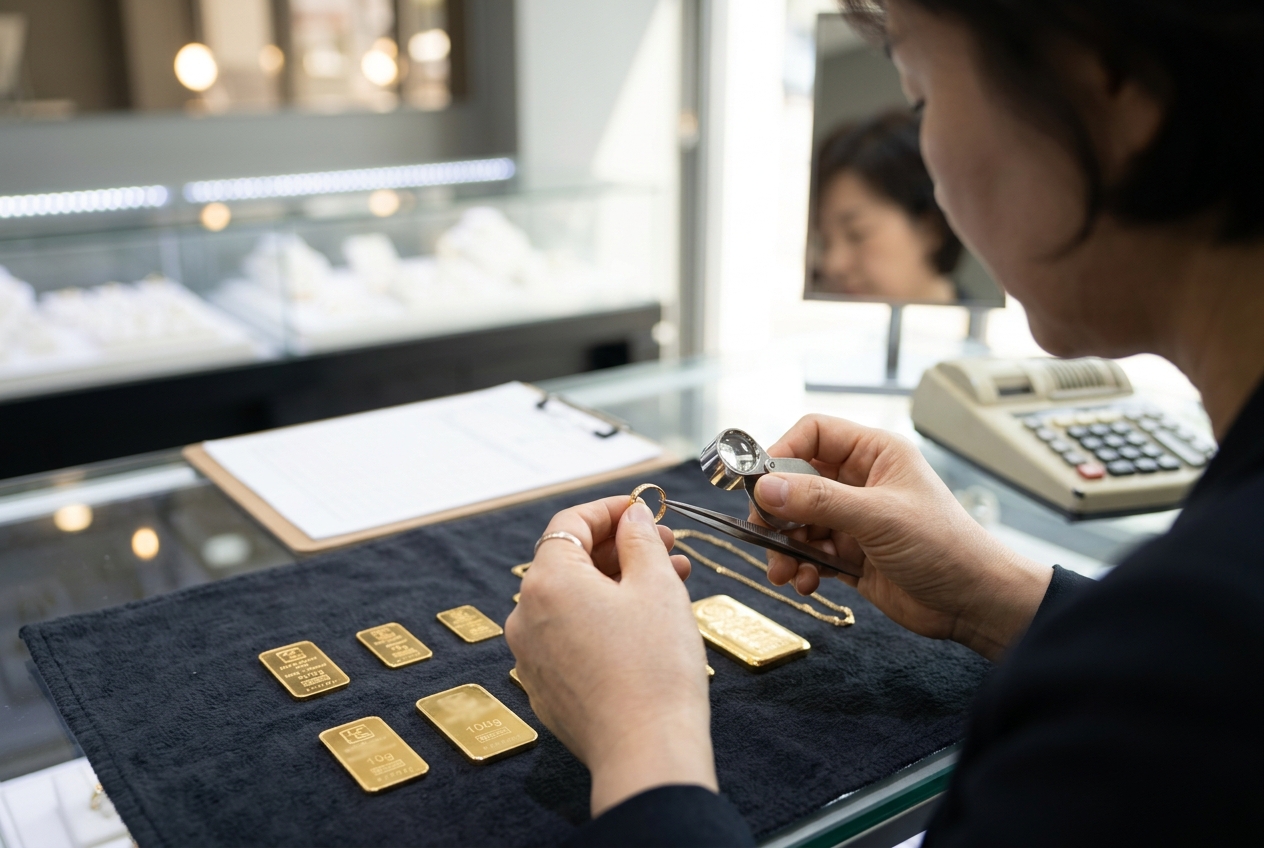
The method of purchasing gold should vary depending on your purpose. You must decide whether to own physical gold or use financial products for investment purposes. Here are the checkpoints to consider when buying gold:
- Purity Verification: Clearly confirm whether it is 24K pure gold or an alloy mixed with other metals.
- Certification Mark: Check for authorized quality assurance marks such as the Taegeuk mark or hallmarks.
- Craftsmanship Fee Calculation: When purchasing gold in the form of jewelry, a 'craftsmanship fee' for the design is added on top of the gold price. This is a cost that cannot be recovered when selling later.
- VAT Inclusion: Be aware that a 10% VAT is often applied to physical gold transactions, so be sure to include it when calculating total costs.
Based on the checklist above, it is advantageous for physical investors to choose gold bars with almost no craftsmanship fees, while for decorative purposes, it is wise to set a budget considering the value of the design. Especially when buying gold bars, prices may vary depending on the manufacturer's brand value or finishing quality, so it is important to choose products from reputable brands that can maintain their value upon resale.
The selection criteria for purchasing physical gold are 'convenience of storage' and 'liquidity'. Gold bars that are too heavy have limitations if you want to sell only a portion later. Therefore, holding gold in various weights, from 1 don (3.75g) to 10 don or 1kg, can be a practical way to manage assets according to the situation. This also has the effect of adjusting the average unit price through split purchases, increasing the efficiency of asset management from a long-term perspective.
3. Purchase Fees and Depreciation to Watch Out for When Selling Gold
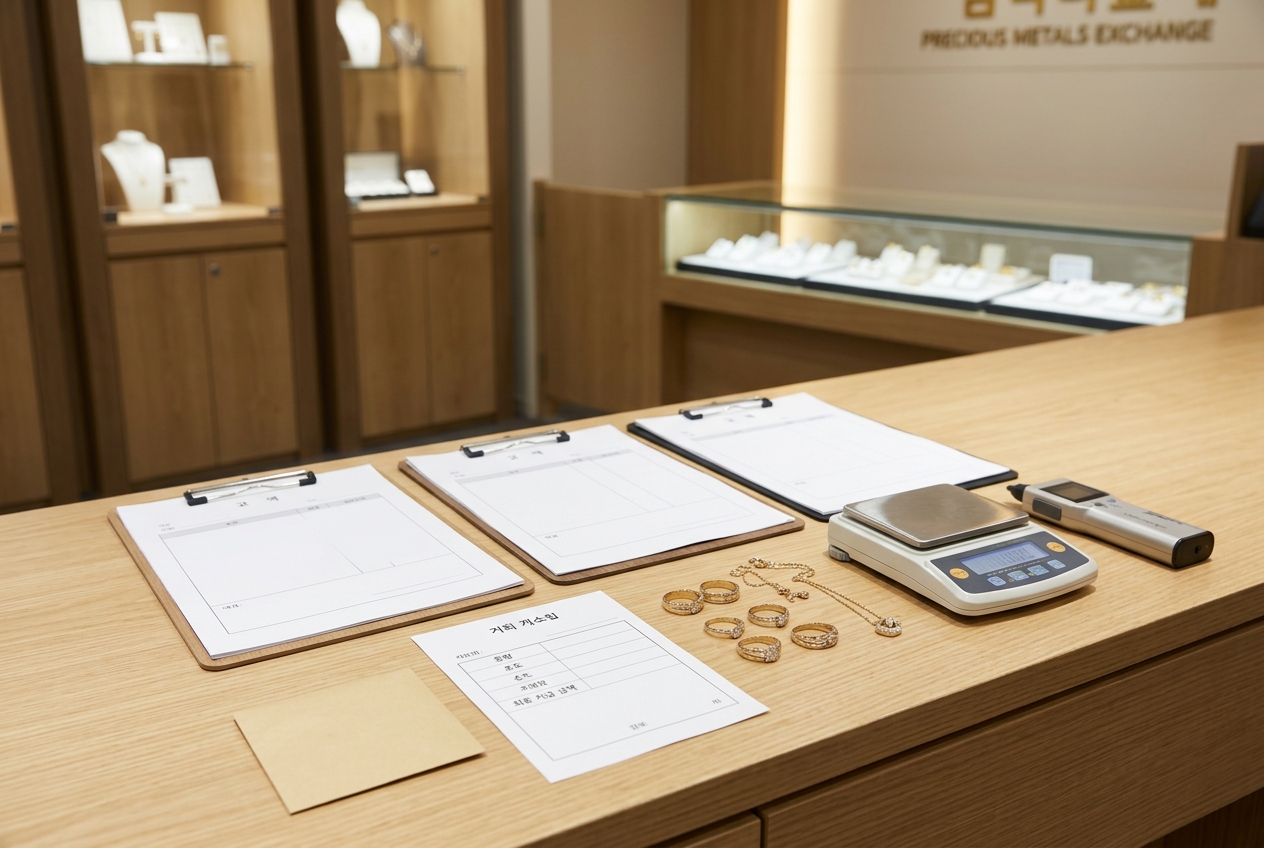
People often feel more disappointed when selling gold than when buying it. The reason is that the purchase price offered by each dealer varies, and depreciation occurs depending on the condition of the product. In particular, when selling gold in the form of jewelry, only the 'pure gold weight' is calculated, excluding the craftsmanship state and the weight of decorations like cubic zirconia, so you will receive a much lower amount than the original purchase price.
The best way to sell is to visit several jewelry stores or precious metal exchanges and compare the daily purchase prices. Do not visit just one or two places; comparing quotes from at least three places will yield better results. Also, it is advantageous to bring the gold product's certificate if you have it. Even without a certificate, purity can be verified with a composition analyzer, but it may take time or incur additional costs, so it is best to keep it in its original state if possible.
A precaution when selling is to clarify the standard for the 'daily price'. Some dealers deduct an additional 'daily fee' from the price. Therefore, asking clearly during the consultation stage how much the 'final amount received including fees' will be is a way to prevent disputes. Also, when selling physical gold and receiving cash, ensure you are in a safe trading environment. It is essential to verify that the weight, purity, and final payment amount are accurately recorded on the receipt or acknowledgment document you sign during the transaction.
4. Response Strategies for Practical Trading

The way you handle gold should vary depending on the situation. First, if the goal is asset growth, using a brokerage gold account or the KRX gold market may be more advantageous in terms of tax benefits and fees than physical gold. The KRX gold market can be traded like stocks, with costs incurred only upon physical delivery, and it has the major advantage of being tax-exempt on capital gains.
Second, for gifts or wedding jewelry, it is better to choose products focused on purity and weight rather than brand value to maintain asset value. While the primary purpose of wedding jewelry is to be worn, over time, the weight of the gold itself becomes the asset. Therefore, choosing designs with high pure gold content and minimal deformation is advantageous in the long run.
Third, if you need to sell gold due to an urgent need for cash, it is more realistic to compare daily prices at multiple locations and find the one with the least loss rather than waiting for the gold price to peak. Avoid situations where you fail to secure necessary liquidity by waiting for a price rebound. In terms of asset management, maintaining gold at around 5-10% of your total portfolio is a safe strategy to prepare for volatility. While gold is an excellent inflation hedge, be aware that it is an asset that does not generate dividends or interest, and adjust your portfolio weight accordingly.
5. Common Mistakes and Precautions in Gold Trading
Many people are lured by phrases like 'highest price purchase' floating on the internet. However, since physical gold trading has standardized prices, places offering absurdly high prices risk deducting fees under other pretexts or distributing low-quality gold. Always use the prices of reputable institutions as a benchmark, and be sure to observe the purity verification process during the transaction.
Keep in mind that gold as a financial product is an investment without principal protection. Since losses can occur depending on price fluctuations, it is safe to operate only within a certain percentage of your total assets. If legal or financial decisions are required, we recommend consulting with experts in the relevant field before making careful decisions.
Also, there is a risk of loss or theft if you store physical gold yourself. If the amount is small, you might be able to keep it in a home safe, but when holding large amounts of gold, it is necessary to use bank safe deposit box services or highly secure storage systems. Do not forget that gold trading is a process of protecting the value of your assets, not just an act of buying and selling. Developing a habit of recording the trend of gold prices before and after trading will be of great help in deciding future trading points.
In conclusion, the gold price per 'don' is not just a number but a barometer of the economic situation. Whether it is physical trading or investment, the most important habit is to clarify your purpose and carefully weigh transaction costs and fees. Based on the information summarized today, we hope you proceed with wiser and more transparent gold transactions.
Frequently Asked Questions
How many grams is exactly one 'don' of gold?
In the Korean standard unit, one 'don' of gold is 3.75g.
Why are the buying and selling prices different?
When selling, VAT, craftsmanship fees, and distribution margins are included, but when purchasing, the calculation is based solely on the pure weight of the gold, which causes the price difference.
What is the most advantageous way to invest in gold?
It depends on your purpose, but considering tax benefits and fees, investing through the KRX gold market or a brokerage gold account can be more cost-effective than physical trading.
Is a certificate absolutely necessary when selling gold?
Having a certificate can speed up purity verification and make the transaction smoother, but even without one, it is possible to sell through an exchange via composition analysis.
Where is the most accurate place to check gold prices?
It is recommended to check the prices updated daily through the websites of reputable institutions such as the Korea Gold Exchange or financial information portals.