As summer approaches, interest in air coolers as an alternative or auxiliary cooling device to air conditioners surges. Due to their ease of installation and mobility, many consider them for personal cooling in studio apartments, living rooms, or offices. However, because air coolers operate on a fundamentally different principle than air conditioners, those who purchase them without fully understanding this often end up disappointed when they fail to meet cooling expectations. In this article, we will examine the precise operating principles of air coolers, the environments in which they are effective, and the details regarding long-term maintenance and limitations.
Definition and Basic Concepts of Air Coolers
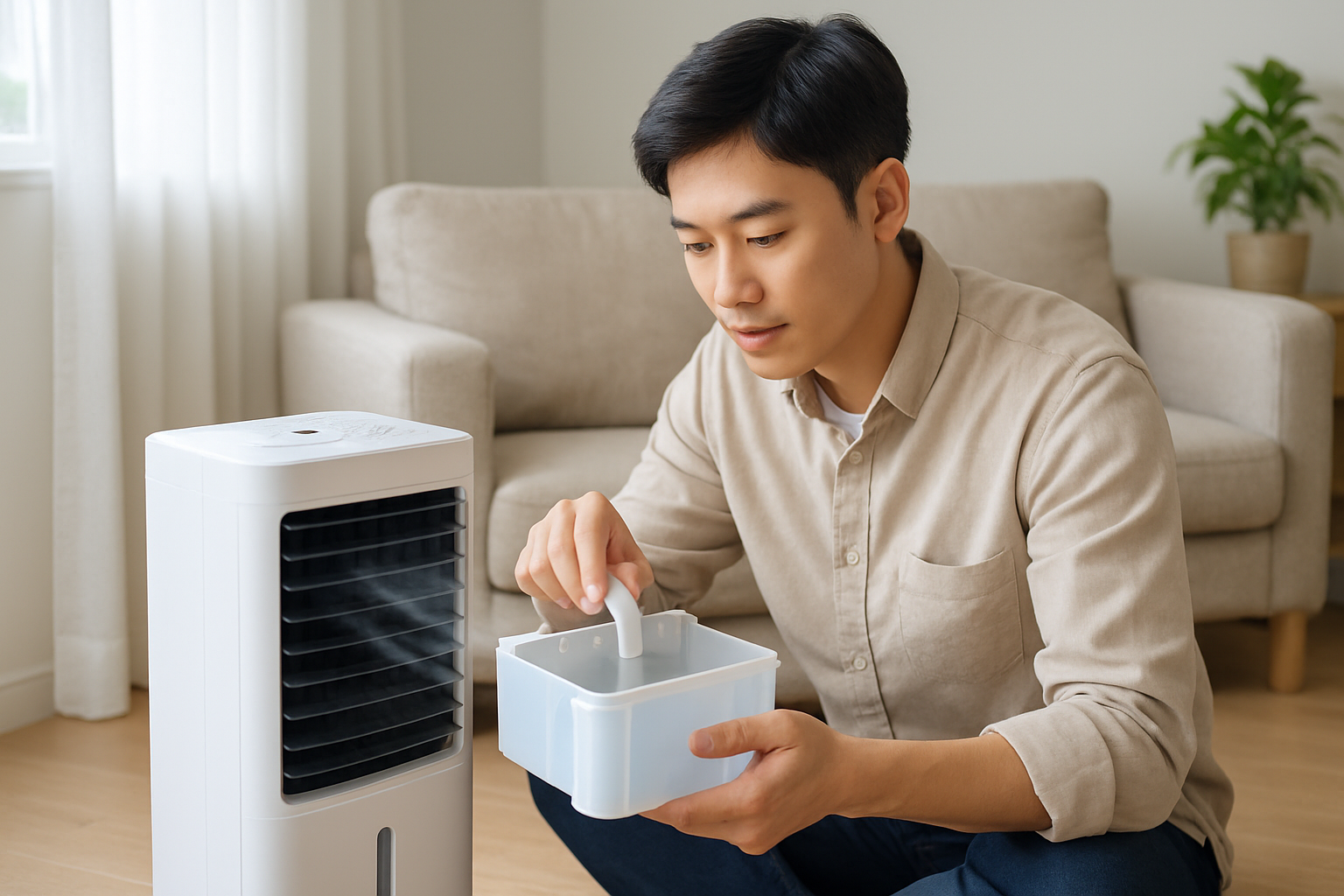
An air cooler generally refers to a device that lowers the air temperature using evaporative cooling. Unlike air conditioners, which cool the indoor air itself by compressing and expanding refrigerant, air coolers utilize the principle of heat of vaporization, where surrounding heat is absorbed as water evaporates. Water from the internal tank wets a filter, and a powerful fan blows air through it, causing the water to evaporate and releasing cooled air.
Because of this principle, air coolers have the strong advantage of lower power consumption compared to air conditioners and do not require the installation of an outdoor unit. However, because they use water as a medium, they also have the critical characteristic of increasing indoor humidity. Therefore, it is more accurate to approach them as humidifying cooling devices rather than simply as 'machines that create cool air.'
When choosing an air cooler, you should carefully check the water tank capacity, filter replacement cycle, fan speed settings, and noise levels. In particular, the difficulty of cleaning varies greatly depending on whether the water tank is detachable or integrated, so it is a good habit to check the product structure before purchasing. Additionally, while a larger water tank allows for longer cooling, it also increases the weight of the water, so if mobility is a priority, it is practical to check if the model is equipped with wheels.
Operating Principle of Air Coolers: Understanding Heat of Vaporization
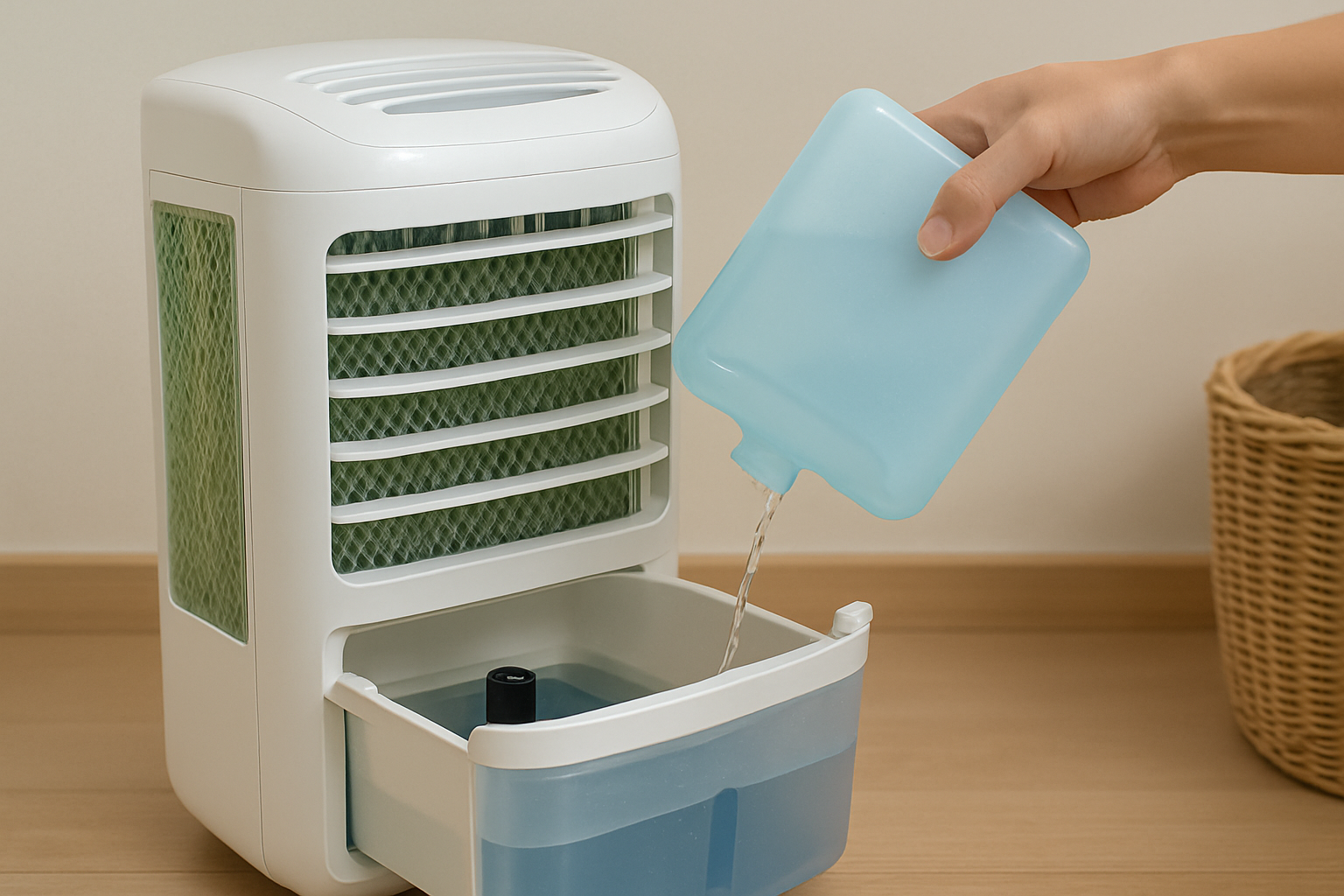
The core of an air cooler is 'heat of vaporization.' It utilizes the physical phenomenon where liquid water absorbs surrounding heat as it turns into water vapor. A pump inside the air cooler draws water from the tank to wet the cooling filter, and warm external air passes through this filter to be released at a lower temperature. Adding ice packs can further lower the filter temperature, maximizing temporary cooling effects.
This process is much simpler and structurally lighter than the refrigerant circulation method of air conditioners. However, because moisture in the air continues to increase, using it for long periods in a closed space can cause indoor humidity to rise sharply, creating a sticky and unpleasant environment. Therefore, when using an air cooler, it is necessary to create an environment where ventilation is possible or to use it in conjunction with a dehumidifier. Since the efficiency of evaporative cooling is proportional to airflow and evaporation surface area, how evenly the filter is wetted is key to cooling performance.
Performance Limitations in Hot and Humid Environments
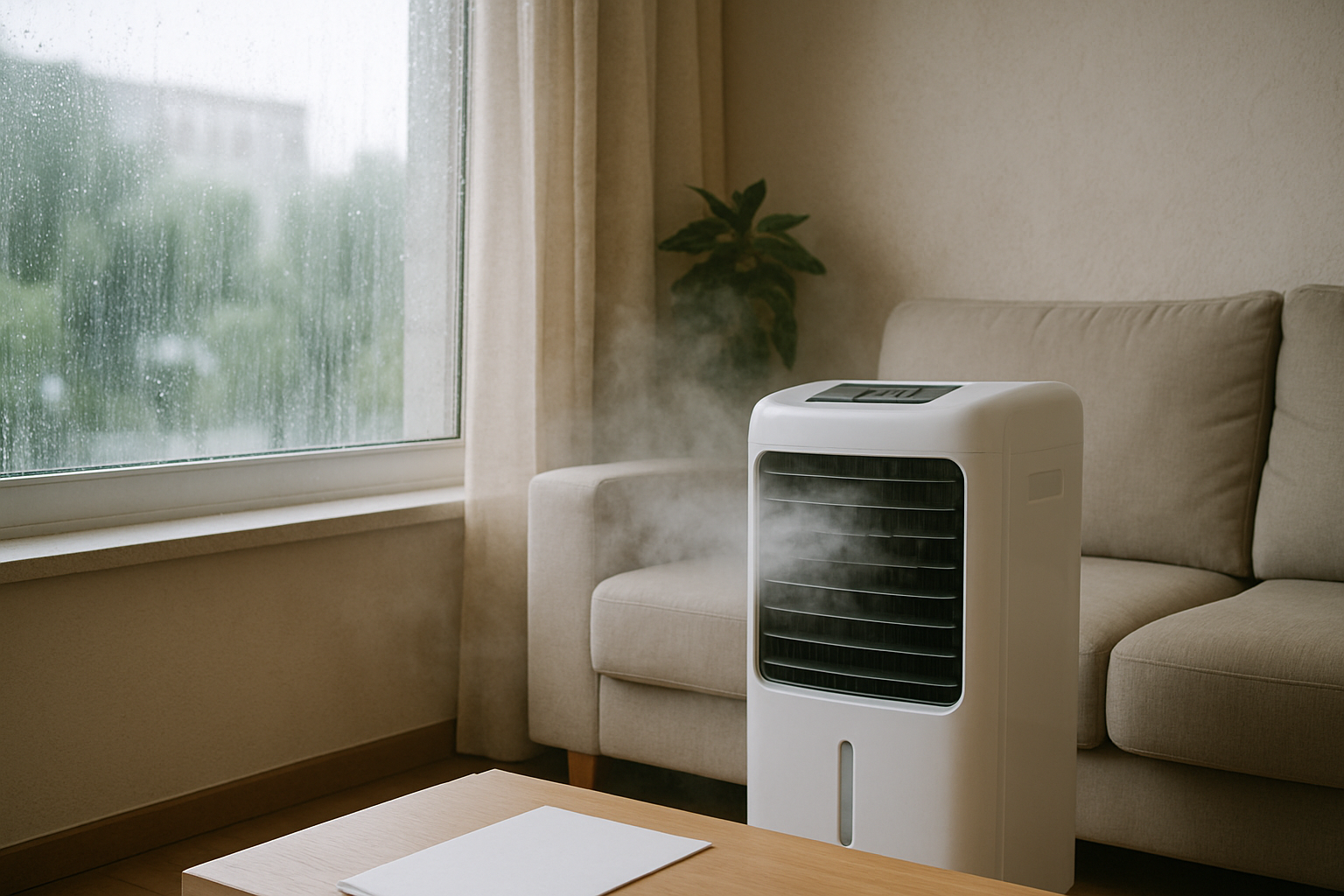
Korea's summer features a hot and humid climate around the monsoon season. If the humidity in the air is already high, water cannot evaporate smoothly from the filter inside the air cooler. If evaporation does not occur, the generation of heat of vaporization decreases, and consequently, the air cooler ends up acting as nothing more than a simple fan or humidifier. This is the biggest source of dissatisfaction for many users.
On days when humidity exceeds 70%, the cooling performance of an air cooler may be barely noticeable. In fact, it may even have the opposite effect, adding moisture and increasing the perceived indoor temperature. Therefore, during the peak of summer, especially during the rainy season or on very humid days, it is better to avoid using an air cooler or ensure good air circulation by opening windows. Conversely, remember that in dry and hot weather, air coolers can provide a much more pleasant cooling environment than air conditioners. In dry regions, evaporative cooling occurs actively, sometimes resulting in a temperature drop of over 5 degrees.
Decisive Differences Between Air Coolers and Air Conditioners
The biggest difference lies in whether the device 'cools the entire indoor air' or 'lowers the temperature at a specific point.' Air conditioners are 'air conditioning' devices that exhaust heat from the entire room to the outside and remove moisture. In contrast, air coolers are specialized for localized cooling. They are suitable for placing next to a desk to cool the air around you, but they are insufficient for lowering the temperature of an entire room.
Also, while air conditioners move heat outside through an outdoor unit, air coolers only continue to release moisture indoors. For this reason, air conditioners keep the air comfortable even during long-term use, but air coolers can make the air feel heavy over time. In terms of price, air coolers are overwhelmingly cheaper and have no installation restrictions, but one must clearly recognize that they cannot replace air conditioners in terms of cooling quality. You should understand that while an air conditioner is an active cooling device that forcibly moves indoor heat outside through a thermodynamic cycle, an air cooler is a passive auxiliary device that lowers the temperature of surrounding air by converting heat into latent heat.
Precautions When Using Air Coolers: Mold and Hygiene
Since air coolers use water, hygiene management is more important than anything else. A structure where water sits in a tank and the filter remains wet is an optimal environment for mold and bacteria to thrive. If not managed properly, a musty odor will occur every time the air cooler is operated, which can also have a negative impact on respiratory health.
To prevent this, you must empty and dry the water tank daily. It is also essential to regularly wash the filter and allow it to dry completely before reattaching it. If maintenance is cumbersome, it is recommended to choose a product that uses disposable filters or consider a model that includes a sterilization function. When washing the filter, gently shake it in water with a mild detergent and dry it in the shade rather than in direct sunlight to prevent filter deformation. If it starts to smell, mold has likely already grown inside the filter, so you should replace it immediately.
Practical Placement Methods to Increase Air Cooler Efficiency
If you want to enjoy the effects of an air cooler as much as possible, placement is key. First, place it near a window to allow fresh outside air to enter. Second, ensure the air cooler's breeze hits your body directly, but maintain a moderate distance rather than being too close to create proper airflow. Third, when using ice packs, be careful not to let the water in the tank get too cold to avoid condensation, and replace the ice packs regularly to maintain the cooling effect.
Using it in conjunction with a circulator is also a good method. If a circulator spreads the air cooled by the air cooler throughout the room, you can achieve cooling effects over a much wider range than using the air cooler alone. Simply understanding airflow and placing the device correctly can significantly change your satisfaction. In particular, rather than placing the air cooler in the middle of the room, it is recommended to face it toward a window to draw in outside air, cool it, and blow it into the room.
User Feedback and Realistic Expectations
Looking at actual user reviews, opinions are sharply divided between 'it's cool' and 'it's just humid.' This stems from differences in usage environments. In dry regions or environments where air conditioner use is limited, air coolers are an excellent alternative. However, those who used them in closed, hot, and humid rooms report low satisfaction. You must always keep in mind that an air cooler is not a magical cooling device, but an auxiliary device that operates conditionally.
The noise issue cannot be overlooked either. Since it must turn a powerful fan to create airflow, it is often noisier than a regular fan. If you plan to use it while sleeping, it is essential to check in advance whether a low-noise mode is supported and if the noise level is low enough not to disturb your sleep. If you are sensitive to noise, choosing a model that uses a DC motor is advantageous in terms of quietness.
Comparison with Alternative Products: Fan vs. Circulator vs. Air Cooler
Fans only circulate air and cannot lower the temperature. Circulators are specialized for moving air over long distances. In contrast, air coolers physically lower the temperature of the air itself through water evaporation. If the goal is simply to cool off by feeling a breeze, a fan is sufficient, but if you want slightly cooler air, an air cooler can be an alternative. However, you must acknowledge that there is no other option besides an air conditioner if you want to lower the temperature of the entire space.
In terms of cost, air coolers have less of a burden on electricity bills than air conditioners and have lower initial purchase costs. However, considering hygiene management costs and filter replacement cycles, it is not that there are no maintenance costs. Please choose the optimal cooling device by considering your living environment, budget, and sensitivity to heat. Since fans are for static cooling, circulators for promoting convection, and air coolers for evaporative cooling, each has a distinct purpose, and using them in combination is the wisest way to spend the summer.
Conclusion: Know Your Air Cooler and Use It Properly
When used in an appropriate environment, an air cooler can certainly be a more economical and efficient cooling aid than an air conditioner. However, it is important to accurately understand the limitations of the evaporative cooling principle and the disadvantage of increased humidity. In humid environments like the Korean summer, ventilation and the use of a dehumidifier are essential, and above all, thorough hygiene management is necessary to spend a healthy summer.
Before purchasing a product, clearly distinguish whether your purpose is localized cooling or whole-room cooling. If the goal is to lower the overall temperature, it is wise to prioritize an air conditioner over an air cooler. If you fully grasp the characteristics of an air cooler and learn the correct usage methods, it will become a reliable supporter in helping you spend a much more comfortable summer.
Frequently Asked Questions
Does an air cooler make the whole room cool like an air conditioner?
No, unlike an air conditioner, an air cooler is not a device that cools the entire indoor air. Since it uses heat of vaporization to temporarily lower the temperature of the breeze, it is mainly suitable for localized cooling.
Does humidity increase when using an air cooler?
Yes, it does. Because it creates cool air by evaporating water, using it in a closed space for a long time can cause indoor humidity to rise, leading to a sticky and unpleasant feeling. It is recommended to use it in an environment where ventilation is possible.
What should I do if the air cooler smells?
It is highly likely that mold or bacteria have grown in the water tank and filter. You should immediately wash or replace the filter, and clean and completely dry the water tank. If the smell is severe, it is caused by filter contamination, so it is recommended to replace it with a new filter.
Is it cooler if I put in more ice packs?
It will blow cooler air temporarily. However, once the ice packs melt, the cooling effect decreases, and it is better to use an appropriate amount to avoid condensation inside the water tank.
Does an air cooler consume a lot of electricity?
Air coolers have much lower power consumption compared to air conditioners. Generally, they consume slightly more power than a fan, but they are much more economical than air conditioners.