Definition and Physical Characteristics of WTI

The Three Major Benchmarks of International Oil Prices

Dynamics of Supply and Demand
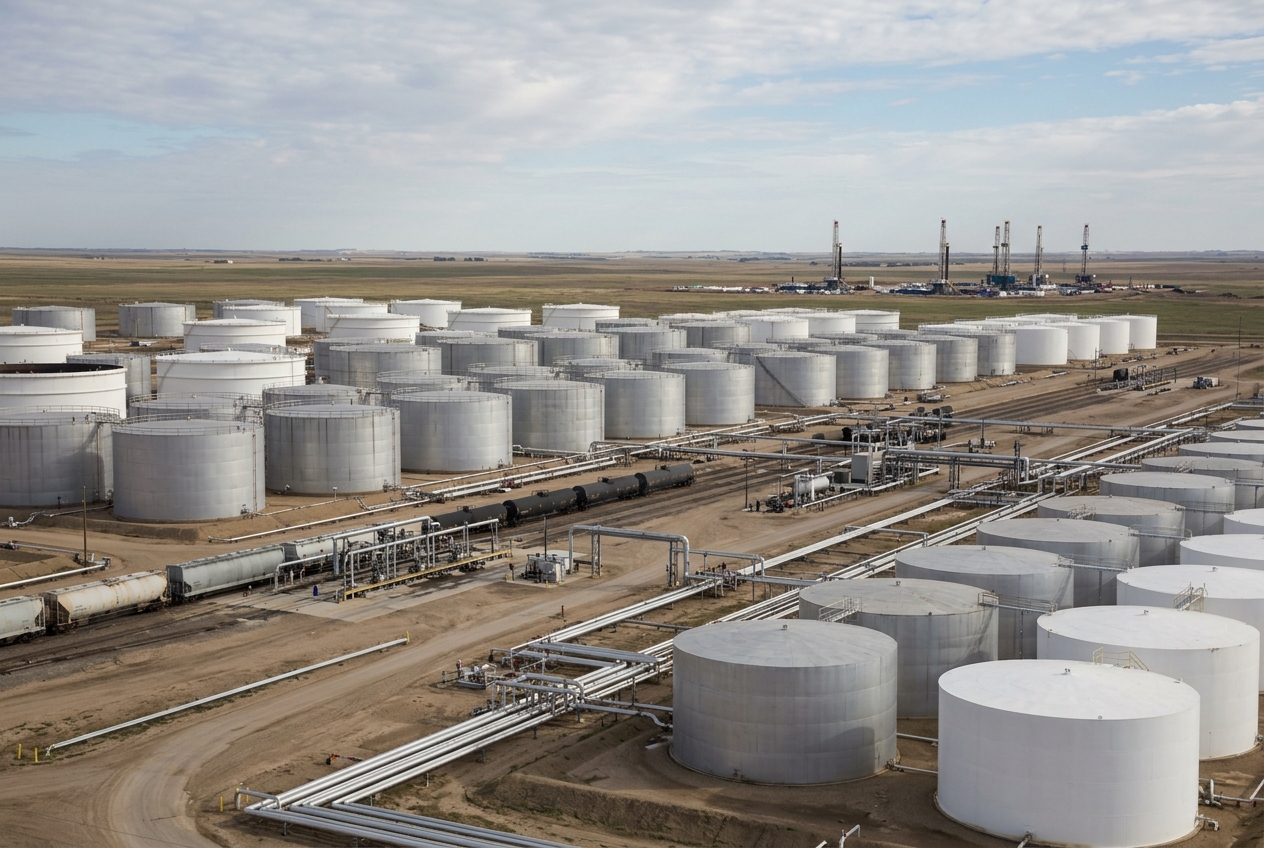
WTI prices are not determined solely by production volume. Factors such as U.S. refinery utilization rates, crude oil inventory levels, and geopolitical risks act in combination. In particular, the weekly crude oil inventory report released by the U.S. Energy Information Administration (EIA) is one of the most closely watched events by traders worldwide. If inventories are higher than expected, the price faces downward pressure; conversely, if demand surges and inventories are depleted rapidly, prices rise. This data immediately changes market sentiment and creates short-term price volatility. In addition to EIA inventory data, market participants closely monitor the U.S. Rig Count. An increase in rigs suggests a high probability of future production growth, which can be interpreted as a long-term signal of oversupply. Conversely, a decrease in rig activity raises concerns about supply shortages, acting as a force that pushes oil prices up. In this way, micro-production indicators and macro-consumption indicators intersect to form the price band for WTI. On the supply side, the marginal cost of production, which includes the difficulty of developing new oil fields and environmental regulatory costs, acts as a price floor.External Factors Affecting WTI Prices
Data Interpretation and Market Response
For individual investors to read the flow of the oil market, they must selectively accept the economic indicators that pour out daily. While technical analysis is important, it is more important to have the habit of checking indicators that gauge real economic demand. Corporate capital expenditure status, jet fuel demand, and each country's energy transition policies are key variables that determine long-term oil price trends. A point of caution when investing is that crude oil is an asset with very high volatility. When investing in derivatives or related ETFs, one must consider not only price fluctuations but also rollover costs and exchange rate volatility. Experts recommend managing risk through multifaceted data analysis rather than relying on a single indicator. In particular, crude oil has inelastic demand, so periods where prices skyrocket or plummet frequently occur depending on economic changes. When deciding the proportion of oil in their portfolio, investors should diversify to ensure they do not increase the volatility of their total assets. Furthermore, having an eye for reading structural changes in the oil market is the foundation for successful investment, rather than short-term trading based on news. To overcome information asymmetry in the market, it is necessary to periodically check reports from reliable institutions.Management and Utilization Methods
Asset allocation using WTI is often discussed as a hedge against inflation. This is because oil prices tend to rise when inflation occurs. However, this is not a formula that applies at all times. In an inflationary situation accompanied by an economic downturn, prices may actually fall due to reduced oil demand, so market conditions must be analyzed in a multi-dimensional way. When actually investing, one should choose a product that fits their investment period and objective. Investors aiming for short-term price fluctuations may consider futures trading or leveraged products, but they must keep in mind that these entail high risks. On the other hand, for investors building a long-term portfolio, choosing indirect exposure through stocks of oil-related companies or index funds may be a more stable strategy. Since holding direct crude oil futures can lead to rollover costs at each maturity that eat into returns, using indirect investment products like energy sector ETFs or refinery stocks may be more suitable for individual investors. It is essential to clearly understand the nature of the underlying assets and the cost structure of each investment product. Additionally, when investing in oil, managing exchange rate risk due to changes in monetary policy is essential. Since crude oil is a dollar-denominated asset, fluctuations in the KRW/USD exchange rate directly affect investment returns. One must always be aware that the final return can vary significantly depending on whether the product is currency-hedged or not. In conclusion, WTI is a barometer that shows the health of the global economy beyond just energy prices. By understanding the principles and background of how this indicator moves, investors gain a broader perspective. Financial data is always just a record of the past and does not guarantee future prices. Therefore, continuous learning and objective observation of market trends are more important than anything else. This information is for general informational purposes only and does not constitute investment advice. When making financial investments, it is recommended to comply with relevant laws and consult with an expert.Frequently Asked Questions
What is the biggest difference between WTI and Brent Crude?
The biggest difference is that WTI is light crude from Texas, USA, and is sensitive to supply and demand within the U.S., while Brent Crude is North Sea oil and serves as a benchmark that more broadly reflects global market demand, including Europe and Asia.
What is the relationship between the value of the U.S. dollar and WTI prices?
Since crude oil is settled in dollars in the international market, they generally have an inverse correlation. When the dollar value rises, oil prices face downward pressure, and when the dollar value falls, oil prices tend to rise relatively.
What are the main reasons for a sharp rise in WTI prices?
Major reasons for price spikes include production cuts by major oil-producing countries, supply disruptions due to geopolitical conflicts in the Middle East, or a surge in demand due to global economic growth.
What are rollover costs when investing in crude oil?
When holding crude oil futures products, you must switch to the next month's contract as the maturity date approaches. The cost incurred due to the price difference between the near-month and far-month contracts is called a rollover cost, which can negatively affect returns during long-term investment.