Dakgalbi is a popular dining-out dish that everyone loves, but many find it difficult to balance the flavors when trying to make it at home. In fact, the core of Dakgalbi lies in the freshness of the chicken and a sauce where gochujang, soy sauce, and chili powder harmonize perfectly. Today, we introduce a practical Dakgalbi recipe that allows you to recreate that restaurant flavor at home without complex steps. Follow these specific steps to reduce the chance of failure, from the start of cooking to the final fried rice.
The Golden Ratio for the Key Sauce That Defines Dakgalbi Flavor

Dakgalbi sauce isn't just about adding a lot of gochujang. It is important to mix in chili powder to cut through the heaviness of the gochujang and to balance the sweetness and saltiness. Generally, for 500g–600g of chicken thigh meat, prepare 3 tablespoons of gochujang, 2 tablespoons of chili powder, 3 tablespoons of soy sauce, 2 tablespoons of minced garlic, 1.5 tablespoons of sugar, 1 tablespoon of oligosaccharide, 2 tablespoons of cooking wine, 0.5 tablespoons of curry powder, and a dash of black pepper. The curry powder is the hidden secret to achieving that professional restaurant flavor.
It is best to make the sauce at least 30 minutes to an hour in advance to let it mature, which ensures the ingredients blend well and create a deep flavor. In particular, adding plenty of minced garlic helps remove the gamey smell of the meat and enhances the flavor. If you prefer a spicier taste, we recommend adding chopped Cheongyang chili peppers or a little bit of Vietnamese chili powder. Additionally, blending an apple or pear into the sauce adds a subtle fruity sweetness, creating a sophisticated, savory flavor that isn't overly harsh. Note that you should limit the fruit to no more than 10% of the total volume to prevent the sauce from becoming too watery.
When maturing the sauce, use an airtight container to minimize contact with air. It is more hygienic to store it in the refrigerator rather than at room temperature; during this process, the sharp scent of the garlic softens, and the sauce develops a viscosity that helps it cling better to the meat. After the sauce is finished, taste it; if it is too salty, add a little more sugar, and if it is too sweet, add another tablespoon of soy sauce to achieve the perfect balance.
A Step-by-Step Guide for Foolproof Dakgalbi Cooking
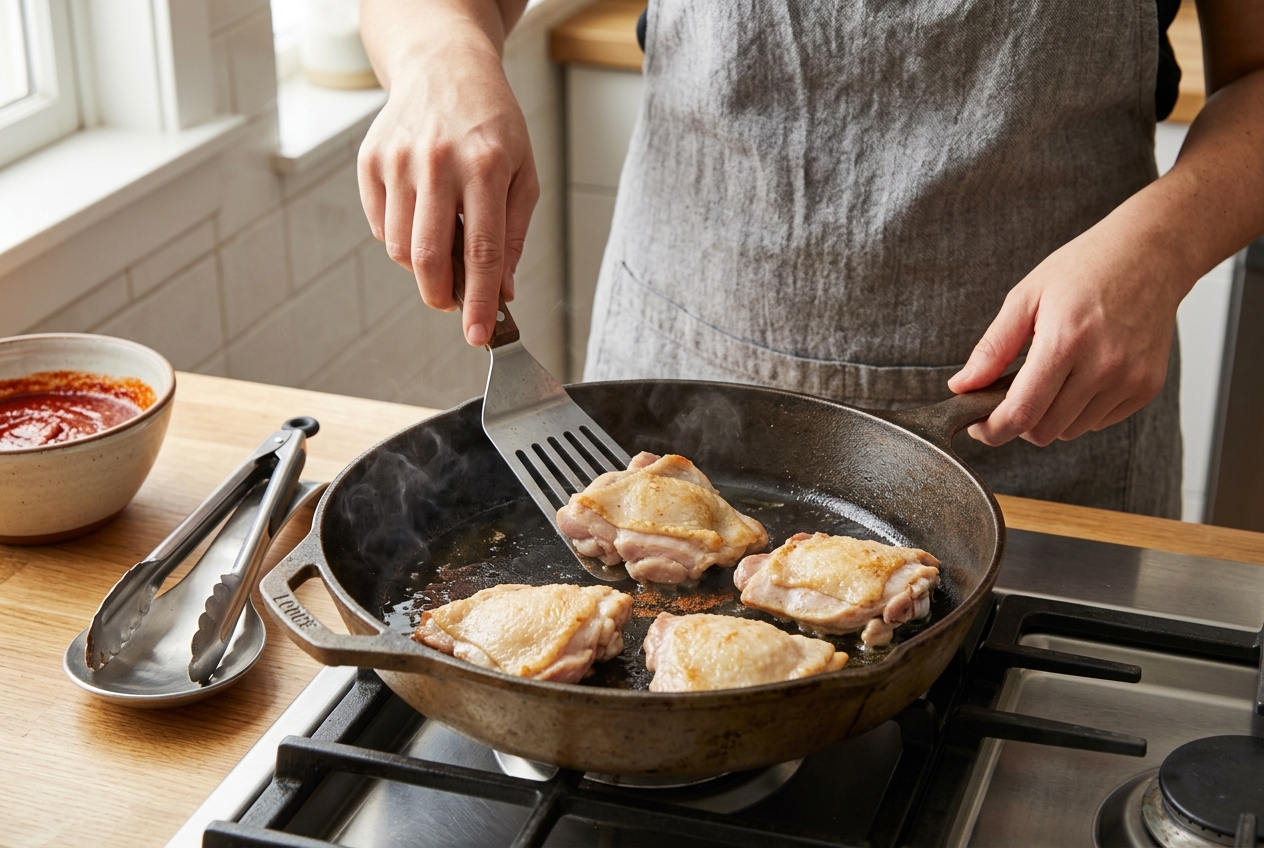
Once the sauce is ready, it's time to start cooking. The order in which you stir-fry the ingredients significantly affects the flavor. First, heat the pan thoroughly, add a very light coating of oil, and stir-fry the chicken first. The key here is to place the skin side down so that enough fat renders out. Add the sauce and toss it only when the chicken is about 80% cooked to ensure the sauce doesn't burn and coats the meat evenly.
Vegetable Preparation and Timing
Once the surface of the chicken starts to turn white, add the prepared vegetables. Cabbage should be cut into large pieces for a better texture, and it's good to have sweet potatoes or rice cakes ready in advance. Since vegetables release moisture, adding them too early can result in the meat being boiled rather than stir-fried. Add the vegetables when the meat is 70% cooked and stir-fry quickly over high heat so the vegetables don't get too mushy and retain their crunch. Since the scent of perilla leaves is essential, it is best to cut them into large pieces and toss them in lightly at the very last stage.
While an iron griddle is ideal if you have one, a regular non-stick pan works just fine. However, since home gas stoves or induction cooktops have lower heat output than commercial restaurant burners, it is better to cook in smaller batches according to the size of your pan rather than cooking everything at once. If the pan is too full, the temperature drops, causing the meat to lose its juices and become tough, so it is important to ensure there is enough space.
For vegetables, cabbage wilts quickly, so cutting it into large pieces is suitable for enjoying the texture even after cooking. Root vegetables like carrots or sweet potatoes should be sliced thinly to shorten the cooking time. If using frozen rice cakes, soak them in water beforehand to prevent the outside from burning while the inside remains hard. Adding perilla leaves at the end and turning off the heat before they wilt completely is the key to maximizing their aroma.
Cooking Tips and Precautions for Different Situations
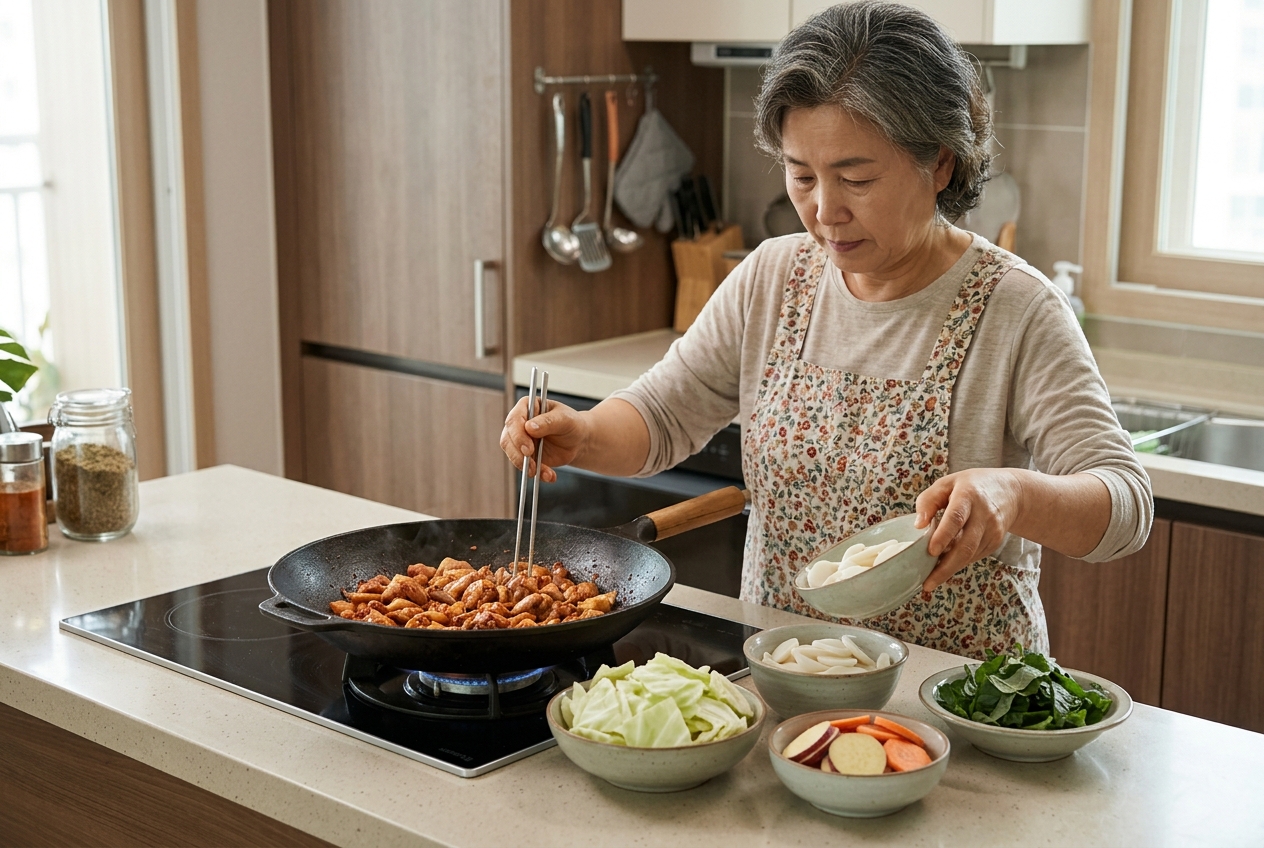
One of the common problems when cooking Dakgalbi is the sauce burning. Because the sauce contains sugar, it will stick and burn quickly if left over high heat for too long. In this case, add a very small amount of water or add more moisture-rich vegetables. Refer to the comparison table below to choose the method that suits your cooking environment.
| Category | Regular Pan Cooking | Iron Griddle/Skillet Cooking |
| :--- | :--- | :--- |
| Heat Control | Maintain medium heat | High heat, quick stir-fry |
| Moisture Management | Recommend adding 2-3 tbsp water | Use vegetable moisture |
| Cooking Time | Approx. 10-15 mins | Approx. 7-10 mins |
| Features | Need to prevent burning | Easy to achieve 'wok hei' |
If you are worried about the sauce burning during cooking, it is best to stir constantly from start to finish. Also, when cutting the chicken, cut it slightly larger than bite-sized pieces to account for shrinkage during cooking. Removing tendons or excess fat when prepping the meat will result in a much cleaner taste. We also recommend marinating the meat with a tablespoon of soju or rice wine beforehand to remove any gamey odors.
Another point to be careful about is the doneness of hard vegetables like sweet potatoes. If you slice sweet potatoes thinly, they will cook at a similar time to the meat, but if you cut them thick, they will take longer. To prevent this, microwave them for about 1 minute to partially cook them before adding, which will shorten the cooking time and ensure they are perfectly cooked along with the meat. Also, if the sauce sticks to the bottom of the pan during cooking, do not scrape it off forcefully; add a spoonful of water and mix gently as if wiping the pan with a wooden spatula to re-coat the meat with the deep flavor of the sauce.
Finishing Touches and Fried Rice
The finale of Dakgalbi is, of course, the fried rice. After finishing the meat, it is essential to stir-fry rice with kimchi, seaweed flakes, and sesame oil in the remaining sauce. Before adding the rice, lightly scrape off any burnt sauce residue from the pan for a much cleaner taste. The secret to the flavor is to lower the heat and let the rice and sauce sit for a moment to crisp up. Adding mozzarella cheese to the fried rice makes it even more savory and rich.
When making fried rice, using slightly cooled rice rather than freshly cooked rice is better because it has less moisture, making it much fluffier and tastier. Chop the kimchi finely, and drizzle sesame oil at the end to add a nutty aroma. Spread the fried rice wide across the pan and heat over low heat for about 1 minute to let the bottom crisp up, perfectly recreating the texture of restaurant-style fried rice.
Dakgalbi has simpler ingredients than you might think, but if you remember the two factors of sauce ratio and heat control, you can make a dish that rivals any restaurant. Use the sauce ratios and cooking order explained today to complete your own Dakgalbi recipe. Start with the standard method, and as you adjust the amount of soy sauce or chili powder to your own taste, it will soon become a popular menu item that your family asks for. You can store leftover sauce in the refrigerator and stir-fry it with rice cakes or udon noodles the next day for a special treat. By always using fresh ingredients and cooking with care until the end, you can fully achieve professional-level flavor at home.
Frequently Asked Questions
Which part of the chicken is best for Dakgalbi?
It is best to use deboned chicken thigh meat. Breast meat tends to become dry when stir-fried, but thigh meat has enough fat to remain tender and absorb the sauce well.
Do I have to add curry powder?
It is not mandatory, but it is a key ingredient that provides the unique aroma and flavor of professional restaurants. Since curry powder also helps remove gamey odors, we recommend adding at least a small amount.
My sauce keeps burning, what should I do?
Sauces containing sugar and oligosaccharide burn easily. Adding 2-3 tablespoons of water or plenty of moisture-rich vegetables like cabbage can prevent burning.
Should the sauce be made in advance?
Yes, it is recommended to let it mature for at least 30 minutes. As the chili powder expands, the color deepens, and the flavors of the garlic and soy sauce blend together for a much deeper taste.
Can I use frozen chicken?
Yes, you can. However, you must thaw it completely and pat it dry with paper towels to reduce any gamey smell. Soaking it in milk for about 10 minutes after thawing is even more effective for removing odors.