The way you study Korean history varies greatly depending on your goals. Whether you need a short-term strategy to pass an exam or want to deeply understand the flow of our history, the focus areas differ. Rather than blindly memorizing dates, it is more important to grasp the grand narrative of history. This is because history is a vast flow where events are linked one after another. For efficient learning, integrated thinking that connects fragmented information is essential, providing us with important insights from the past to apply to modern society. The starting point of learning is to establish a 'historical context'.
The Beginning of Korean History Study: The Importance of a Macro Perspective

The most common mistake when starting Korean history is memorizing the dates of minor events or the names of figures first. However, these are easily forgotten. History begins with the question 'Why?'. The core of learning is connecting why a specific event occurred and how its results influenced the next era. If you first grasp the characteristics of the entire era, individual events will naturally fall into place in your memory.
For example, if you understand why the aristocratic society of the Goryeo Dynasty collapsed, you can easily infer the nature of the subsequent military regime and why they chose their specific method of governance. This causal-focused learning helps you understand history in three dimensions, beyond just solving exam questions. In the early stages of learning, it is recommended to start by hanging a full timeline on the wall and training yourself to view major events of each era within a large framework. A macro perspective acts as a powerful frame even when memorizing detailed events, reducing study fatigue. Comparing and analyzing the background of the founding and the causes of the fall of each dynasty is also a very useful strategy for grasping the grand flow of the era.
Key Flows by Era and Points You Shouldn't Miss

When dividing Korean history by era, the central focus is the change in governance systems and social structures. Learning centered on the unique social contradictions and efforts to resolve them in each era, from prehistoric times to the modern day, will maximize efficiency.
Growth of Ancient States and Competition Among the Three Kingdoms
For ancient society, you should focus on the process of moving toward a centralized state. Understand how royal authority was strengthened and what the social integration effects of adopting Buddhism were. The Three Kingdoms developed while competing with each other; the point is to compare the direction of territorial expansion and the patterns of exchange during each country's golden age. Remember that the three elements appearing in the growth process of ancient states—the promulgation of laws, the organization of official rank systems, and the official recognition of Buddhism—are essential conditions for centralization. Also, if you look at how fiercely they competed to occupy the Han River basin during their territorial expansion, the flow of ancient history becomes clear at a glance. The core of ancient history is not just who won, but understanding the changes in the system regarding how they operated the state and ruled the people.
Comparison of Governance Systems: Goryeo and Joseon
Both Goryeo and Joseon were based on Confucianism, but there are significant differences in their social operating principles. If Goryeo was an aristocracy-centered society, Joseon established a Neo-Confucian order centered on the Sadaebu (scholar-officials). We recommend creating a comparison table to see how these differences were reflected in the civil service examination or land systems. In particular, it is important to grasp how the centralized system of the early Joseon period changed after the Imjin War. The differences between Goryeo's Jeonsigwa system and Joseon's Gwajeonbeop and Jikjeonbeop are key indicators showing how the economic base of the ruling class changed at the time. Trace the causal relationships of why each system was introduced and what abuses occurred over time that led to the reorganization of the system. Changes in governance are ultimately intertwined with changes in economic structure, which in turn leads to social conflict and the emergence of new reform theories.
Modern and Contemporary History: A Period of Change and Challenge
Modern and contemporary history is the most dynamic period in our history. From the opening of ports to the Japanese colonial period and into the modern era, you must examine the invasion of foreign powers, the resistance of the people against it, and the conflicts during the modernization process. Since the chronological order of events is very important in this period, practicing placing events using a timeline is essential. In particular, it is good to sequentially organize the contents of treaties signed with various countries after the opening of ports and the subsequent process of economic exploitation. For the independence movement during the Japanese colonial period, classifying the nature of each organization around the three main pillars of armed struggle, diplomatic activities, and capacity-building movements makes complex content clear. When studying this period, contemplating the desperation felt by the people at the time and what kind of nation they aimed for helps form a historical consensus.
Practical Strategies for Efficient Memorization and Understanding
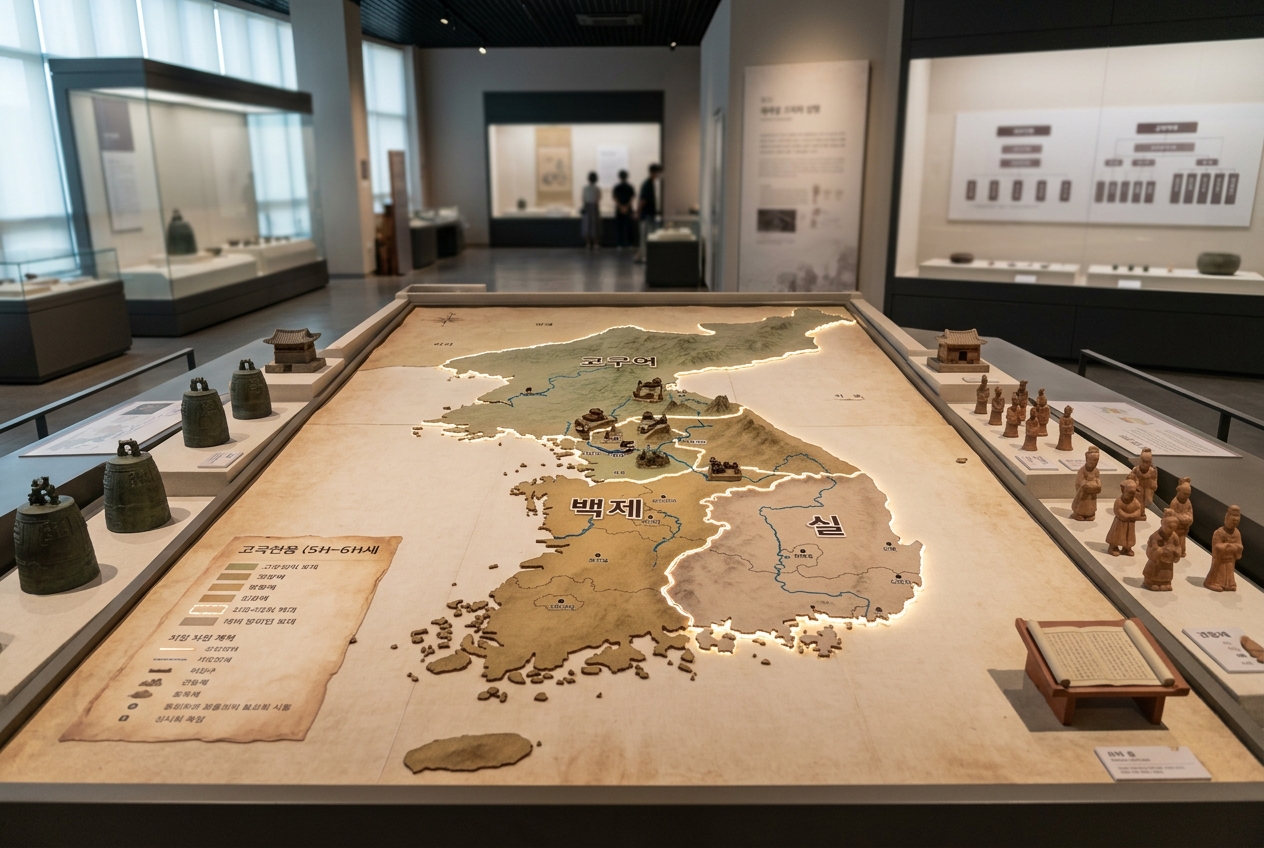
History is not a subject for memorization, but for understanding. However, a minimum amount of memorization is absolutely necessary. A great tool for this is 'story-based learning'. Imagine history in your head like a drama. Put yourself in the shoes of the king or the figures involved and think about the situation at the time. Rather than just listing facts, if you substitute the era's situation to understand why that person had no choice but to make such a decision, your memorization efficiency will increase dramatically. Also, the process of reconstructing what you have learned in your own words and explaining it is the best way to aid long-term memory.
- Keyword-centered Mind Maps: Place the core keywords of each era in the center and connect related events in a branching format. If you branch out in the order of Person-Event-Result, complex information becomes organized.
- Comparative Study Method: Comparing systems or figures from similar periods makes the differences clear. For example, compare what kind of Confucian governance foundation King Seongjong of Goryeo and King Seongjong of Joseon each established.
- Utilizing Visual Materials: Maps and charts convey information more powerfully than text. Get into the habit of checking territorial changes while looking at maps and grasping population changes or the history of tax system reforms through charts.
- Blank Sheet Review Method: This is a method where you write down what you have studied on a blank sheet of paper and explain the causal relationships yourself. This is the best metacognitive learning method to identify what you know and what you don't.
Points to Note and Error Prevention During Study
The most important thing to be careful about when studying Korean history is becoming buried in fragmented information. If you ignore the background of a specific event and only memorize the result, it is difficult to deal with application problems. Also, when interpreting history, an attitude of 'historical relativism' that considers the situation of the time is necessary. If you judge the past with modern standards, you may miss the essence of history. For example, rather than evaluating the class system or customs of a certain era only from the perspective of modern human rights, it is important to analyze why such a system had to be maintained within the social and economic background of that time. This analytical attitude fosters critical thinking and allows you to view historical facts in a more three-dimensional way.
Finally, remember that history is not fixed and interpretations can change depending on historical sources. Accessing various historical sources beyond what is in the textbook is a shortcut to improving your competence. When reading historical sources, it is important to grasp who wrote it, when, and why. Recognizing that the content can differ depending on the recorder's perspective, even for the same event, is the core of historical thinking. In conclusion, Korean history is not just a means to get exam scores, but a mirror to understand our roots and diagnose the present. Starting today, try to deepen your learning by reading or watching related documentaries that follow the flow of the era.
To increase the completeness of your learning, consistent repetitive study is essential. Beyond just reading books, cultivate active study habits such as creating your own questions and writing answers to them. In particular, listing the main social change factors that appear in each era and practicing finding the connecting links between how those changes influenced the next generation is the most certain way to achieve a high score. Historical knowledge exerts much more power when connected than when it exists in fragments. I hope your study of Korean history becomes a time to gain insights that allow you to apply the wisdom of the past to the present, beyond just the process of accumulating knowledge.
Frequently Asked Questions
What is the first thing I should do when starting to study Korean history?
Grasp the big flow of the entire era. It is good to establish an overall composition through a timeline of how society changed in order from the prehistoric era to the modern day.
Do I have to memorize the dates of events one by one?
You don't need to memorize every date. Since it is important to grasp the chronological order of events, it is more efficient to understand the before-and-after relationships based on events that were decisive turning points.
Modern and contemporary history is too difficult; how should I study it?
Modern and contemporary history has events placed very densely. It is good to organize it by following the flow, focusing on the causes and results of the events and the response methods of each force accordingly.
How should I utilize historical sources?
Historical sources are the best evidence showing the situation at the time. Read the core historical sources in your textbook and repeat the training of analyzing what historical background those sources came from.