QR (Quick Response) codes have become an indispensable tool in our daily lives. They have established themselves as a key medium for quickly delivering information, from restaurant menus and public notices to payment systems. However, do you only know them as 'codes that connect when scanned'? In this article, we will go beyond the basic concepts of QR codes to explore how to increase their practical utility and the security measures we must strictly observe.
What is a QR Code: Innovation in Information Compression and Delivery

The QR code is a 2D barcode developed by Japan's Denso Wave in 1994, overcoming the limitations of traditional 1D barcodes that could only store information horizontally. Its biggest feature is the ability to store data in both horizontal and vertical directions, allowing a much larger amount of information to be contained in a small area. The complex patterns intertwined within the square are the collection of data containing that information.
The reason QR codes are powerful in a digital environment lies in 'connectivity.' Without the need to manually type long URLs, you can instantly navigate to a website or download a file just by pointing your camera at it. They act as a bridge connecting offline and online worlds, maximizing efficiency in various industrial fields such as marketing, payments, and logistics.
Data Density and Error Correction Capability
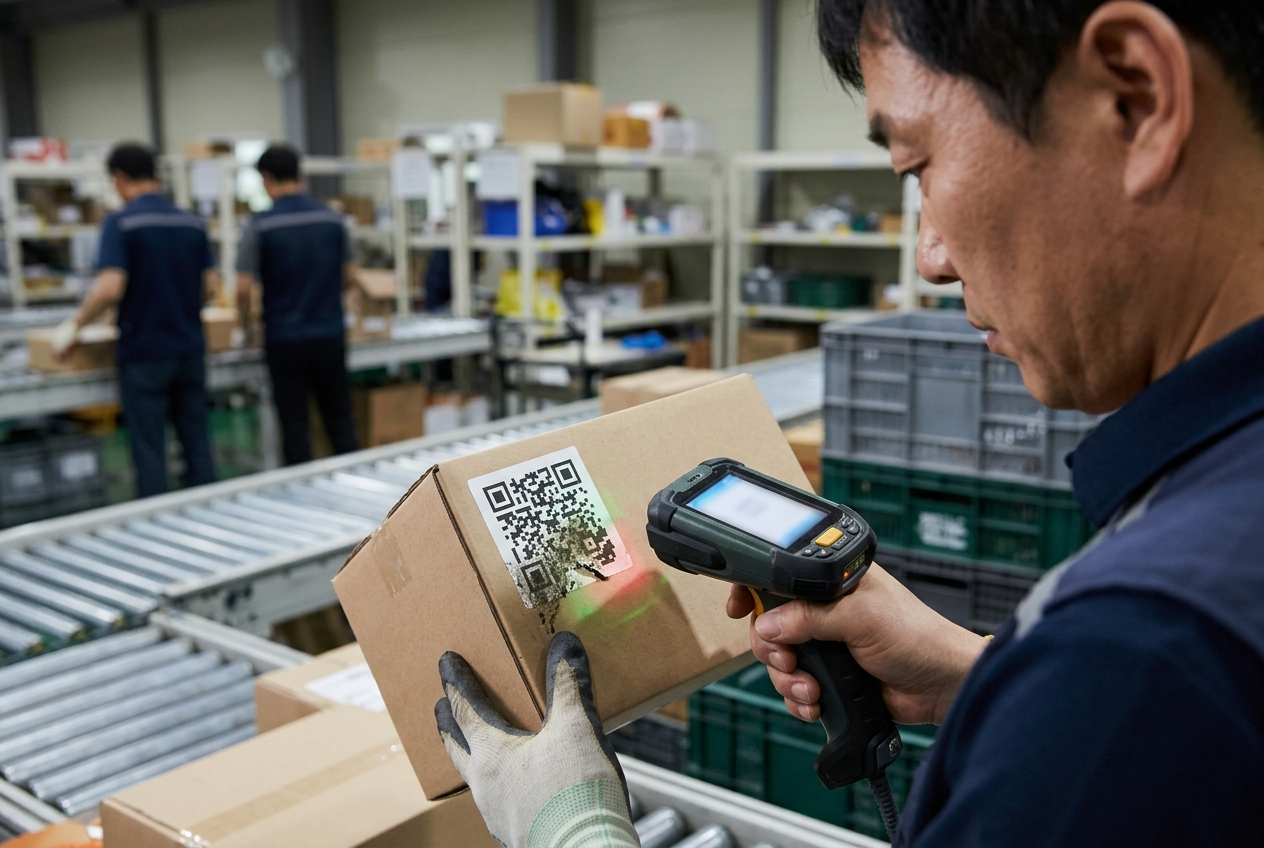
QR codes do not simply list information; they include Error Correction Codes. Thanks to this, data recovery is possible even if the code is partially contaminated or damaged. This restoration capability is divided into four levels (L, M, Q, H), and the higher the level, the more damage it can withstand. Due to this design, stable scanning is possible even in environments where damage is likely, such as outdoor advertisements or product packaging. For example, the L level can recover about 7% of damage, while the H level can recover up to 30%, making it technically important to set the appropriate level according to the environment. Additionally, as the size of the code decreases, the data density increases, and more sophisticated patterns and higher error correction capabilities are required to contain complex information. Choosing the optimal version for the user environment is key to increasing recognition rates.
Creating Your Own QR Code: Choosing the Right Tool for Your Purpose
We live in an era where anyone can easily create a QR code. You can use generation tools tailored to your purpose, such as promoting a personal blog, sharing contact information on a business card, or guiding users to an event page. There are many services online that generate high-quality QR codes for free. The most important thing is to understand the difference between 'Static QR' and 'Dynamic QR'.
Static QR codes contain information directly within the code itself, so the content cannot be modified after creation. This is suitable for fixed information that does not require changes once distributed (e.g., main website URL, Wi-Fi access information). On the other hand, dynamic QR codes store information on a server and only contain the server's address in the code, allowing you to change the linked URL at any time. If you are using them for marketing activities, dynamic QR codes that allow for statistical tracking are much more advantageous.
Design Elements to Consider When Creating
Readability is vital for QR codes. If you excessively change colors or place complex logos in the center for design purposes, the scan recognition rate may drop. It is essential to maintain a clear contrast between the background and foreground colors and to secure a minimum margin. Especially when placing them in public spaces used by many people, a testing process to ensure they are quickly recognized regardless of smartphone model should be prioritized. Also, when inserting a logo, careful placement is required to utilize the central 'error correction area' so as not to directly cover the data pattern. As design elements increase, the recognition rate may decrease, so you must conduct physical tests when inserting logos for corporate branding. Beyond simple logo insertion, when changing the overall color of the code, you must comprehensively consider whether the contrast between colors is clear and whether it is printed on materials with high glare; these are important factors that determine the quality of the final output.
Security Checkpoints for Safe QR Code Usage

As convenient as they are, QR codes are also exposed to security threats known as 'Quishing' (QR + Phishing). Scanning a QR code created by someone with malicious intent carries the risk of being connected to a phishing site or having malicious apps installed. You should break the habit of indiscriminately scanning any QR code.
First, never scan QR codes from unknown sources. Strange QR codes attached in streets or public places may have been placed there by someone else. Second, always check the URL that appears after scanning. Simply verifying that the site address is the one you intended to visit and checking for strange characters can prevent most incidents. Third, actively use security apps. Modern smartphones provide a preview feature when scanning QR codes, so it is safer to go through the step of checking the address first rather than connecting immediately. Fourth, before entering personal information, you must check whether the linked website has a security certificate (HTTPS) applied, and carefully cross-check if the QR code is impersonating a public or financial institution.
Precautions When Using in Public Places
When using QR codes in public facilities, it is wise to check if there are signs that the original code has been covered up. Also, avoid entering personal information after connecting via a QR code using public Wi-Fi. Especially when accessing payment-related information or services that require login, use a network environment with secured security if possible. It is important to develop the habit of distinguishing whether a QR code is an official one provided by a public institution or one attached by a private entity. QR codes in the form of stickers attached to offline advertisements require special caution. If you find a suspicious QR code, the safest preventive measure is to search for the institution's official website to find information rather than scanning it directly.
Practical Guide for Efficient Management
When operating QR codes as an individual or small business, consistency in management is important. If you use multiple QR codes, you should clearly record which code is used where. Also, you must periodically check that the links are working properly. If a linked page disappears or the address changes and it is left unattended, it will significantly harm the user experience. Administrators need a data-driven approach to analyze marketing efficiency by periodically tracking the scan count and inflow path of QR codes. In terms of management, it is recommended to assign a campaign name to each QR code and periodically report scan statistics to identify which location's QR code shows the highest response. This is very helpful for efficiently allocating marketing resources. QR codes are not just graphics, but digital assets. If you clarify your purpose, prioritize security, and manage them continuously, they will become powerful marketing tools that connect online and offline. Start applying QR codes to your daily life or work environment from today. You will discover the vast potential contained within a small square.
QR codes are the beginning of smart digital utilization. You need a balanced perspective that enjoys convenience while always following security rules. Based on what we have covered today, I hope your digital life becomes safer and more enriched.
Frequently Asked Questions
I scanned a QR code and it connected to a strange site. What should I do?
Immediately close the browser and terminate the connected window. If you have entered personal information or downloaded a file, perform a malware scan immediately and take additional security measures such as changing your password.
Should I use a static QR code or a dynamic QR code?
A static QR code is suitable when simply showing information that does not change. However, if you need to collect marketing data or have the possibility of modifying the linked website address in the future, it is much more efficient to use a dynamic QR code.
Can I change the QR code design to look pretty and still have it recognized?
Color changes or logo insertion are possible, but if it is too excessive, the scan recognition rate will drop. You must maintain a clear contrast between the background and the code, and be careful not to excessively cover the data pattern in the center of the code.
Do QR codes have an expiration date?
The QR code itself does not have an expiration date, but if the destination (URL) the QR code is linked to expires, you will not be able to see the information even if you scan it. In the case of dynamic QRs, there may be an expiration date depending on the service provider's policy, so it is necessary to check.