As summer approaches, an unwelcome guest inevitably arrives: the typhoon. Every year, as we see news reports of significant damage, we often feel a vague sense of anxiety. Why do typhoons occur, and what preparations should we make to stay safe during this period? A precise understanding of typhoons is the first step toward reducing groundless fear and establishing reasonable countermeasures.
How Typhoons Are Formed and Move

A typhoon is a massive cyclonic storm that originates in tropical waters. As water vapor evaporates from warm seas where temperatures are 27°C or higher and condenses, it releases tremendous energy; the vortex generated during this process is the core of a typhoon. The lower the pressure at the center, the more strongly it draws in surrounding air, increasing its intensity. A tropical cyclone is officially classified as a typhoon once it develops a maximum sustained wind speed of 17 m/s or higher.
Many people wonder, 'Why don't typhoons follow a fixed path?' Typhoons do not move by their own power; rather, they are steered by the Earth's massive air currents, such as the westerlies and the edges of the North Pacific High. In other words, their path changes every time based on the surrounding pressure distribution. Typhoons tend to avoid high-pressure areas and move toward lower-pressure zones; when the North Pacific High expands, it pushes the typhoon along its periphery toward the Korean Peninsula. Therefore, checking the Korea Meteorological Administration's forecasts daily is not just about knowing the weather—it is an essential process for survival.
Understanding Typhoon Ratings and Risks
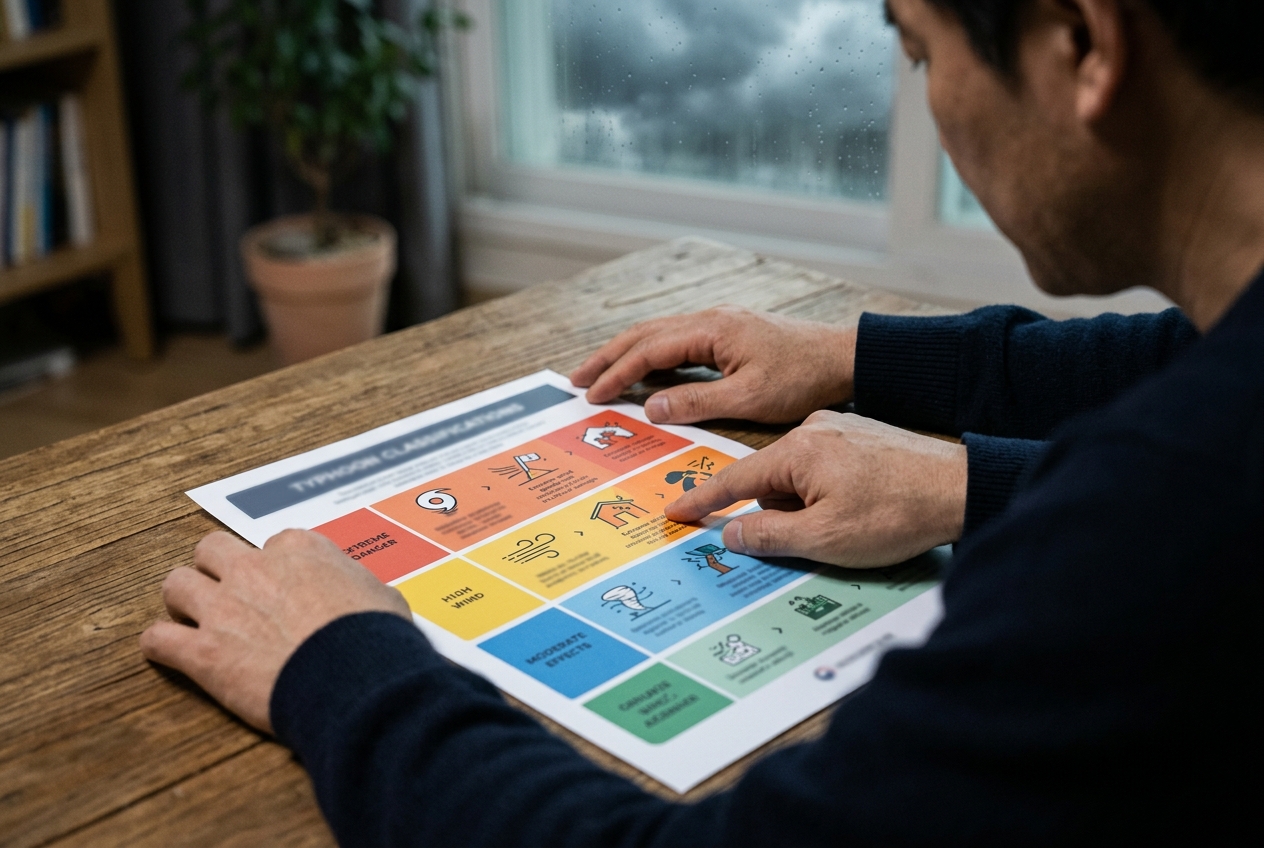
Typhoons are categorized based on the maximum wind speed near their center. It is not just about heavy rain; the destructive power when accompanied by strong winds is unimaginable. Winds of 25 m/s or more can blow off roofs, and speeds over 35 m/s have the power to derail trains. Therefore, it is important to check the typhoon grade announced in weather forecasts and understand the level of impact expected in your area of residence.
Checklist to Verify When a Typhoon Approaches
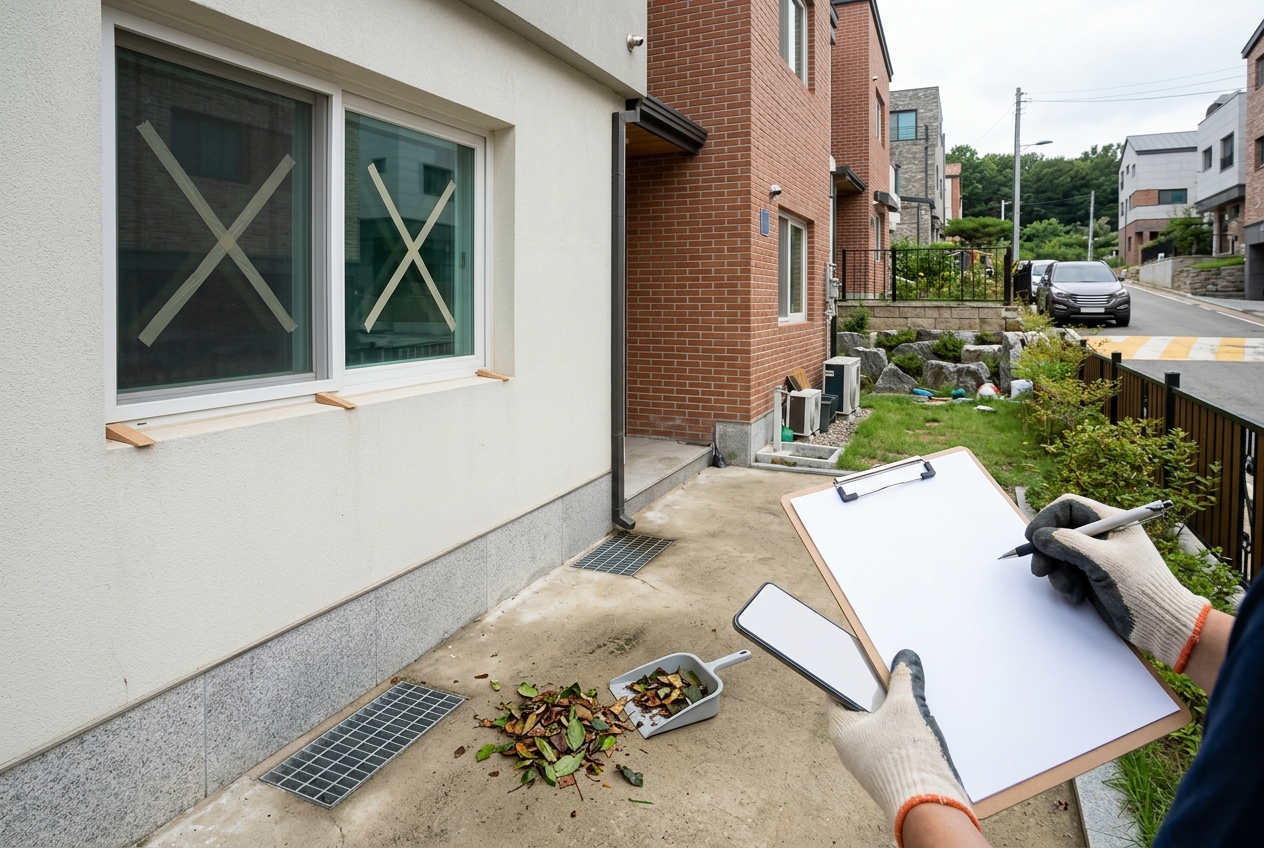
When news arrives that a typhoon is approaching the Korean Peninsula, you must first inspect the area around and inside your home. Recently, typhoons are often accompanied by localized heavy rain and strong winds, requiring extra caution. Because typhoons cause not only strong wind and rain but also secondary damage like storm surges and landslides, pre-inspection is not an option but a necessity.
- Check window security: Seal gaps between windows and frames, and use tape or fixing devices to prevent shaking. Keeping windows from vibrating is key to preventing breakage.
- Inspect drains: Ensure that drains on balconies or in front of your house are not blocked by leaves or trash. If drainage is not smooth, flooding can occur in an instant.
- Check emergency contacts and shelters: Know the location of the nearest shelter and keep emergency contact numbers for family members. You can check shelter locations by municipality on the National Disaster Safety Portal.
- Avoid flood-prone areas: Residents of underground parking lots or low-lying areas should consider moving their vehicles in advance. Low-lying roads, in particular, can flood instantly, trapping vehicles.
While the above points are basic, it is easy to overlook them when a typhoon actually hits. Creating a checklist in advance and saving it in your smartphone's memo app can significantly speed up your response. Furthermore, community-based responses, such as checking if you can help elderly neighbors with limited mobility evacuate, are very important. Since the elderly may have difficulty accessing real-time disaster information, communication between neighbors is a great help.
Specific Methods to Maintain Safety Indoors
When you are in the direct path of a typhoon, it is best to refrain from going out and stay indoors. Staying near windows is very dangerous. If a window breaks due to strong winds, shards can fly inside and cause serious injury. Move to a room far from windows or to the center of the living room. Closing curtains or blinds can partially prevent shards from flying if a window breaks.
Also, prepare for power outages. Damage to power lines due to typhoons is common. It is recommended to have at least three days' worth of flashlights, portable batteries, a radio, emergency drinking water, and instant food. For home appliances, it is safer to unplug them to prevent overcurrent damage from lightning strikes. Specifically, it is recommended to use surge protectors for computers or expensive electronics. During a typhoon, refrain from using elevators and use stairs if possible, as there is a risk of being trapped during a power outage.
Safe Waiting Posture and Environment
When staying indoors, close gas valves and minimize gaps where water could enter from outside. When strong winds blow, close windows, check locks, and move furniture away from windows in case of breakage. Keeping indoor lighting bright to maintain psychological stability is also important.
Flood Damage Prevention and Action Tips

Recently, record-breaking heavy rains falling in short periods have led to frequent flooding in low-lying areas. If you live in a semi-basement or use an underground parking lot, check in advance if flood barriers are installed and prepare sandbags. Sandbags are effective for diverting water flow or blocking water from entering entrances. If water starts to enter your home, immediately turn off the main circuit breaker and evacuate to a safe place before the water reaches knee height.
The pressure of water is stronger than you might think and can make it difficult to open doors, so initial response is paramount. If the door cannot be opened from the outside, use a heavy object to break a window and escape. When walking through flooded areas, use a long stick to check the ground, as manhole covers may be open. To prevent electrocution, never go near streetlights or traffic lights.
How to Deal with Vehicle Flooding
If you are driving and the road is flooded, it is best not to enter. If water rises above one-third of the tire height, there is a high possibility that water will enter the vehicle. If your vehicle is trapped, evacuate immediately and move to higher ground. If the car door will not open, break a window or use a seatbelt cutter to escape quickly.
Precautions and Recovery After a Typhoon Passes
Do not feel relieved just because the typhoon has passed. The ground may be weakened, leaving a risk of landslides or retaining wall collapses. Also, damaged utility poles and downed power lines are major causes of electrocution. When going outside, carefully inspect surrounding facilities and never approach areas that look dangerous. In particular, if a downed power line is submerged in water, the rule is to stay at least 10 meters away.
Do not turn on flooded appliances; have them inspected by a professional. Connecting power while moisture remains can lead to fires or electrocution. During the recovery process, always wear safety gear and it is wiser to seek help from local government rather than attempting strenuous work alone. Ventilate the house thoroughly to prevent mold, and discard any food exposed to contaminated water for hygiene reasons.
Precautions During Recovery
After a typhoon, there is a risk of waterborne diseases. Disinfect items that were submerged in contaminated water and drink boiled water if possible. Also, when repairing damaged houses, ensure structural safety by seeking professional help. Be careful, as many people suffer secondary injuries while attempting recovery work alone.
Typhoons remind us how small we are in the face of nature's massive power. However, with thorough preparation and vigilance, we can minimize damage and get through this period safely. Most importantly, discard the complacent thought that 'nothing bad will happen to me.' Disasters arrive without warning, but preparation is our choice.
Based on the information covered today, we recommend conducting a safety inspection of your home in preparation for the upcoming typhoon season. Small actions, such as discussing evacuation routes with your family and keeping an emergency bag near the entrance, will become the greatest shield to protect your precious life and assets. Always keep an eye on the latest forecasts from the Korea Meteorological Administration and stay safe in your daily life.
Frequently Asked Questions
How often should I check typhoon forecasts?
When a typhoon is approaching, it is recommended to check the latest information at least every 3 to 6 hours via the Korea Meteorological Administration's Weather Nuri or disaster safety text services.
Is taping windows really effective?
Rather than increasing the strength of the glass itself, taping helps reduce the gap between the glass and the window frame, preventing breakage caused by vibration. However, it is more important to firmly secure the window frame than to rely solely on tape.
What should I do first if the power goes out during a typhoon?
First, unplug all home appliances to prevent damage from overcurrent, and secure a flashlight. Also, for safety, using a lantern or smartphone light is better for fire prevention than using candles.
How should I handle a flooded vehicle?
Never start the engine of a flooded vehicle; contact your insurance company to have it towed. The moment you start the engine, water can enter the engine, causing irreparable damage.