Many people think, 'Since the loan amount is small, it won't have a major impact on my credit score.' However, this is one of the most common misconceptions in the financial market. Even if it is a small amount, a loan is still debt, and it directly affects your repayment capacity and credit evaluation. When you need quick cash, small loans are often the first thing that comes to mind—but what should you be careful about?
Does taking out a small loan automatically lower your credit score?

To start with the conclusion: while the act of taking out a loan does not cause your score to plummet instantly, the number of loans, the type of loan, and your repayment history work together to affect your credit evaluation. Because a small loan is classified as 'debt,' financial institutions view it as an individual's repayment burden. In particular, if you repeatedly take out small loans from multiple sources, you may be classified as a 'multiple debtor,' which significantly increases the likelihood of your score dropping.
What many people overlook is the interest rate level of small loans. Because the amount is small, people expect the interest burden to be low, but in reality, interest rates are often set higher than those for general secured or unsecured loans. This is because financial institutions judge that small loans involve higher management costs and relatively higher risks of default. A drop in credit score is more fatal when a 'delinquency' record occurs rather than just the short-term execution of a loan. Even a single day of late payment remains on your record with credit bureaus, which will return as a disadvantage when applying for long-term loans or credit cards in the future.
From the perspective of credit score management, small loans carry risks similar to 'short-term card loans (cash advances).' Even if it is a non-face-to-face product from a Tier 1 financial institution, if you execute multiple loans in a short period, credit bureaus may interpret this as a sign that your financial situation has deteriorated rapidly. Therefore, unless it is absolutely necessary, you need a strategy to minimize the number of loans to keep credit score fluctuations to a minimum.
3 things you must check yourself before applying for a small loan

Before you apply blindly, please ask yourself the following three questions. First, 'Is this money truly essential?' If it is for simple consumption, adjusting your spending is much more advantageous in the long run than taking out a loan. Second, 'Can I repay both the principal and interest within the repayment period?' Small loans often have a lump-sum repayment structure at maturity, meaning a large amount is due all at once. This can be a huge burden if you do not manage your finances strictly. Third, 'Is it okay for my credit rating?' Check your current debt-to-income ratio before applying for a loan.
An additional point to check is the 'appropriateness of the repayment method.' While small loans often use lump-sum repayment at maturity, it is better to choose an equal principal and interest repayment method if possible. Lump-sum repayment may seem to have a lower immediate interest burden, but because the entire principal must be repaid at maturity, the psychological and financial pressure is very high. On the other hand, equal principal and interest repayment allows you to pay a fixed amount every month, which is advantageous for systematically reducing debt.
Looking at the guidelines from the Financial Supervisory Service or commercial banks, the first thing to consider when taking out a loan is the reliability of the institution. Do not be swayed by illegal private lending or excessive advertising. If you think lightly of a small loan and provide your personal information carelessly, you could become a target for voice phishing or illegal debt collection. When actually taking out a loan, you should make it a habit to verify whether the company is officially registered through the Financial Supervisory Service's 'Institutional Financial Institution Inquiry' service.
What criteria should you use to choose a small loan?
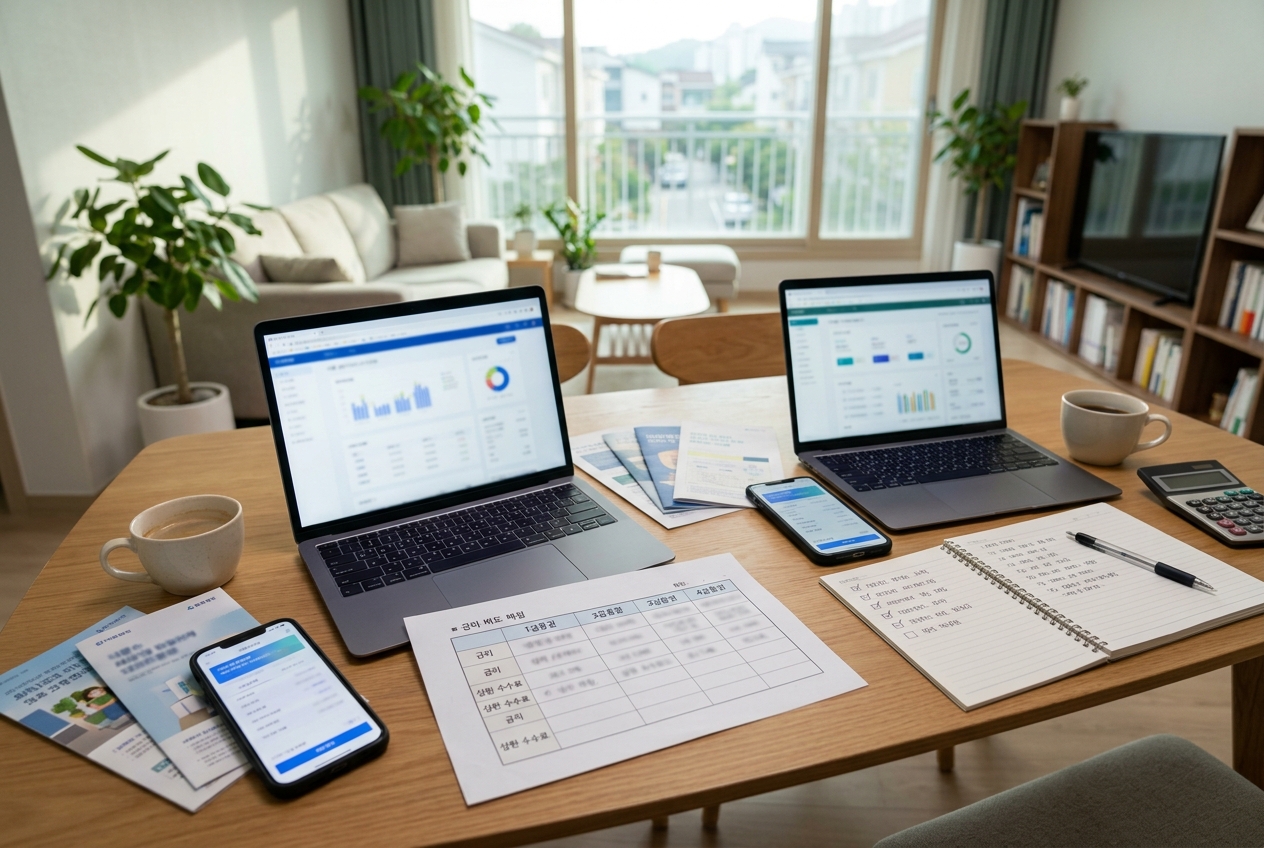
For a safe financial life, you should follow these criteria. First, consider non-face-to-face small loan products from Tier 1 financial institutions. Recently, there are many products where you can check your limit instantly just by verifying your identity through a bank app. Before moving on to Tier 2 financial institutions or private lenders, it is the correct order to check products from your primary bank first. Tier 1 financial products not only have relatively lower interest rates but also have the advantage of causing less credit score decline and having higher reliability.
Comparing interest rates is essential. You must check not only the annual interest rate but also the 'overdue interest rate' and 'early repayment fee.' Small loans often do not have early repayment fees if paid off early, but some products do, so you must read the terms and conditions carefully. Also, setting up automatic transfers to fundamentally block the possibility of delinquency is very important for credit management. When choosing a loan, it is wiser to choose a place with a lower 'monthly interest burden' based on your monthly repayment capacity rather than just looking for a place with a high 'limit.'
When setting comparison criteria, you should consider the 'total cost.' Do not just look at the interest rate; check if there are any stamp duties or incidental costs incurred when taking out the loan. Also, to ensure you are getting the best conditions for your current credit score, you should actively use the non-face-to-face limit inquiry features in various bank apps, as these do not affect your credit score. However, be careful, as repeating inquiries at too many banks in a short period can be perceived negatively by credit bureaus.
How should you manage your finances after using a small loan?

After taking out a loan, mark the repayment schedule on your calendar and ensure funds are in your account at least 1-2 days before the scheduled repayment date. Even a single day of delinquency can cause a major blow to your credit score. Remember that while it is easy to lower your credit score, it is very difficult to raise it again. If you think it will be difficult to repay the loan, you must contact the financial institution before the due date to inquire about extending the repayment period or changing the repayment method. It is much safer to consult in advance than to simply default.
After repayment, it is a good idea to request and keep a 'Certificate of Full Repayment.' Although rare, there are cases where the completion of repayment is omitted due to a system error. Also, your credit score may not recover immediately after paying off the loan. It usually takes several months, so refrain from using credit cards or taking out additional loans immediately after repayment, and build a history of sound financial transactions to gradually recover your score.
How to properly utilize financial information
Financial products are like tools. If used well, they are useful means to solve temporary financial difficulties, but if used incorrectly, they lead to a debt trap. The complacent thought that 'it's a small amount, so it will be fine' is the most dangerous. You need to develop the habit of always calculating your fixed expenses against your monthly income and operating funds only within a manageable range. Before taking out a loan, you must coldly weigh whether 'the benefit gained from this loan is greater than the interest cost.' The habit of taking out loans simply for consumption is the first step toward debt snowballing.
Finally, always refer to the latest data from official institutions for financial information. Unverified information from communities or social media may differ from the actual situation. You should be the one who best understands your own financial status, and if necessary, you should actively consider receiving help from public institutions such as the Korea Inclusive Finance Agency. You can protect your finances as much as you know. Just having a 'financial settlement' time to check your debt status every month can prevent reckless borrowing. If the habit of analyzing your own consumption patterns and setting a budget is established, a foundation will be laid to utilize financial products like small loans more wisely.
Frequently Asked Questions
Do small loans affect my credit score?
Yes, small loans remain as loan records and affect your credit score. In particular, applying for multiple loans in a short period or defaulting can lower your score.
What should I do if my Tier 1 small loan application is rejected?
Rather than forcing yourself to look for Tier 2 financial institutions or private lenders, we recommend re-checking your income verification documents or visiting your primary bank branch for a consultation.
Why is the overdue interest rate so high?
Financial institutions apply much higher overdue interest rates than general interest rates to prevent delinquency. This is stated in the terms and conditions when signing the loan contract, so you must check it in advance.
What is an early repayment fee?
This is a fee incurred when you pay off the principal before the loan maturity date. Some small loan products do not have this fee, so it is good to check the terms and conditions.