The moment we type the price of 1 don of gold into a search bar, we are faced with numbers that change slightly every day. While gold has long been considered one of the most reliable means of preserving asset value, there are far too many variables to consider beyond the market price when you actually set out to buy physical gold. One 'don' of gold is exactly 3.75g, and the price at which this weight trades in the market varies significantly depending on the seller, distribution channel, and product form.
Many people check the gold price and immediately look for the nearest jewelry store or bank. However, gold is not a product that can be purchased at the real-time spot price like stocks. We will break down the key criteria one by one to explain why the price differs between sellers for the same weight of gold on the same day, and what you should base your decision on to avoid future regrets.
1. Understanding the Structure of 1 Don Gold Prices: Why Does the Price Always Vary?

The first thing to note when checking gold prices is that the 'buying price' and 'selling price' are different. The international gold price often encountered in the news usually refers to the value of pure gold as a raw material. However, gold bars or jewelry purchased by general consumers include several additional costs.
- Base Price: The value of pure gold reflecting international gold prices and exchange rates. The daily posted price is based on wholesale rates, and retail stores add their margins to this.
- Labor Cost (Gong-im-bi): The production cost incurred during the process of melting and crafting gold into shapes. This increases with the complexity of the design and the brand value.
- Margin: The distribution fee added by the seller for operating expenses and profit. This varies depending on the store location, brand size, and service quality.
- VAT: A 10% VAT is charged separately when purchasing gold bars. This is a legal requirement and is not an exception even for cash transactions.
If you set your budget based solely on the '1 don gold price,' you may feel a significant difference in the actual payment amount. Pure gold jewelry is traded at a much higher price than investment gold bars due to the high proportion of labor costs. If your goal is investment, it is reasonable to choose gold bars with almost no labor costs; if it is for a gift, choose a product that includes design value. When budgeting in practice, you must compare based on the 'total purchase price.'
2. Investment Gold Bars vs. Pure Gold Jewelry: What Should You Choose?
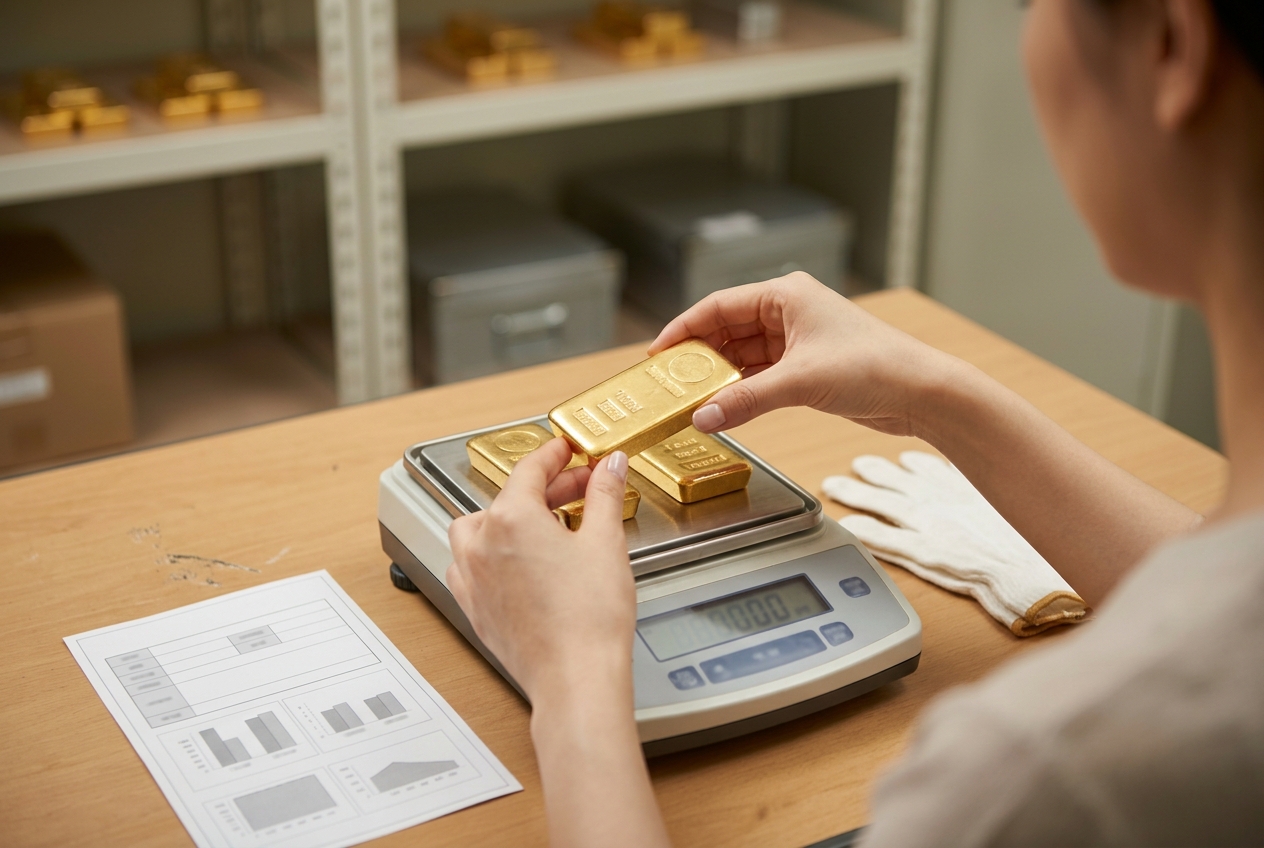
The most common mistake made by those considering gold investment is confusing 'pure gold jewelry' with investment-grade gold. Jewelry is prone to wear and tear over time, and designs can easily go out of fashion. In contrast, gold bars focus solely on the purity and weight of the gold. From an investment perspective, the most important factor is how much 'pure gold weight' you secure for your money.
| Category | Primary Purpose | Price Composition | Liquidity |
|---|---|---|---|
| Gold Bar | Asset Storage/Investment | Price + Margin + VAT | Very High |
| Pure Gold Jewelry | Wear/Gift | Price + Labor Cost + Margin | Average |
As shown in the table above, if you prioritize liquidity, gold bars are overwhelmingly advantageous. This is because when selling jewelry later, you are often only recognized for the value of the pure gold, making it difficult to recover the high labor costs paid initially. On the other hand, gold bars are distributed with certificates, so they are recognized for a consistent value anywhere in the market, and branded gold bars may even command a premium upon resale. The selection criteria are clear: if asset growth and securing emergency funds are the priority, choose gold bars; if anniversary gifts or the satisfaction of wearing the item are the priority, choose jewelry.
3. Checklist You Must Verify When Purchasing Physical Gold

Once you have decided to purchase gold, you must check the following items. First is the presence of a 'Quality Certificate.' Having a certificate issued by a reputable institution can minimize depreciation when selling later. The certificate should specify the weight, purity, manufacturer, and serial number.
Second is 'purity.' Always ensure it is 24K (99.9%) pure gold. Third is the 'reliability of the seller.' Even if gold prices are similar, profit margins vary by seller. It is recommended to use verified businesses with high transaction volumes that have been operating in the market for a long time. Additionally, it is safer to check for scale errors before purchase or prefer products with official test reports. As a practical step, verifying the store's business registration and membership in jewelry-related associations is a good way to validate their credibility.
4. Traps and Information to Be Aware of When Buying Gold

You will often see advertisements emphasizing the 'lowest price' on internet communities or social media. However, since gold is a product with a set market price, you should be suspicious if it is excessively cheap. It may be a product with low purity or insufficient weight. Also, be especially careful of investment solicitations that promise principal protection under the name of 'Gold-tech,' as these are likely financial scams. While gold can serve as an inflation hedge as a physical asset, a cautious approach is needed for speculation aimed at short-term price gains.
Gold prices can fluctuate sharply depending on exchange rates and international conditions. In particular, a strong US dollar can be a factor in falling gold prices. Therefore, it is better to approach it from a long-term perspective using surplus funds. Also, consider storage costs in addition to gold price volatility. If holding a large amount of gold, you should plan safe storage methods in advance, considering safe installation costs or insurance premiums. As a precaution, if you keep high-value gold at home, it is recommended to install security devices to prevent theft or utilize bank safe deposit box services.
5. Practical Purchase Process: Where and How to Buy?
Sellers are largely divided into banks, gold exchanges, and general jewelry stores. Banks have the highest reliability but higher fees, while gold exchanges can offer gold bars at relatively reasonable prices. General jewelry stores offer good accessibility, but you must ensure they transparently disclose the daily price.
Just before purchasing, it is highly recommended to compare the daily price at multiple places and consult via phone regarding stock and pricing. Especially when paying in cash, don't forget to ask if a cash receipt can be issued. This is very important for proving the source of funds or maintaining transparent transaction records later. When purchasing, it is most accurate to visit the store in person to check the condition of the product and go through the process of measuring the weight yourself along with the certificate.
As a practical step, you must write a transaction statement and receive a certificate stating the purity and weight of the gold. Also, asking about the 'buy-back price' (purchase price by the dealer) in advance makes it much easier to calculate asset value later. Verifying that they provide consistent price information is also an essential process.
In conclusion, when purchasing gold, clarifying your purpose is the top priority. If asset growth is the goal, prioritize the purity and certification of gold bars; if conveying your heart to a loved one is the goal, choose jewelry with excellent craftsmanship. The price changes every day, but the value of gold remains constant. Please compare carefully and choose reasonably.
Finally, the most important principle in gold investment is 'diversification.' It is necessary to have a strategy to increase the defensive strength of your portfolio during economic crises by holding a portion of your assets in gold. I hope you become a wise investor who carefully reviews your financial situation and prioritizes the value of asset preservation over target returns. Since gold has a strong character as a buffer against long-term economic conditions rather than short-term profits, a long-term perspective that can withstand volatility is required.
Frequently Asked Questions
How many grams is exactly 1 don of gold?
1 don of gold is exactly 3.75g as a legal unit of measurement.
Why is VAT added when buying gold bars?
Gold bars are classified as gold bullion (raw material) under tax law, so a 10% value-added tax is incurred upon transaction. However, this VAT is not refunded when selling back.
Where is the most accurate place to check gold prices?
It is most accurate to check the pure gold price posted daily on the websites of reputable institutions such as the Korea Gold Exchange.
Can I get the same price I paid when selling jewelry?
No. Since the labor costs paid at the time of purchase are generally not included when selling back, it is usually priced lower than the purchase price.
Is it mandatory to issue a cash receipt when purchasing gold?
Yes, it is recommended to trade with businesses that can issue cash receipts to ensure transparent asset proof and prevent future tax issues.