What is the first indicator you should check when buying real estate or preparing for a lease or monthly rent contract? It is the 'real transaction price.' Real estate transactions involve such large sums of money that making decisions based on asking prices or vague rumors is risky. A real transaction price inquiry is the most powerful data available to objectively judge whether the property you are looking at is priced appropriately or how market trends are shifting. Beyond simple searching, the ability to read between the lines of data is the key to protecting your assets.
What is a Real Transaction Price and Why Does It Differ from an Asking Price?

The real transaction price refers to the amount agreed upon by the actual seller and buyer, documented in a contract, and reported to the relevant local government. On the other hand, the 'asking price' commonly encountered is the price the seller hopes to receive. There can be a significant gap between the two. By checking past transaction history through a real transaction price inquiry, you can gauge whether the price currently requested by the seller is excessively high compared to market conditions, or at what level quick-sale properties are being closed. IMAGE_SLOT_1 Many novice investors or tenants regret their decisions after signing contracts based solely on asking prices. The real transaction price is an indicator that reveals the actual 'temperature' of the market, while the asking price reflects the seller's 'psychology.' As a buyer, you should sit at the negotiation table based on the 'fact' of the real transaction price rather than being swayed by the asking price. Furthermore, while asking prices react first to rapid market changes, real transaction prices reflect the value at the time the contract was completed, making them much more reliable for understanding the market's actual strength and direction.
In reality, the asking price is often the price where the seller's expectations are maximized. In contrast, the real transaction price is strictly determined by market supply and demand and the buyer's ability to pay. Therefore, when negotiating, it is necessary to narrow the range by setting the average real transaction price of the last three months as the lower limit and the lowest asking price of properties currently on the market as the upper limit. Remember that the point where the gap between the asking price and the real transaction price narrows is where trading becomes active.
How to Use the Ministry of Land, Infrastructure and Transport's Real Transaction Price Disclosure System
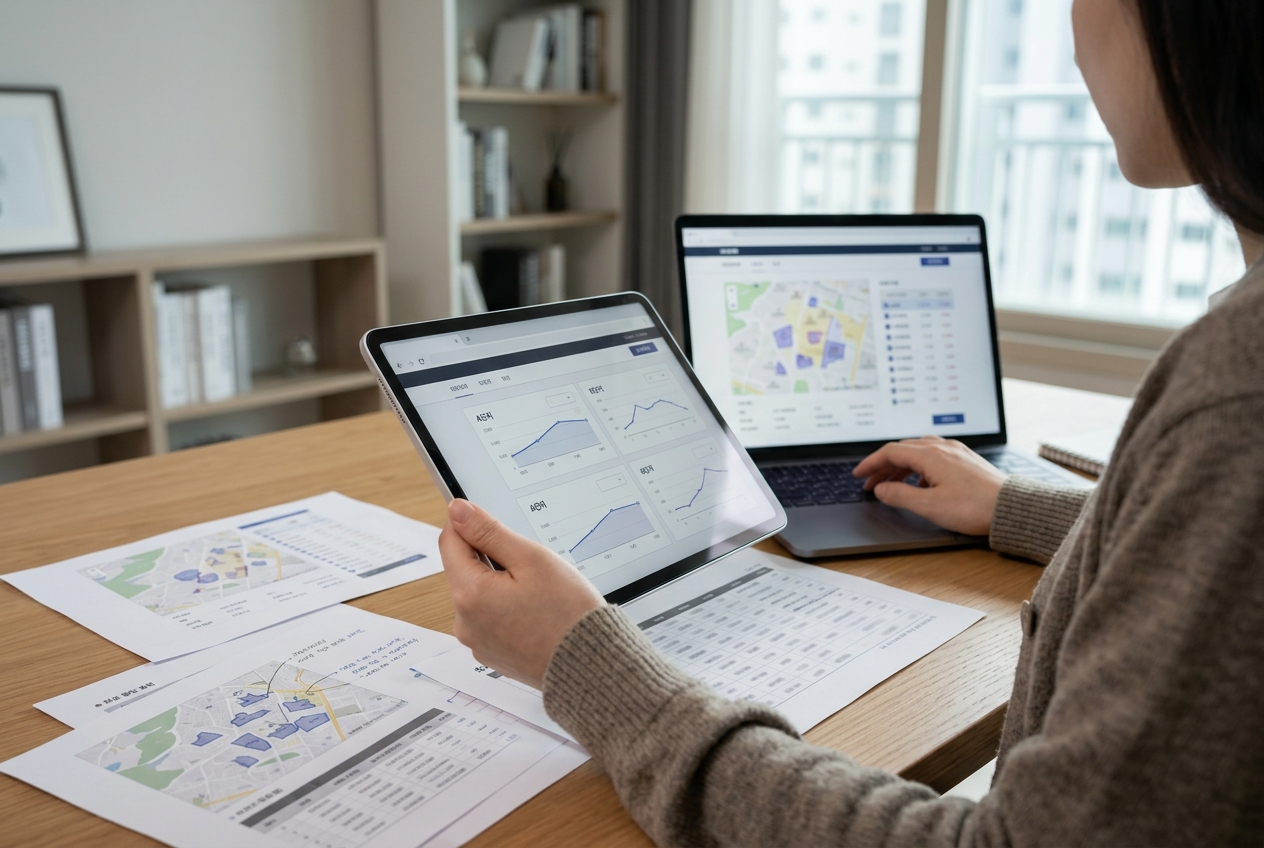
The most authoritative source is the Real Transaction Price Disclosure System operated by the Ministry of Land, Infrastructure and Transport. This site provides detailed data by housing type, such as apartments, row/multi-household houses, detached/multi-family houses, and officetels. A point to note when searching is that even within the same complex, price differences can be significant depending on the floor, orientation, remodeling status, and view. It is important to develop the habit of filtering and checking transaction history for the specific building or floor you are interested in, rather than just looking at the average price. Please refer to Everything About Apartment Real Transaction Price Inquiries for more specific analysis methods. Using the graph function provided by the system allows you to view the long-term price trends of a specific complex. Simply observing whether this graph trends upward or if transaction volume has plummeted after a certain point can help predict the liquidity of that complex.
When using the system, you must set a 'comparison target.' Rather than looking at the price of a single complex in isolation, you should compare it in parallel with nearby complexes of similar age and size. Utilizing the 'Complex Search' function within the system allows you to see the real transaction price trends of surrounding complexes at a glance, which is a great help in judging the relative value of whether your target property is overvalued or undervalued in the market.
Variables to Consider When Analyzing Data
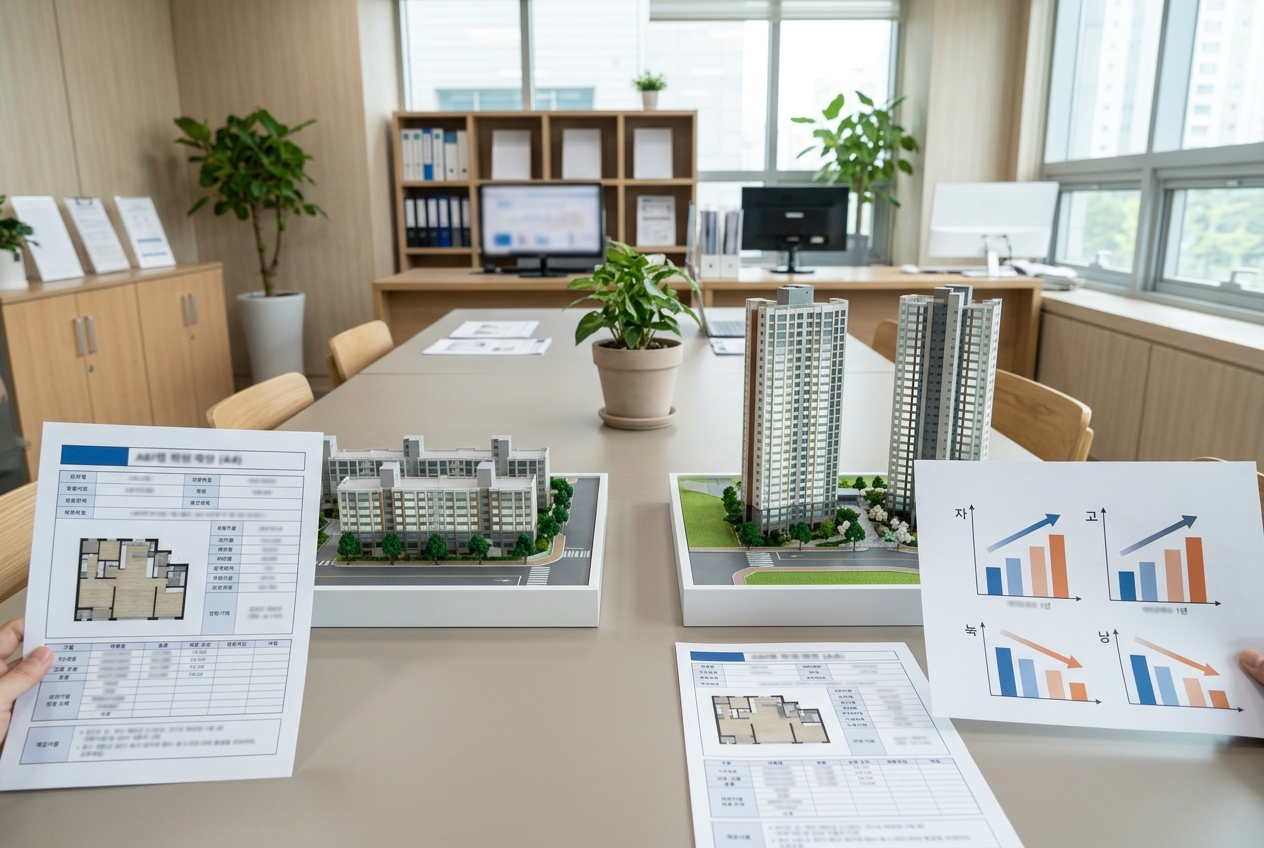
When conducting a real transaction price inquiry, you should not just check the amount. The following are items that must be checked when interpreting data. IMAGE_SLOT_2
- Transaction Timing: You must compare the price from a year ago with the current price to understand the upward or downward trend.
- Floor and Orientation: There is a large price deviation between low and high floors, and south-facing versus north-facing units. You should not ignore the difference between 'royal' buildings and non-royal buildings within the same complex.
- Special Transactions: Transactions such as family gifts or quick sales can be included, which may distort the average. In complexes with low transaction volume, a single special transaction can make the overall market price appear lower.
- Contract Cancellation: Recently, cases canceled after the contract are also displayed in the system, so it is necessary to verify whether the transaction was actually completed. Canceled reports should be excluded from market price calculations.
- Renovation Status: The condition of the interior has a significant impact on the price. You must supplement the internal condition, which does not appear in the real transaction price, through on-site visits.
A checkpoint when analyzing data is 'transaction volume.' Even if prices rise, an increase not supported by transaction volume may be temporary. Conversely, a segment where prices are stagnant but transaction volume is gradually increasing is highly likely to be a signal that the market is bottoming out and preparing to turn upward. Additionally, checking the transaction volume by floor plan within the same complex to identify the most popular layout is very important when considering future liquidity.
Real Transaction Price Utilization Strategies by Transaction Type

If you are a buyer, you can establish a 'negotiation strategy' through real transaction prices. If the recent real transaction price trend is downward, you have a justification to attempt a price adjustment with the seller; conversely, if the upward trend is clear, quick decision-making may be necessary. IMAGE_SLOT_3 Tenants should also use real transaction price inquiries to check the 'Jeonse' (lump-sum deposit) ratio to ensure there is no risk of a 'tin-can Jeonse' (where the deposit exceeds the property value). If the Jeonse real transaction price is close to the sale price, you must carefully consider the risk of deposit non-return. A high Jeonse ratio can be a signal that the Jeonse deposit is not safe relative to the sale price. Furthermore, checking Jeonse transaction volume in the system to see if Jeonse supply is flooding the market or if it is scarce can be a great help in securing favorable conditions when signing a lease.
From the seller's perspective, when putting your property on the market, you should set an appropriate selling price by comparing the highest and average prices among recent real transactions. Rather than asking for an unconditionally high price, setting an asking price within the range of real transactions from the last 3 to 6 months increases the probability of receiving actual purchase inquiries. If the market is stagnant, narrowing the gap between the real transaction price and the asking price is the shortcut to a successful sale.
Precautions: Limitations of Data and Countermeasures
Real transaction price data is a record of the past. In other words, it does not guarantee future prices. Also, since the reporting deadline is within 30 days of the contract date, there is a possibility that the very recent market atmosphere is not 100% reflected in the data. IMAGE_SLOT_4 Therefore, you should make comprehensive judgments by combining real transaction price inquiries with on-site real estate visits, changes in recent asking prices, interest rate situations, and policy changes. Since all real estate transactions are made at your own risk, it is safest to refer to official data while also seeking expert advice. Especially during periods of frequent record-high price renewals, keep in mind that the numbers in the real transaction price system may be lower than the current market price until the data is updated. Conversely, in a 'transaction cliff' situation, real transaction prices may disappear, making it difficult to grasp the market price; in such cases, it is better to check the actual transaction atmosphere through nearby real estate agencies.
As a practical method to overcome the limitations of data, we suggest 'on-site verification.' Online data is just the starting point of information. The actual living environment, parking convenience, and management status of the complex are not revealed in the data. After narrowing down candidates to 3 to 5 complexes using data, it is essential to visit the site and hear about the recent actual transaction atmosphere from brokerage offices. Data is cold, but the field is hot. Only investors who use both harmoniously can survive in the market.
Final Checkpoints for Successful Real Estate Transactions
Ultimately, a real transaction price inquiry is the process of establishing an 'objective benchmark.' To avoid being swept away by market overheating or stagnation, you must develop the power to interpret data yourself. Do not just look at a specific complex; evaluate its relative value by comparing prices with similar nearby complexes. In real estate transactions, the person who reduces information asymmetry eventually leads to a favorable contract. Rather than blindly trusting data, you need the wisdom to use data as a compass while listening to the voices of the field. If you organize the transaction patterns of the complex you are interested in over the past 3 to 5 years, you can grasp its characteristics, such as how much it rises during a boom and how well it defends during a downturn. Such efforts are the first step toward failure-free real estate investment.
Finally, a point to be careful about when using data is 'confirmation bias.' You should not fall into the error of only looking for data favorable to the property you want to buy, or conversely, only picking out negative indicators. It is important to always consider counter-data and maintain a cool-headed perspective. A real transaction price inquiry is the first line of defense to protect your valuable assets. Start by accessing the Ministry of Land, Infrastructure and Transport's Real Transaction Price Disclosure System right now to carefully examine the history of the complexes you are interested in. Only those who are prepared can seize opportunities and avoid risks.
Frequently Asked Questions
Why is there a difference between the real transaction price and the asking price?
The real transaction price is the amount actually reported after a contract is concluded, while the asking price is the price the seller hopes for. Depending on market conditions, the asking price can be higher or lower than the real transaction price.
Do canceled contracts appear as real transactions?
Yes, cases where a contract has been canceled are also displayed in the system. You must verify whether the transaction was actually completed or canceled before analyzing the data.
What is the most important thing to be careful about when checking real transaction prices?
Even within the same complex, there are large price differences depending on the floor, orientation, view, and renovation status. It is important to check the detailed conditions of individual transactions rather than just looking at the average price.
What is the deadline for reporting real transaction prices?
Real estate transaction reports must be made within 30 days of the contract date. Therefore, you should consider that very recent market changes may not be immediately reflected in the system.