As a transportation hub connecting Seoul and the southern Gyeonggi region, Geumjeong Station is a place bustling with crowds during rush hour. It is the intersection of Line 1 and Line 4, and with the upcoming GTX-C line, its future value is highly anticipated. However, for first-time visitors or those transferring to a line they don't usually take, it can feel somewhat complex. Today, we will explore how to navigate Geumjeong Station more smartly through various scenarios.
Geumjeong Station Transfers: Key Points Where Anyone Can Easily Make a Mistake
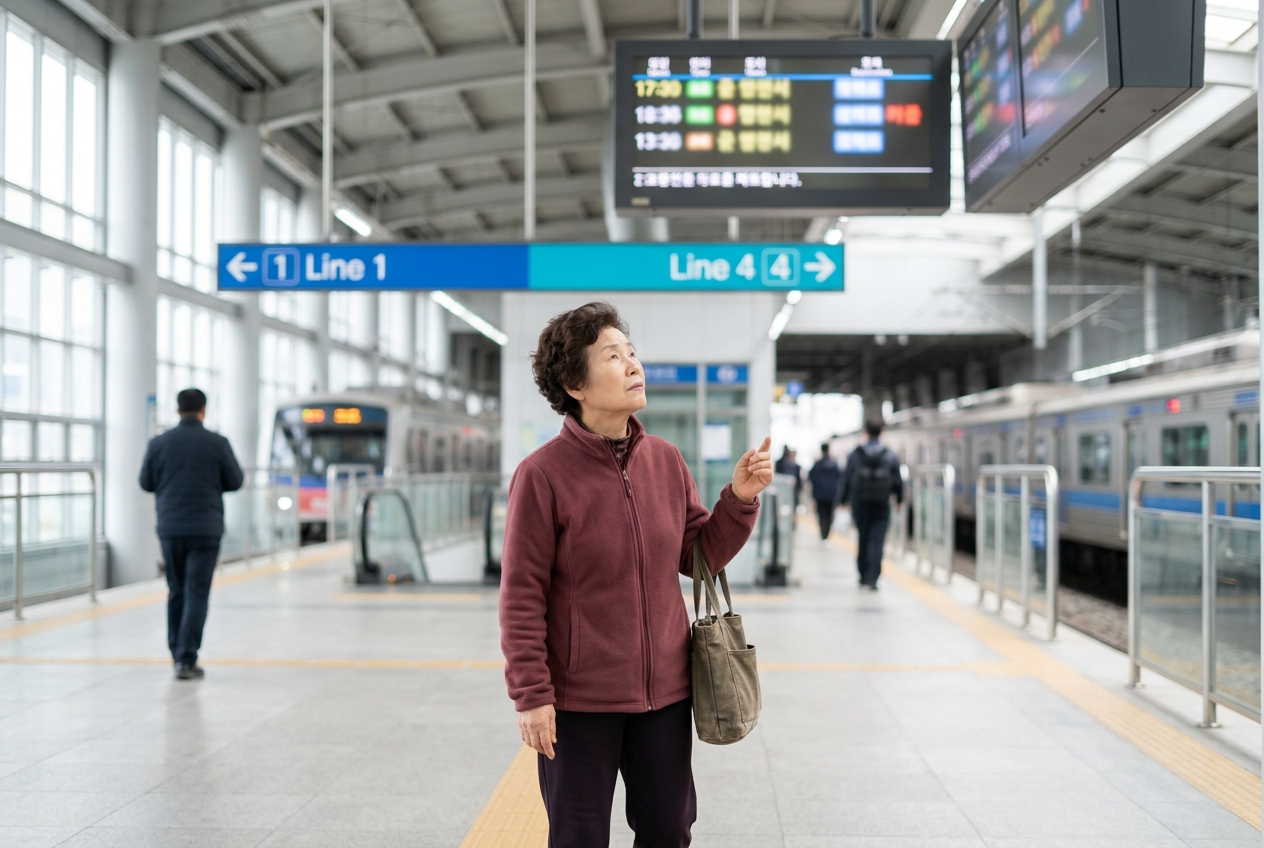
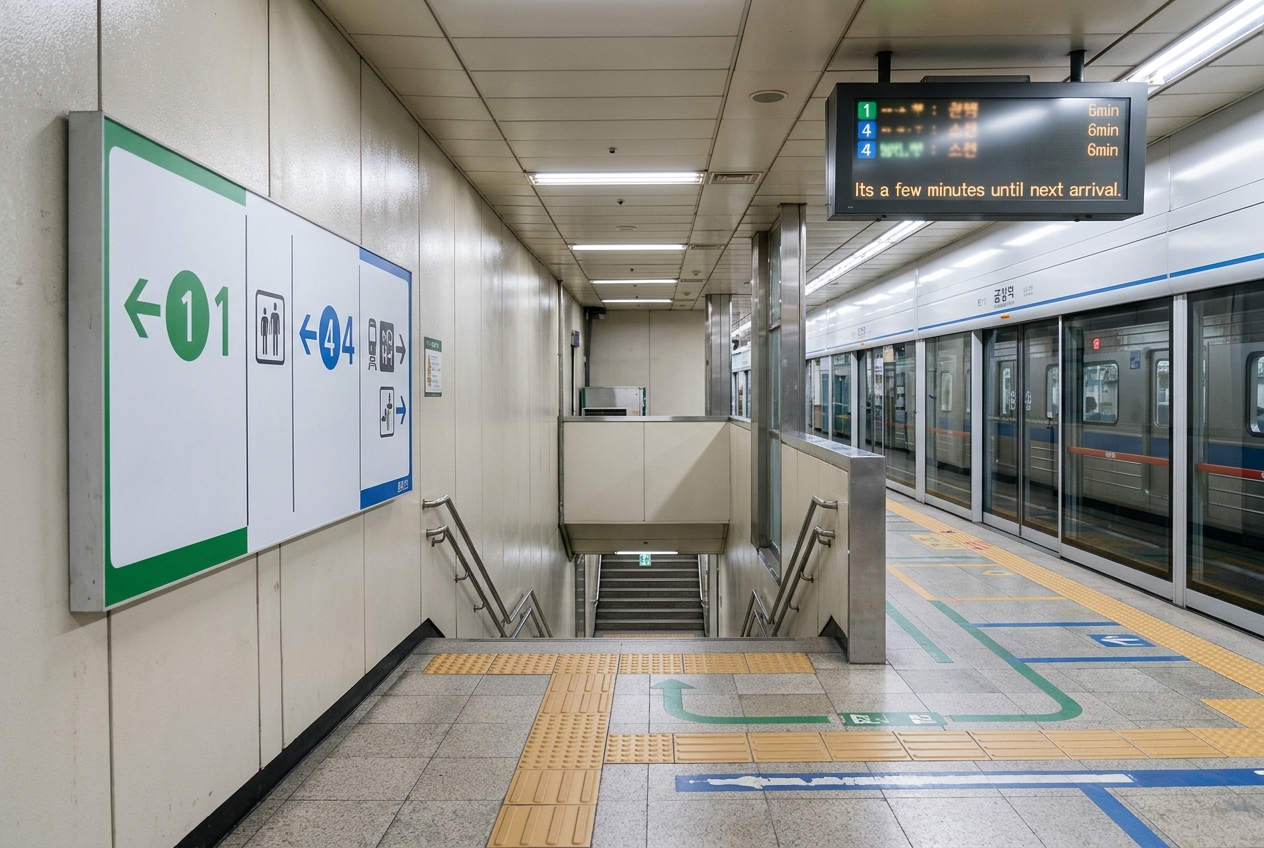
The most notable feature of Geumjeong Station is its 'cross-platform transfer' structure, where Line 1 and Line 4 can be transferred on the same platform. While this is very convenient as there is no need to climb stairs, it can lead to situations where you have to exit the ticket gate to return if you board in the wrong direction. Extra caution is needed for first-timers, especially since express and local trains are mixed.
The first thing to check when transferring is the destination on the electronic display. Line 1 is divided into northbound (towards Seoul Station, Cheongnyangni) and southbound (towards Cheonan, Sinchang), while Line 4 is divided into northbound (towards Danggogae, Oido). You should get into the habit of checking whether the train you need to board is an 'Express' or 'Local' train. Express trains can shorten travel time to your destination because they have different stops, but if you board one by mistake, you risk missing your intended station.
Points to Note When Transferring
- Always listen to the destination announcement when a train enters the station.
- Knowing the stops for express trains in advance is the key to saving time.
- Since it is a cross-platform transfer structure, check whether you need to use the stairs to cross to the opposite platform or if you can simply stand and wait.
- It is recommended to check the boarding position numbers marked on the platform to position yourself closer to stairs or exits when getting off the train.
- In bottleneck areas where transfer passages narrow, it is essential to follow order rather than pushing in to prevent accidents.
- It is also recommended to familiarize yourself with evacuation routes and the location of fire extinguishers within the station in case of an emergency.
Furthermore, to maximize the benefits of cross-platform transfers, it is important to decide your direction immediately after getting off the train. When transferring from the Line 1 northbound line to the Line 4 Oido direction, the information signs on the platform are concentrated in the center. Therefore, boarding the middle cars of the train is the most efficient strategy to minimize your transfer route. During peak transfer times, the path can become narrow, so it is safer to move with the flow rather than rushing as soon as the doors open.
Geumjeong Station Usage Scenarios During Rush Hour
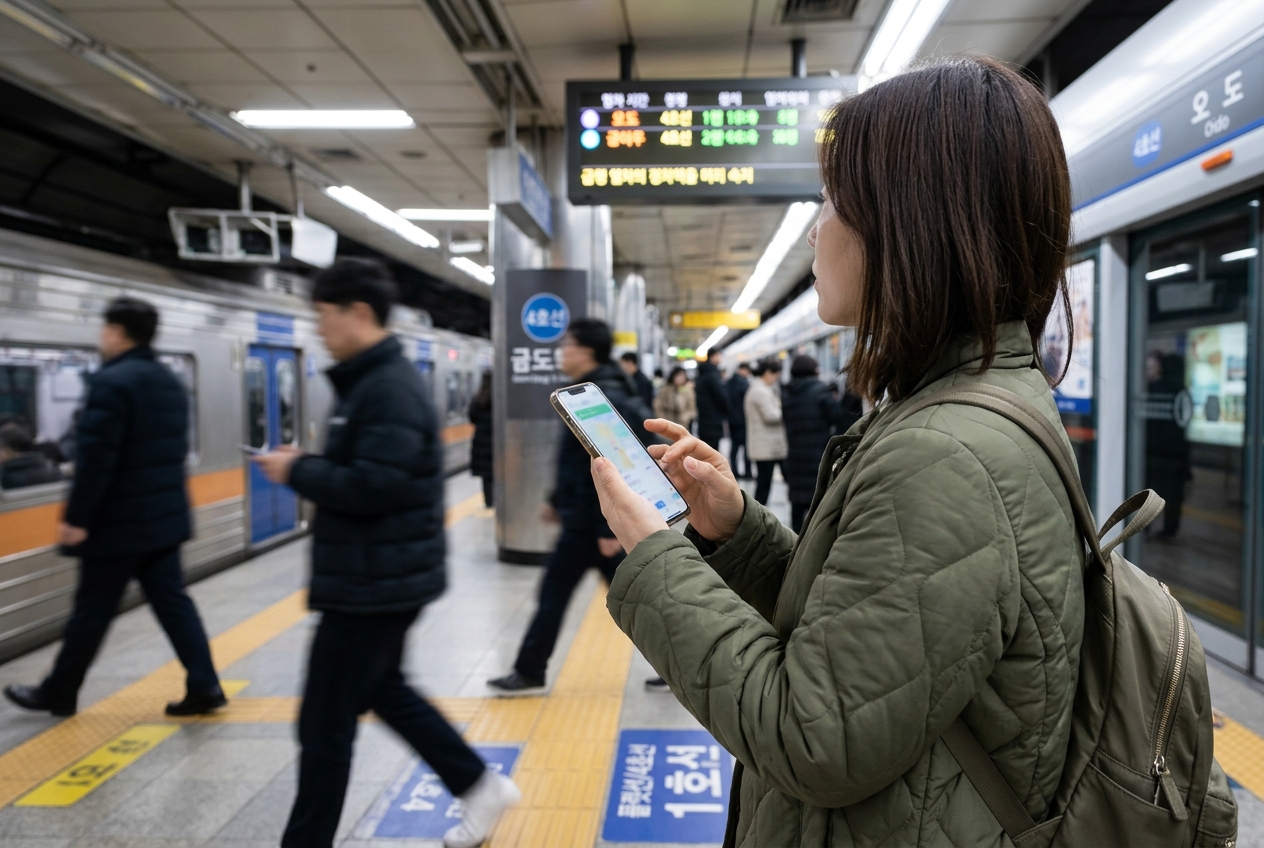
Geumjeong Station is an essential gateway for residents of Anyang, Gunpo, and Uiwang commuting to Seoul. Between 7:00 AM and 9:00 AM, Geumjeong Station is extremely crowded. At these times, it may be more efficient to wait for the next train rather than trying to force your way onto a crowded one. Also, the movement paths within the station are quite narrow.
If you are entering Geumjeong Station from Gunpo or Sanbon to transfer to Line 1, using the front or rear cars rather than the middle of the platform is advantageous for moving quickly to stairs or exits upon arrival. Conversely, when getting off from the Seoul direction to transfer to Line 4, following the transfer signs immediately after getting off is the fastest route.
Commuting Strategies
- To avoid congestion, try to use the very front or very back cars of the train. The middle cars are often crowded with transfer passengers, making movement very difficult.
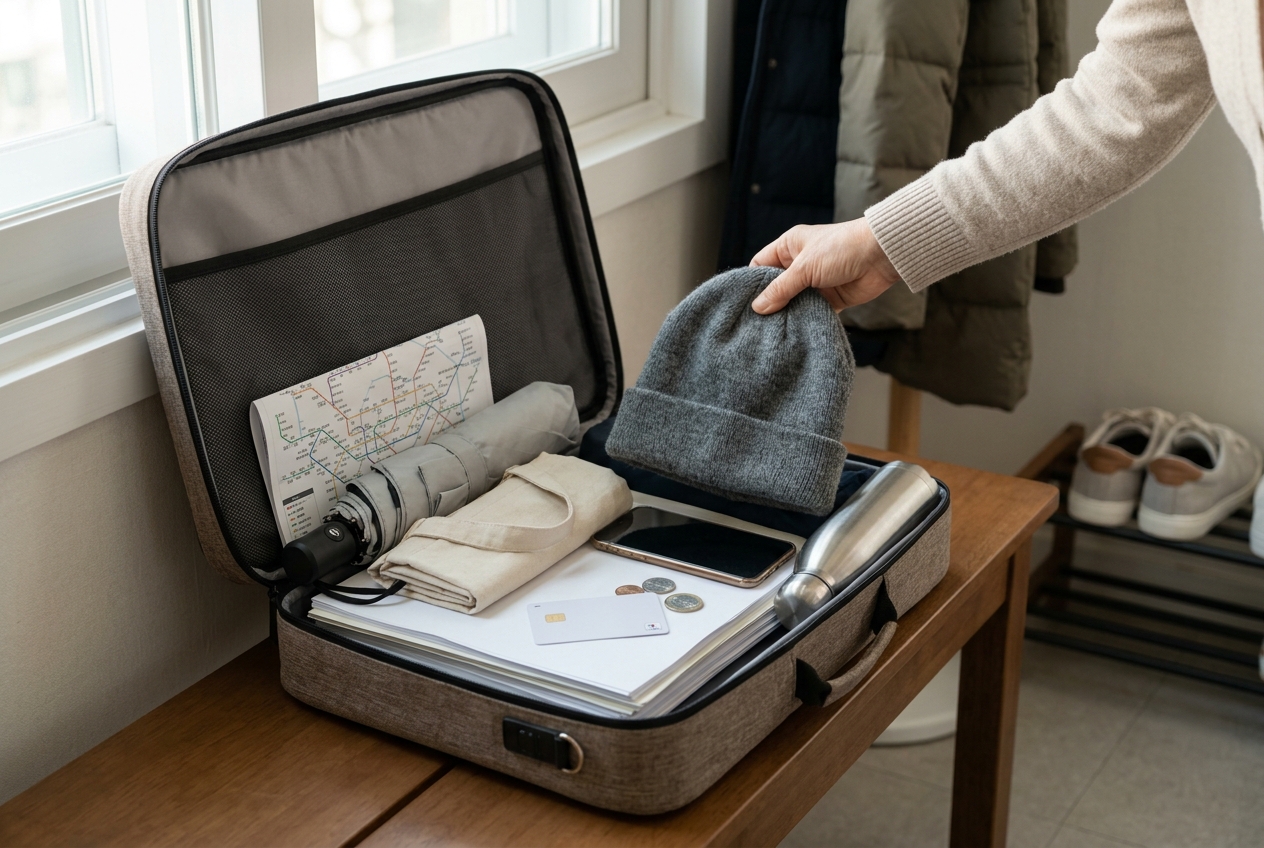
- If your transportation card balance is low, it will cause significant inconvenience to those behind you at the transfer gate. Always top up in advance or check your mobile transportation card balance.
- Checking real-time train arrival times via a smartphone app and entering the platform 2-3 minutes before arrival is a way to reduce waiting time.
- On rainy days, the platform floor can be slippery, so avoid running and walk with shorter strides.
During rush hour, caution is also needed when using the stairs within the station. Long lines often form at the northbound escalator due to the concentration of passengers; please observe right-hand traffic and maintain a safe distance from the person in front of you. Especially in winter, be careful not to let coats or bags get caught in the escalator gaps, and in crowded areas, wearing your bag in front of your body is effective for preventing loss and damage to belongings.
Geumjeong Station Surrounding Commercial Area and Living Environment
The area around Geumjeong Station creates a unique atmosphere where old commercial districts and modern residential complexes coexist. Various food alleys are formed right in front of the station, making it suitable for a quick meal on the way home from work or meeting acquaintances. However, keep in mind that parking space is very limited during the evening hours due to the high volume of floating population.
Exits 1 and 2 of Geumjeong Station are densely packed with traditional commercial areas, and recently, office buildings and new residential facilities have been continuously appearing due to redevelopment projects around the station. Those who live or work here can enjoy the convenience of being near the station, but at the same time, they must pay attention to changes in pedestrian paths due to construction zones.
Considerations for Using the Surrounding Commercial Area
- Restaurants are often full during after-work hours, so it is recommended to check for reservation availability when visiting in groups.
- Nearby public parking lots often fill up early, so it is recommended to use public transportation rather than your own car, or secure information on nearby private parking lots in advance.
- Construction vehicles are frequent around new residential areas, so always watch your surroundings and use crosswalks when walking.
- Many businesses in the station area operate until late at night, so safety on the way home at night is relatively good, but caution is needed on less-traveled side streets.
The Geumjeong Station commercial area is particularly vibrant in the evening as local office workers and residents mingle. When visiting restaurants or cafes, it is a good idea to identify your route in advance and consider the distance from the station. With the recent expansion of new residential facilities around the station, life-oriented services such as convenience stores, coin laundries, and unmanned parcel lockers for single-person households have been significantly improved. While this environment is a great advantage for residents near the station, areas where residential and commercial zones meet may experience noise on weekends and holidays, so it is worth considering when choosing a place to live.
Frequently Asked Questions and Preventive Measures
Due to its structure, inconveniences related to aging facilities are sometimes raised at Geumjeong Station. Since movement paths can become longer during elevator or escalator inspections, those with mobility issues are advised to check the facility's operating status via a subway app in advance. Also, on rainy days, the connection points on the platform can be slippery, so it is necessary to get into the habit of walking carefully.
Finally, as the GTX-C line construction is underway at Geumjeong Station, the surrounding environment is expected to continue changing over the next few years. Public transport users are encouraged to pay attention to construction notices and arrive at the station with more time to spare than usual. When transfer time is tight, planning for the next train rather than rushing is the first step in preventing safety accidents.
Checklist for Safe and Efficient Use
- Check Facility Maintenance: The operational status of elevators in the station is important not only for those with mobility issues but also for those with strollers. Check in advance via the app.
- Familiarize Yourself with Construction Notices: Due to GTX-C construction, exits may be closed or temporary passages may be in operation. Do not always use the same passage; pay close attention to information boards.
- Manage Transfer Time: While the transfer between Line 1 and Line 4 is on the same level, train intervals may differ. Bookmarking the train schedule is very helpful.
- Manage Belongings: During crowded rush hours, wear your bag in front or keep a firm hold on your belongings to prevent loss.
Geumjeong Station is evolving beyond a simple transfer station into a center for the Anyang and Gunpo areas. While there may be temporary inconveniences due to facility repairs or construction, using the 'real-time subway notification' feature of the latest mobile apps can minimize these issues. For example, simply checking train arrival times in advance and calculating transfer waiting times can reduce waiting time at Geumjeong Station by more than 5 minutes. In conclusion, Geumjeong Station is a very convenient transit hub if utilized well, but it requires the wisdom to understand and deal with its structural characteristics and congestion levels in advance. Checking your route in advance and moving with leisure by avoiding peak hours is the wisest way to use Geumjeong Station. Since transportation systems are always changing, maintaining the habit of checking the latest information is the key to using Geumjeong Station.
Frequently Asked Questions
How do I transfer between Line 1 and Line 4 at Geumjeong Station?
Geumjeong Station has a cross-platform transfer structure. You can board the train on the opposite side of the same platform; please be sure to check the destination on the information display before boarding.
How do I take an express train?
You must board a train that displays 'Express' on the platform electronic board. Since express trains do not stop at all stations, it is important to check in advance if your destination is a stop.
Is parking available around Geumjeong Station?
Parking space is very limited due to the dense commercial area around the station. We recommend using public transportation if possible, and if you must drive, please search for information on nearby public parking lots in advance.
Are there any inconveniences due to construction at Geumjeong Station?
Some routes may change due to the GTX-C line construction. Please follow the notices posted inside the station and the route guidance, and it is recommended to allow 5-10 minutes more than usual for your travel.