People who start YouTube stand in front of the camera with their own unique goals. Some want to document their daily lives, others want to share expertise in a specific field, and some are driven by the concrete goal of generating revenue. However, once they actually start, they often face a reality that is tougher than expected. It is natural to lose motivation when views don't rise and the subscriber count remains stagnant. In this article, we will examine the major situations encountered while running a YouTube channel and delve into the strategic approaches needed at each stage.
The First Step in Content Planning: Finding What Viewers Want to See

The biggest mistake many beginner creators make is failing to bridge the gap between 'videos I want to make' and 'videos people want to watch.' While maintaining your own style is important, YouTube is a platform that must be chosen by the viewer. First, you must clearly distinguish whether your topic is of general interest or if it targets a specific niche market. Viewers subscribe to channels that solve their problems, provide entertainment, or offer new information.
For example, if you run a cooking channel, rather than just uploading 'what I cooked today,' you need a plan that addresses specific viewer needs, such as '10-minute super simple recipes for busy office workers.' During the planning stage, ask yourself: 'Who is going to click on this video?' and 'What does the viewer gain after watching this video?' If you cannot answer these two questions, the planning is not yet complete. While it is good to analyze competitor channels when determining your direction, it is much more advantageous to find the gaps they are missing rather than copying them. Adding detailed tips not covered in top-ranking videos for a specific keyword, or reflecting requests made by viewers in the comments, can create differentiated content. Additionally, creating a 'series' early on is a good idea. Producing a specific topic in multiple parts can motivate viewers to look forward to the next video.
Practical methods for refining content planning include 'using mind maps' and 'using keyword tools.' It is important to draw out sub-topics that can stem from your main topic using a mind map to check for relevance, and to identify what people are actually curious about through Google Trends or YouTube's search autocomplete feature. Also, getting into the habit of writing down three key points to place at the beginning, middle, and end of the video when drafting your plan can help reduce unnecessary footage and improve clarity during filming.
Characteristics and Precautions for Videos Favored by the Algorithm
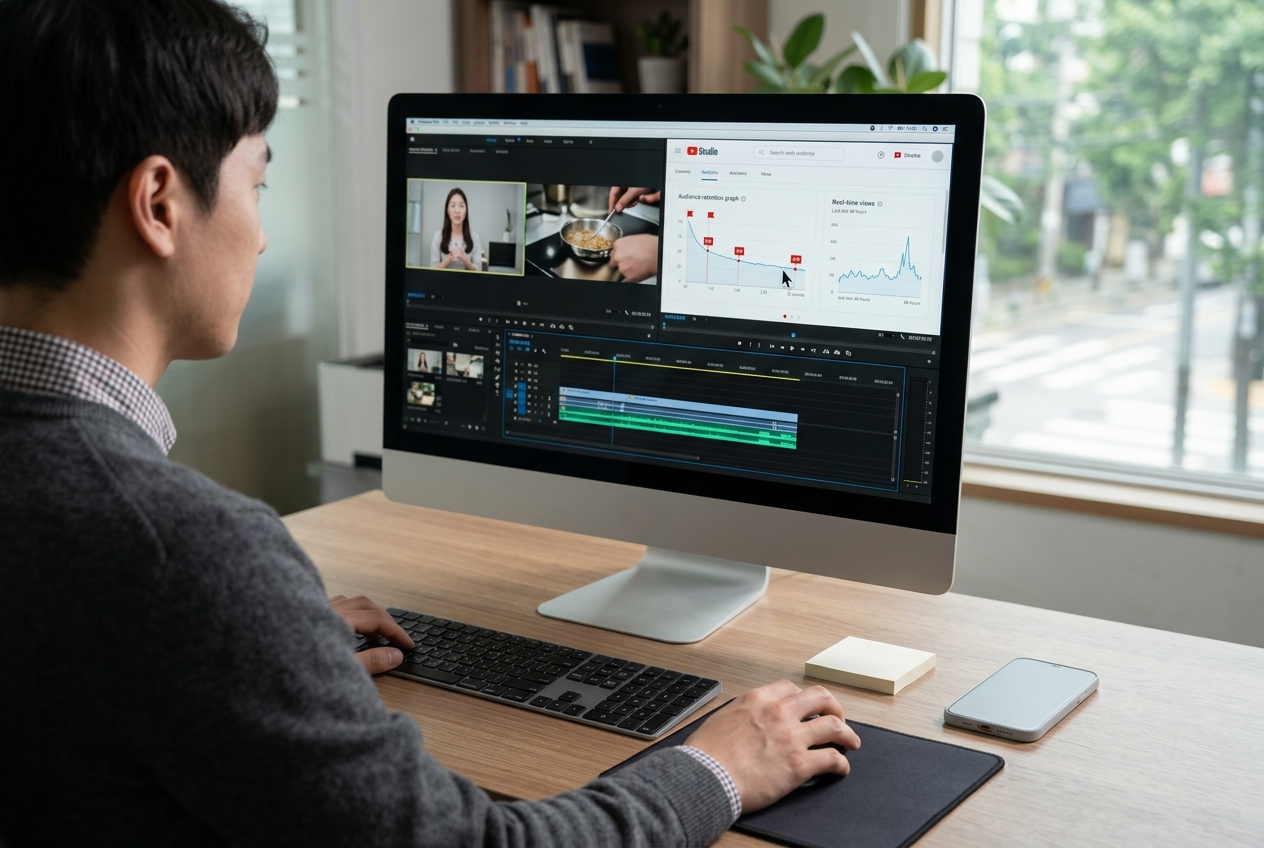
The YouTube algorithm is complex and constantly changing, but the core principle is always 'viewer satisfaction.' This is why metrics such as whether viewers watch the video to the end, leave comments, or share it are important. The first 30 seconds of a video are crucial. Within this short time, viewers judge whether the video is worth their time. Therefore, a structure with a short, impactful introduction that gets straight to the point is effective. To grab the viewer's attention, it is also a good idea to show a short highlight of the video in the first scene or to present the clear results they will get from watching the video.
Also, thumbnails and titles are the storefront of your video. 'Clickbait' that uses provocative language to induce clicks might increase views in the short term, but it lowers channel credibility in the long run. You need to practice writing titles that match the actual content while stimulating curiosity. For example, rather than 'Making delicious kimchi stew,' specifying a concrete benefit like 'Fail-proof kimchi stew, secret seasoning revealed' is more effective for increasing click-through rates. Instead of relying on the algorithm, you should focus on increasing 'channel dwell time'—making people who watched your video come back to watch another. Use strategies like naturally mentioning other videos throughout your content or using end screens to recommend related videos. The longer viewers stay on your channel, the more the algorithm recognizes it as a reliable content provider.
A checkpoint for algorithm response is analyzing the 'audience retention graph.' Use the statistical data provided in YouTube Studio to identify where viewers drop off the most. If the graph drops sharply at a certain point, it is highly likely that the editing in that section is too long or contains unnecessary explanations. Creating a feedback loop, such as changing the editing rhythm or adjusting the tempo of the video to avoid repeating these mistakes in the next production, is the shortcut to algorithm optimization.
Audience Engagement: Creating Value Beyond Just Views
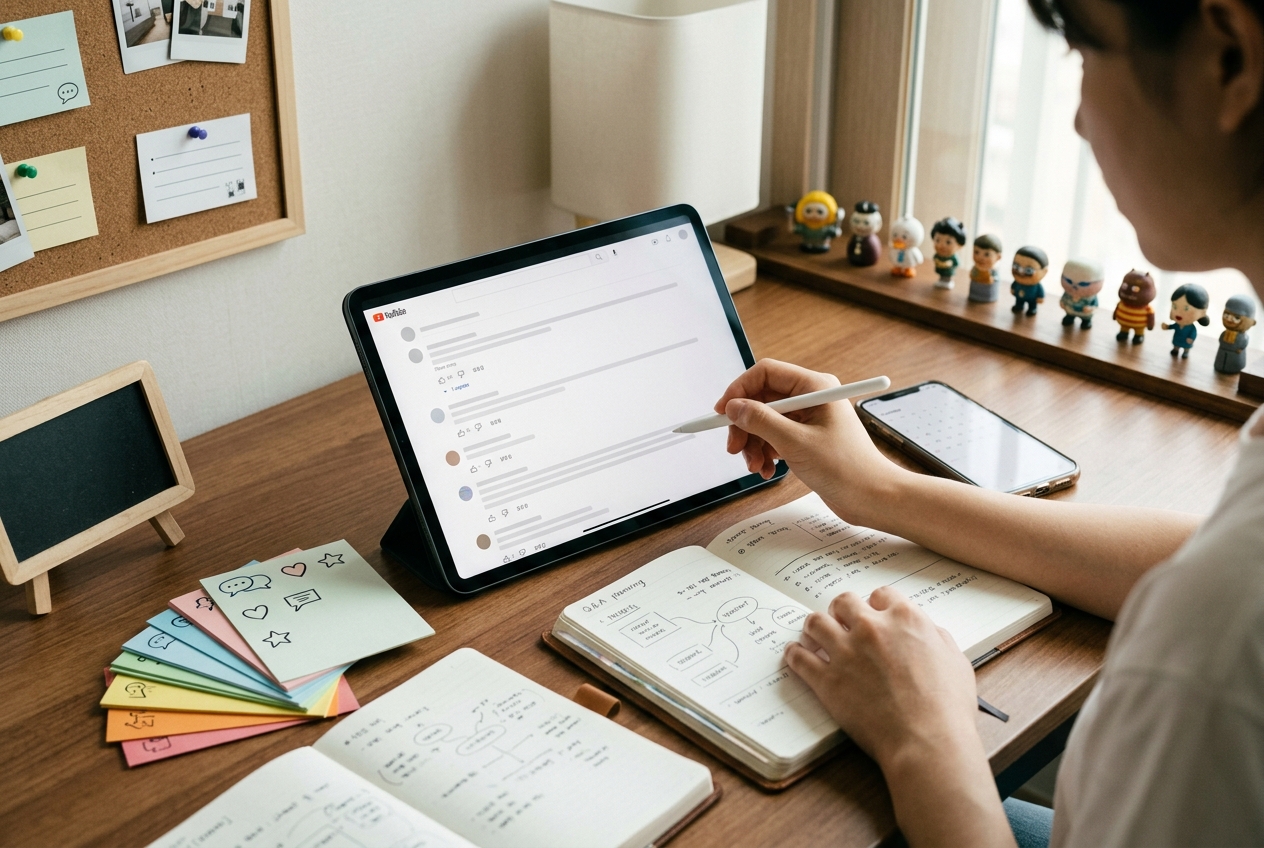
Engagement with subscribers is a key factor in determining channel loyalty. From replying to every comment with care to using the Community tab for polls or asking questions, this is the process of turning viewers from mere observers into 'fans.' Especially in the early stages, you should actively accept viewer feedback. Just by asking if the editing speed is too fast, if the audio is clear, or what topics they would like to see covered, viewers feel they are contributing to the channel's operation. Once a bond is formed with the audience, they become strong supporters of the channel, going beyond simple view counts.
However, unconditional kindness is not always the answer. It is easy to get exhausted if you respond to every negative comment or indiscriminate criticism. For healthy channel operation, you need the wisdom to distinguish between constructive criticism and malicious comments. Use constructive feedback as a foundation for content improvement and reflect it in future productions to create better results. On the other hand, malicious comments intended solely for emotional venting are better firmly blocked or ignored for the sake of your mental health and the channel's atmosphere. As the owner of the channel, setting clear communication guidelines and managing the community to keep it healthy is also an important skill for a creator.
A more advanced stage of engagement is planning viewer-participatory content. For example, scheduling regular Q&A videos or turning ideas suggested by viewers into videos and mentioning them in the credits. This increases the emotional connection viewers have with the channel and transforms them into active community members beyond simple subscribers. A small tip for improving the quality of communication is to write down frequently asked questions in a pinned comment to enhance viewer convenience.
Routine Management for Sustainable Operation

YouTube is like a marathon. I see too many cases where people start off enthusiastically, uploading videos every day, only to burn out and quit quickly. Setting a sustainable upload schedule that fits your environment is more important than anything else. If uploading once a week is manageable, focus on keeping that promise. Keeping your word to viewers is the most basic way to build trust. Regular uploads can send positive signals to the algorithm and instill the perception in viewers that 'this channel consistently provides good content.' You should set a routine that harmonizes with your life rather than an unreasonable schedule to ensure long-term operation.
You should be wary of 'perfectionism' in the video-making process. You don't need perfect editing and expensive equipment from the start. You can make great videos with the smartphone you have right now. What matters is the sincerity of the message in the video, not the technical perfection. The process of consistently uploading, improving editing skills, and refining planning ability is the engine of growth. Also, data analysis is essential. Use YouTube Studio to regularly identify which videos cause people to drop off and which videos attract many subscribers. Checking the average audience retention graph can help you find sections where viewers get bored. Cutting these sections out or improving them in the next video is the way to grow based on data. Improvement based on data guarantees much faster and more certain growth than vague effort. Finally, have a mindset of recording and cheering for your own growth. Rather than being swayed by short-term numbers, the key to running a YouTube channel is to move forward one step at a time with the goal of making a slightly better video than yesterday.
A concrete method for sustainable operation is running a 'content bank.' Get into the habit of writing down ideas whenever they come to mind, and try using a 'time blocking' strategy where you divide tasks by day, separating filming and editing. If you build a system where you focus on planning one day, filming another, and editing on a third, you can prevent burnout and maximize work efficiency. Also, you need a mindset that focuses on the 'essence of content' rather than obsessing over technical perfection. Instead of investing a month to make one perfect video, publishing four videos, even if they are slightly lacking, to gauge viewer reactions is the way to make your growth speed four times faster. Consistency becomes data, and data becomes the identity of your channel.
Frequently Asked Questions
Is expensive equipment absolutely necessary when starting YouTube?
No, you can start with just a smartphone in the beginning. The most important things are the content and the sincerity of the video.
What should I do if my views are too low?
Check if your thumbnails and titles are inducing clicks, and verify if your first 30 seconds are capturing the viewer's attention.
How often should I upload videos?
Rather than uploading frequently at all costs, it is most important to set an upload schedule that you can consistently keep.
How should I handle malicious comments?
Accept constructive feedback, but it is better to firmly delete or use the user block function for malicious comments intended for slander.
What should I do to get favored by the YouTube algorithm?
Reducing viewer drop-off rates and increasing audience retention time are the keys to being chosen by the algorithm.